
Tetragnatha laboriosa
Hentz, 1850
Silver Long-jawed Orbweaver
Tetragnatha laboriosa is a long-jawed orb-weaving spider in the Tetragnathidae, commonly known as the silver long-jawed orbweaver. It occurs across North and Central America with records extending from Alaska to southern South America. The passes through nine instars before reaching adulthood. Activity is predominantly , with mating occurring at night.
Pronunciation
How to pronounce Tetragnatha laboriosa: //ˌtɛtrəɡˈneɪθə ˌlæbəriˈoʊsə//
These audio files are automatically generated. While they are not always 100% accurate, they are a good starting point.
Identification
Distinguished from other orb-weaving by horizontal web orientation and elongated body form. Separation from requires examination of genitalia, spacing, and the ratio of jaw length to length. T. laboriosa is one of fifteen Tetragnatha in North America; precise identification to species level is challenging without microscopic examination.
Images
Appearance
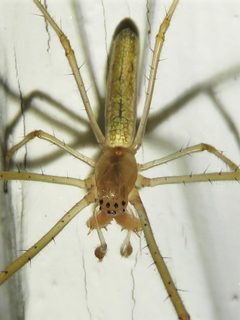
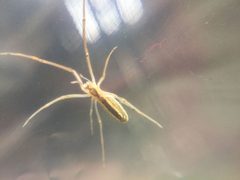
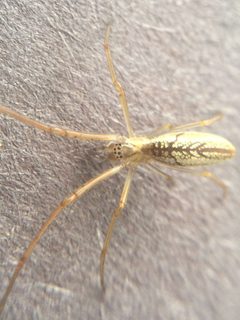
Body and legs elongated and slender, typical of the Tetragnatha. and fangs are conspicuously elongated. Coloration includes silvery tones, contributing to the . Narrow body profile and habit of holding legs close together create a stick-like silhouette when at rest. Body length varies by instar and sex, with mature individuals likely measuring within the 5–16 mm range typical for the genus.
Habitat
Occurs in varied environments including meadows, fields, and riparian corridors. Often found near water, where larger individuals may construct webs over aquatic . Webs are built under eaves of structures and near outdoor lights that attract prey.
Distribution
North America and Central America. GBIF records indicate presence from Alaska through Chile, Argentina, and the Falkland Islands, though southern records may represent separate introductions or taxonomic uncertainties.
Seasonality
Active during summer months; present during typical growing season. mating habits observed.
Diet
Preys on flying insects including , gnats, mayflies, and mosquitoes. Aquatic insect emerging from water are intercepted by horizontal webs positioned over water surfaces.
Life Cycle
Nine instars observed, including the stage. sacs are produced by females; placement varies—some adhered to twigs or substrate, others suspended on web periphery.
Behavior
Predominantly activity pattern. Constructs horizontal or near-horizontal orb webs. When disturbed, abandons web and clings to grass stems or substrate, using slender body and leg posture to mimic broken vegetation. Tolerant of conspecifics; individual webs may be built in close proximity. Mating occurs at night with both sexes grasping each other's jaws; males may possess cheliceral spurs to receive female fangs.
Ecological Role
of nuisance insects including mosquitoes and midges. Contributes to regulation of aquatic insect through interception of emerging .
Human Relevance
Beneficial in human-altered environments; reduces of biting flies. Commonly encountered around buildings where outdoor lighting concentrates prey.
Similar Taxa
- Tetragnatha viridisEasily distinguished by emerald green coloration; T. laboriosa lacks this distinctive hue.
- Tetragnatha guatemalensisExhibits communal web-building on a massive ; T. laboriosa builds individual webs.
- Araneidae (typical orb weavers)Construct vertically oriented webs and have more compact body forms; Tetragnathidae webs are horizontal and bodies are elongated.
More Details
Taxonomic note
First described by Hentz in 1850. -level identification within Tetragnatha is difficult and relies heavily on genitalic characters.
Sources and further reading
- BugGuide
- Wikipedia
- GBIF taxonomy match
- iNaturalist taxon
- NCBI Taxonomy
- Catalogue of Life
- Spider Researcher Rosemary Gillespie to Present UC Davis Seminar | Bug Squad
- Bug Eric: Spider Sunday: Longjawed Orb Weavers
- Lab Test Rapidly IDs Potential Mite Pest of Honey Bees
- Evidence for Biodiversity Insurance Hypothesis: More Species Are Indeed Beneficial
- New Research Links Honey Bee Swarms to the Spread of an Invasive Mite
- Bug Eric: One Night, One House, Seventeen Spider Species
- Life History, Habits, and Prey Preferences of Tetragnatha laboriosa (Araneae: Tetragnathidae)