
Tapinesthis inermis
(Simon, 1882)
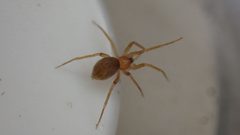
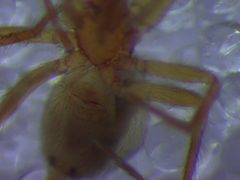
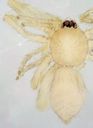
Tapinesthis inermis is a minute spider in the Oonopidae (dwarf goblin spiders). It is the sole member of its , which was established by Simon in 1914 based on specimens originally described as Oonops inermis in 1882. The species is native to Europe and has been introduced to North America (Canada and USA).
Pronunciation
How to pronounce Tapinesthis inermis: /ˌtæpɪnˈɛsθɪs ɪˈnɜrmɪs/
These audio files are automatically generated. While they are not always 100% accurate, they are a good starting point.
Identification
Identification of T. inermis requires examination of genitalic structures under magnification, as is typical for oonopid spiders. The Tapinesthis can be distinguished from other Oonopidae by subtle somatic and genitalic characters established in Simon's original description. No published field identification guides or diagnostic illustrations for this are readily available.
Images
Habitat
Distribution
Native to Europe (with records from Austria and possibly Bulgaria). Introduced to Canada and USA. The Austrian is recorded as common.
Similar Taxa
- Other Oonopidae generaTapinesthis is , but other dwarf goblin spider (e.g., Oonops, Orchestina) share the 's characteristic minute size and compact body form. Definitive separation requires examination of arrangement, cheliceral , and male and female epigynal structures.
More Details
Taxonomic history
Originally described as Oonops inermis by Simon in 1882, transferred to Tapinesthis in 1914 when Simon established that . The genus has remained for over a century.
Data limitations
This is known from very few observations (8 records in iNaturalist as of source date). Basic biological information— specificity, prey, , and detailed —appears to be unstudied or unpublished.