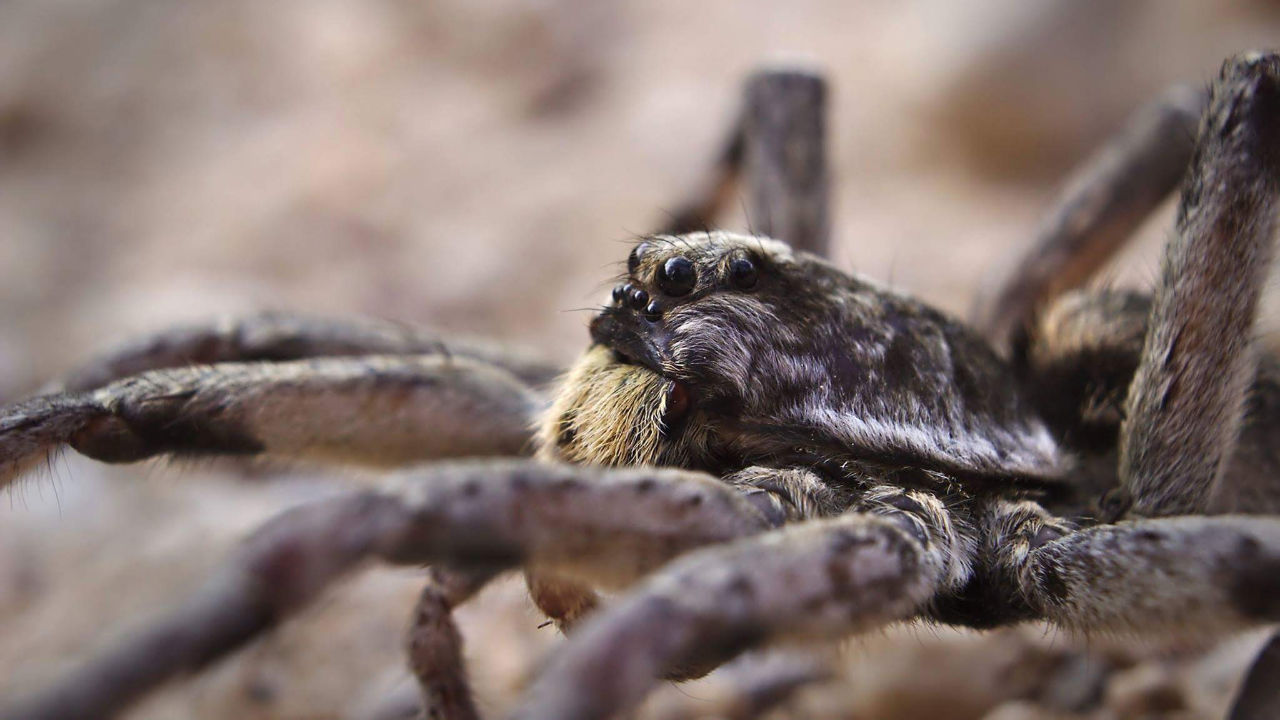
Hexurella apachea is a species of mygalomorph spider in the family Hexurellidae, described by Gertsch and Platnick in 1979. It is native to the United States, specifically occurring in the southwestern borderlands region. As a dwarf funnel web spider, it belongs to a lineage of small-bodied mygalomorphs with distinctive burrowing habits.
Hexurella rupicola is a dwarf funnel web spider species described by Gertsch and Platnick in 1979. It belongs to the family Hexurellidae, a small group of mygalomorph spiders. The species is native to the United States, with records from the US-Mexico borderlands region. It is one of several species within the genus Hexurella that have been subject to recent taxonomic revision using molecular phylogenetic methods.
ghost spiders, yellow ghost spider
Hibana is a genus of anyphaenid sac spiders established by Antônio Brescovit in 1991. The genus contains 18 described species distributed from the United States through Central America to Brazil, including the Caribbean. These small, pale, nocturnal spiders are commonly known as ghost spiders due to their coloration and elusive habits. Hibana includes the yellow ghost spider (Hibana velox), formerly classified under Aysha. The genus is notable for its cursorial hunting behavior and restricted area searching following food consumption.
Hibana cambridgei is a small ghost spider in the family Anyphaenidae. Like other members of its genus, it is pale in coloration and nocturnal in habit. The species is native to North America and has been recorded from the United States and Mexico. Very few specific observations of this species have been documented in scientific literature.
garden ghost spider, ghost spider
Hibana gracilis, commonly known as the garden ghost spider, is a small nocturnal hunting spider in the family Anyphaenidae. Adults reach a maximum body length of about 8 millimeters, with most individuals around 6 millimeters. The species is found throughout the United States and Canada, where it hunts insects on foliage and constructs silken retreats in curled leaves during daylight hours.
ghost spider
Hibana incursa is a species of ghost spider in the family Anyphaenidae, first described by Chamberlin in 1919. It is a small, pale-colored, nocturnal hunting spider distributed from the United States through Panama. Like other ghost spiders, it does not build webs to capture prey but instead actively prowls vegetation for insects.
Yellow Ghost Spider
Hibana velox, commonly known as the yellow ghost spider, is a small nocturnal hunting spider native to North America. Formerly classified as Aysha velox, this species belongs to the family Anyphaenidae and is recognized for its pale coloration and active predation on small insects. It occupies diverse habitats ranging from natural vegetation to human dwellings, and has been documented as an effective biological control agent against agricultural pests such as the citrus leafminer.
Hilaira herniosa is a species of sheet-web weaving spider in the family Linyphiidae, one of the largest families of spiders. First described by Tamerlan Thorell in 1875 under the name Erigone herniosa, this small-bodied spider has a documented distribution spanning the Holarctic region, including northern Europe, Asia, and North America. The species inhabits moist, cool environments typical of many linyphiid spiders. Specific details regarding its biology and ecology remain limited in published literature.
Rosemary Wolf Spider
Hogna ericeticola, known as the rosemary wolf spider, is a species of wolf spider in the family Lycosidae. It was described by Howard K. Wallace in 1942. The species is endemic to Florida scrub habitats in Putnam County, Florida, United States. As a member of the genus Hogna, it is a large, active ground-dwelling spider.
Forest Wolf Spider
Hogna frondicola is a species of wolf spider in the family Lycosidae, commonly known as the Forest Wolf Spider. It is found throughout the United States and Canada, with confirmed records from Alberta and British Columbia. The species is one of several Hogna species known to serve as hosts for the spider wasp Anoplius aethiops, which paralyzes and provisions its burrows with these spiders.
Marbled Cellar Spider
Holocnemus pluchei is a cellar spider native to the Mediterranean region that has been introduced to North America, Australia, and other regions. It is notable for its group-living behavior, with multiple individuals often sharing communal webs. Both sexes possess stridulatory organs, an unusual trait among spiders. The species exhibits a unique defensive behavior called 'bouncing' when disturbed. It has been identified as a source of allergenic proteins that can trigger asthma in sensitive individuals.
Hololena santana is a funnel-web weaver spider in the family Agelenidae, described by Chamberlin & Ivie in 1942. The species is found in the United States and belongs to a genus of approximately 30 recognized species restricted to the western third of North America. Like other Hololena, it constructs flat, sheet-like webs with a funnel-shaped retreat and is known to occasionally enter human dwellings.
Hololena tentativa is a funnel-web weaver spider in the family Agelenidae, found in the United States. Like other Hololena species, it constructs flat, sheet-like webs with a funnel-shaped retreat. The genus is restricted to the western third of the U.S. and contains approximately thirty recognized species in need of taxonomic revision.
encrusted spiders, dusty desert spiders, American sand assassins
Homalonychidae is a small family of spiders containing a single genus, Homalonychus, with three described species. These spiders are characterized by their distinctive 'encrusted' appearance caused by soil and debris adhering to short, stiff setae covering their bodies. They are medium-sized, non-web-building spiders found in arid regions of southwestern North America and northwestern Mexico. Their phylogenetic placement remains uncertain due to a combination of advanced morphological features and primitive behavioral traits.
Homalonychus selenopoides is a true spider in the family Homalonychidae, found in desert regions of the southwestern United States and northwestern Mexico. Males perform distinctive courtship behaviors involving vibratory drumming on the substrate and spinning silk threads embedded with sand grains. Females construct silk retreats incorporating sand for egg-laying and exhibit maternal care by guarding egg sacs.
American sand assassin
Homalonychus theologus is a true spider in the obscure family Homalonychidae, found in the southwestern United States and northwestern Mexico. It is one of only two species in its genus. The species exhibits distinctive sand-encrusted camouflage achieved through specialized setae that trap soil particles. It does not construct webs and has been observed employing self-burying behavior during molting and mating.
dwarf spiders
Hybauchenidium is a genus of dwarf spiders in the family Linyphiidae, first described by Å. Holm in 1973. The genus contains four species distributed across high-latitude regions of the Northern Hemisphere, including boreal and arctic areas of North America, Europe, and Asia. Species in this genus are small-bodied spiders characteristic of the sheet-web building Linyphiidae.
A rare spider species in the family Hypochilidae, described by Catley in 1994. The specific epithet "bernardino" references the San Bernardino Mountains of southern California, where the species was first discovered. Hypochilidae is a small family of spiders with distinctive morphological features and limited geographic distribution.
lampshade weaver
Hypochilus bonneti is a species of lampshade spider (family Hypochilidae) first described by Gertsch in 1964. It is one of several species in the genus Hypochilus, which are known for their distinctive flat, circular webs that resemble lampshades. The species occurs in the United States, though specific details about its biology and ecology remain poorly documented.
Hypochilus kastoni is a species of lampshade spider in the family Hypochilidae, described by Norman Platnick in 1987. It is one of several species in the genus Hypochilus, a group of spiders notable for their distinctive web architecture and relictual distribution in North America. The species is known from the western United States, where it inhabits rocky habitats. Like other Hypochilus species, it constructs characteristic flat, circular webs with a conical retreat, resembling a lampshade in appearance.
Meadow Dark-eyed Orbweaver
Hypsosinga funebris is a small orb-weaving spider in the family Araneidae, commonly known as the Meadow Dark-eyed Orbweaver. It is found in the United States and Canada, typically inhabiting meadow and grassland habitats. The species builds small, flat orb webs and is most active during the warmer months.
Triangle Web Spiders, Triangle Spiders
Hyptiotes is a genus of small cribellate spiders in the family Uloboridae, commonly known as triangle web spiders. These arachnids are distinguished by their unique triangular webs—rudimentary orb webs consisting of four radii connected to a single anchor thread. They are notable as the only spiders in North America that lack venom glands, relying instead on specialized silk to capture and subdue prey. Adult females measure 3-4 mm, while males are 2-3 mm. Four species occur in North America, with three primarily western and one eastern species (H. cavatus).
Gertsch's Triangleweaver
Hyptiotes gertschi is a cribellate orb-weaving spider in the family Uloboridae, commonly known as Gertsch's Triangleweaver. Like other members of its genus, it constructs a distinctive triangular web—a reduced sector of a typical orb web. The species is one of four Hyptiotes species in North America and is distributed across the United States and Canada, with records from Alberta, British Columbia, and Manitoba.
dwarf spider
Idionella rugosa is a species of dwarf spider in the family Linyphiidae, first described by Crosby in 1905. It is a small sheet-web weaving spider found in North America. The species has been documented in the United States and Canada, with records from Alberta, Manitoba, and Ontario.
Unequal Whiskered Money Spider
Islandiana flaveola is a dwarf spider species in the family Linyphiidae, commonly known as sheet-web weavers or money spiders. First described by Banks in 1892, this species is distributed across the United States and Canada. Like other members of its genus, it constructs flat, sheet-like webs rather than the more familiar orb webs. The species is one of at least fifteen recognized species in the genus Islandiana.
Bog Sheet-web Weaver
Kaestneria pullata is a sheetweb spider in the family Linyphiidae, commonly known as the Bog Sheet-web Weaver. It has been documented across a broad geographic range spanning North America, Europe, and Asia, including Russia from European regions to the Far East, as well as China, Mongolia, and Japan. The species is one of approximately 4,600 described species in Linyphiidae, the second largest family of spiders.
Kaira is a genus of orb-weaving spiders in the family Araneidae, established by O. Pickard-Cambridge in 1889. Members of this genus are known for their distinctive morphology and are part of the diverse tropical and subtropical araneid fauna. The genus is relatively small and understudied compared to larger araneid genera.
pale frilled orbweaver, frilled orbweaver
Kaira alba is an orb-weaving spider in the family Araneidae, commonly known as the pale frilled orbweaver. The species is distributed across the southern United States and Mexico. Like other members of the genus Kaira, it constructs orb-shaped webs for prey capture.
Kaira altiventer is a species of orb-weaving spider in the family Araneidae. It was described by O. Pickard-Cambridge in 1889. The species has a broad geographic distribution spanning from the United States southward through Central America to Brazil.
Kaira hiteae is a species of orb-weaving spider in the family Araneidae, described by Levi in 1977. The genus Kaira is notable for containing relatively small, specialized orb-weavers. Very few observations of this species have been documented, with only three records on iNaturalist.
Kibramoa is a genus of spiders in the family Plectreuridae, first described by Ralph Vary Chamberlin in 1924. The genus comprises seven species and one subspecies, all restricted to arid regions of Mexico and the southwestern United States. These spiders are among the lesser-known members of Plectreuridae, a family characterized by elongated chelicerae and haplogyne genitalia.
Kibramoa madrona is a true spider in the family Plectreuridae, described by Gertsch in 1958. It is found in the United States. Members of this family are typically found in arid and semi-arid regions of western North America.
Arizona black hole spider
Kukulcania arizonica is a crevice-weaving spider native to the southwestern United States, commonly known as the Arizona black hole spider. Females are velvety black with a compact, tarantula-like body form and can live for several years, reaching approximately 13 mm in body length. Males are dramatically different in appearance—pale beige or brown with small bodies and disproportionately long legs. The species constructs distinctive lacy, non-sticky webs that radiate from a silken tube retreat, typically built in crevices on building walls or similar structures. The spider belongs to the cribellate lineage, possessing specialized silk-producing structures that produce entangling rather than adhesive capture threads.
crevice weaver
Kukulcania geophila is a species of crevice weaver spider in the family Filistatidae, distributed across the southwestern United States and Mexico. Like other members of its genus, it constructs distinctive lacy, cribellate webs that emerge from sheltered retreats in crevices. The species exhibits pronounced sexual dimorphism, with females being larger, dark-colored, and long-lived compared to males. Two subspecies are recognized: K. g. geophila and K. g. wawona.
Kulcania tomentosa is a species of cribellate spider in the family Dictynidae. The genus Kulcania was established by Lehtinen in 1967, with species characterized by their cribellate silk production and association with specific habitat types. Dictynidae spiders are generally small to medium-sized web-builders that construct irregular, tangled webs often called 'cobwebs' or 'mesh webs.' The specific epithet 'tomentosa' refers to a hairy or woolly appearance, likely describing the spider's pubescence.
Larinia borealis is an orb-weaving spider in the family Araneidae. It is found in North America, with confirmed records from Canada (Alberta, British Columbia) and the United States. As an orb-weaver, it constructs characteristic circular webs to capture prey. The species was first described by Nathan Banks in 1894.
Brown Widow, Brown Button Spider, Grey Widow, Brown Black Widow, House Button Spider, Geometric Button Spider
Latrodectus geometricus, commonly known as the brown widow, is a widow spider in the family Theridiidae native to Africa with a cosmopolitan distribution due to human-mediated introduction. It is smaller and lighter in color than black widow species, with distinctive black-and-white geometric patterns on the dorsal abdomen and an orange-yellow hourglass marking ventrally. The species is notable for its highly aggressive behavior toward native black widow spiders in invaded ranges, actively seeking out and killing them rather than competing for resources. While possessing neurotoxic venom, its bites are significantly less dangerous to humans than those of black widows due to lower venom delivery.
Lauricius hooki is a species of spider in the family Zoropsidae, commonly known as false wolf spiders or wandering spiders. The species was described by Gertsch in 1941 and is known from the United States. As a member of Zoropsidae, it shares morphological characteristics with wolf spiders (Lycosidae) but belongs to a distinct family within the spider order Araneae.
Dominican Spider
Leucauge licina is a species of long-jawed orbweaver spider in the family Tetragnathidae. It is known from Caribbean islands including Cuba and Jamaica, with most records from the Dominican Republic. Like other members of the genus Leucauge, it constructs horizontal orb webs and displays distinctive coloration with silvery or pearly markings. The species is part of a genus containing over 200 species worldwide, with only two species (L. venusta and L. argyra) documented in North America north of Mexico.
Linyphantes pualla is a species of sheetweb spider in the family Linyphiidae, described by Chamberlin & Ivie in 1942. It is distributed across the United States and Canada. As a member of Linyphiidae, it constructs sheet webs for prey capture. The species has been documented in 21 iNaturalist observations, indicating it is encountered infrequently in the field.
Linyphantes victoria is a species of sheetweb spider in the family Linyphiidae, first described by Chamberlin & Ivie in 1942. It belongs to a family commonly known as money spiders or sheetweb weavers, characterized by their small size and construction of flat sheet webs often with a dome or tangle above. The species is documented from Canada, though specific details about its biology remain limited in published literature.
Litopyllus temporarius is a ground spider species in the family Gnaphosidae, described by Chamberlin in 1922. It belongs to the infraorder Araneomorphae, the group containing most modern spider species. The species is known only from the United States, though specific habitat details and ecological information remain undocumented.
Big Bend Recluse
Loxosceles blanda, commonly known as the Big Bend recluse, is a species of recluse spider in the family Sicariidae. It was described in 1983 by Gertsch and Ennik. The species is native to the United States, with its common name suggesting association with the Big Bend region of Texas. Like other members of the genus Loxosceles, it possesses cytotoxic venom that can cause tissue necrosis in humans, though documented cases specific to this species are limited.
Loxosceles palma is a venomous recluse spider in the family Sicariidae, native to Baja California, Mexico. The species name derives from the Latin word for palm, referencing the palm canyons of California and Baja California where it occurs. It inhabits deep canyon environments and has been documented in the San Jacinto Mountains of California.
ghost spider
Lupettiana mordax is a species of ghost spider in the family Anyphaenidae. It has been recorded across a broad geographic range extending from the United States through Central America to Peru and Brazil. The species belongs to a family of wandering spiders that are active hunters rather than web-builders.
Lutica nicolasia is a species of ant spider in the family Zodariidae, described by Willis J. Gertsch in 1961. It belongs to a genus of spiders known for myrmecophagy—specialized predation on ants. The species has been recorded from the United States, though detailed ecological and behavioral studies remain limited.
Mexican Social Spiders
Mallos is a genus of cribellate araneomorph spiders in the family Dictynidae, first described by O. Pickard-Cambridge in 1902. The genus is notable for including social spider species, particularly *Mallos gregalis*, which lives in groups and communicates through web vibrations. These spiders produce cribellate silk, a type of woolly, non-sticky silk used in prey capture. The genus has been the subject of systematic research, including studies on their spinning apparatus evolution.
Mallos niveus is a species of mesh-web weaver spider in the family Dictynidae. It was described by O. Pickard-Cambridge in 1902. The species belongs to a genus whose members are known for their social web-building behavior, though species-specific documentation for M. niveus remains limited. It occurs in the southwestern United States and Mexico.
Mallos pallidus is a species of mesh web weaver spider in the family Dictynidae, first described by Banks in 1904. It is found in the United States and Mexico. The genus Mallos belongs to the cribellate spider lineage, characterized by the presence of a cribellum—a silk-producing organ that generates woolly, non-sticky silk used in prey capture.
Mallos pearcei is a species of mesh-web weaving spider in the family Dictynidae, first described by Chamberlin and Gertsch in 1958. As a member of the genus Mallos, it shares the characteristic cribellate silk production common to this group. The species is known from the United States, though specific details about its biology remain poorly documented.