
Hibana incursa
(Chamberlin, 1919)
ghost spider
Hibana incursa is a of ghost spider in the Anyphaenidae, first described by Chamberlin in 1919. It is a small, pale-colored, hunting spider distributed from the United States through Panama. Like other ghost spiders, it does not build webs to capture prey but instead actively prowls vegetation for insects.
Pronunciation
How to pronounce Hibana incursa: //hɪˈbɑːnə ɪnˈkɜːrsə//
These audio files are automatically generated. While they are not always 100% accurate, they are a good starting point.
Identification
Distinguished from the similar Hibana gracilis (eastern North America) by geographic range—H. incursa occurs in western North America and south through Central America, while H. gracilis is found in the eastern United States. Both share the characteristic pale coloration and habits of ghost spiders. Separation from other Anyphaenidae requires examination of arrangement and genitalia. May be confused with sac spiders (Clubionidae) or longlegged sac spiders (Cheiracanthium), but lacks the distinct groove of Cheiracanthium and the curved setal tuft on the of Clubiona.
Images
Appearance
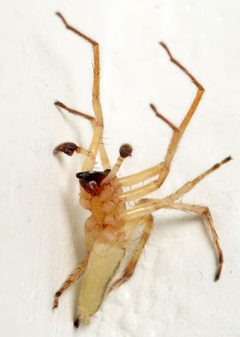
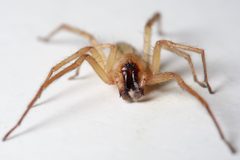
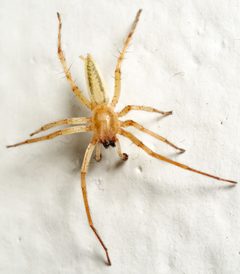
Small spider with pale, translucent coloration. reach approximately 6-8 mm in body length. The typically shows subtle patterning, including markings on the surface. The overall pale coloration provides camouflage against foliage. Long legs relative to body size, typical of the .
Habitat
Vegetation in varied including forests, shrublands, and urban gardens. Nocturnally active on foliage; diurnally shelters in curled leaves bound with silk. Often found near outdoor lighting where insect prey congregates.
Distribution
United States (western regions) to Panama, including Mexico. Western North American distribution distinguishes it from the eastern Hibana gracilis.
Seasonality
Active year-round in warmer parts of range; peak activity likely coincides with warmer months in temperate regions. may be encountered in autumn when seeking sheltered sites.
Diet
Active of small insects; observed feeding on and other small flying insects attracted to lights.
Life Cycle
Females deposit in silk sacs within retreats. Spiderlings hatch and may initially remain in the maternal retreat before dispersing after their next . Development includes egg, spiderling (post-embryonic ), and stages.
Behavior
hunter that does not construct capture webs. Actively prowls foliage and vegetation surfaces in search of prey. retreat consists of silk-lined curled leaf. Frequently encountered near outdoor artificial lighting, suggesting attraction to light or to insect prey attracted to light. Fast-moving when disturbed.
Ecological Role
of small insects; contributes to regulation of of tiny flying insects such as . Serves as prey for spider wasps including Priocnemis minorata.
Human Relevance
Occasionally enters human dwellings, particularly in autumn. Not considered dangerous; bites are rare and not medically significant. May cause minor alarm due to pale coloration and indoor wanderings. Presence near outdoor lighting may result in encounters on porches and near windows.
Similar Taxa
- Hibana gracilisEastern North American counterpart with nearly identical appearance; distinguished primarily by geographic separation, though subtle morphological differences in genitalia exist
- Cheiracanthium speciesLonglegged sac spiders share pale coloration and indoor occurrence but have distinct groove in center of and different arrangement
- Clubiona speciesSac spiders have curved setal tuft on front edge of and distinct groove not present in Hibana
More Details
Taxonomic history
The Hibana was established to accommodate formerly placed in other anyphaenid genera. The Anyphaenidae has undergone taxonomic revision, with some authorities previously placing these spiders in Clubionidae.
Etymology
The 'ghost spider' refers to the pale, translucent coloration and habits of these spiders.