
Hibana
Brescovit, 1991
ghost spiders, yellow ghost spider
Species Guides
5- Hibana cambridgei
- Hibana futilis(ghost spider)
- Hibana gracilis(garden ghost spider)
- Hibana incursa(ghost spider)
- Hibana velox(Yellow Ghost Spider)
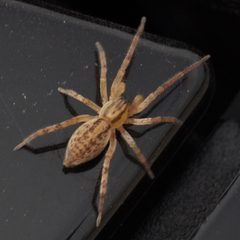
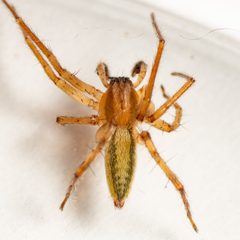
Hibana is a of anyphaenid sac spiders established by ônio Brescovit in 1991. The genus contains 18 described distributed from the United States through Central America to Brazil, including the Caribbean. These small, pale, spiders are commonly known as ghost spiders due to their coloration and elusive habits. Hibana includes the yellow ghost spider (Hibana velox), formerly classified under Aysha. The genus is notable for its hunting and restricted area searching following food consumption.
Pronunciation
How to pronounce Hibana: /hɪˈbɑːnə/
These audio files are automatically generated. While they are not always 100% accurate, they are a good starting point.
Identification
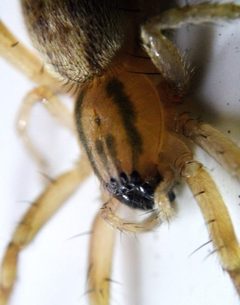
Distinguished from similar sac spiders in Clubionidae (e.g., Clubiona) by absence of a distinct groove in center of and lack of obvious tuft of curved setae on front edge of . Separated from Cheiracanthium (longlegged sac spiders, family Eutichuridae) by these same characters; Cheiracanthium also tends to be more consistently yellow. Differs from pirate spiders (Mimetidae) by lack of long leg spines and different arrangement. Most reliably identified by examination of genitalia; determination requires specimens.
Images
Appearance
Small spiders with body lengths typically 6-8 mm, reaching maximum slightly over 8 mm. Generally pale in coloration, ranging from pale yellow to cream or light brown. Body slender with relatively long legs. lacks a distinct central groove. without obvious tuft of curved setae on margin. arrangement typical of Anyphaenidae with two rows of four eyes each. Legs relatively long and slender, adapted for rapid movement.
Habitat
Occupies diverse including deciduous forests, agricultural systems (notably cotton), and mangrove forests. Found in vegetation from ground level to . By day, individuals hide in curled leaves bound with silk. Nocturnally active on foliage, often associated with outdoor lighting that attracts insect prey. Some show tendencies, entering human structures.
Distribution
Ranges from the United States (including southern Canada) south through Mexico, Central America, and the Caribbean to Brazil. distributions vary: Hibana gracilis occurs in USA and Canada; Hibana velox in USA, Mexico, and Caribbean; Hibana talmina in Venezuela, Colombia, Guyana, and northern Brazil; Hibana futilis from USA to Venezuela and Cuba. West Indies represented by multiple species.
Seasonality
Activity patterns vary by latitude and . Hibana gracilis observed in autumn (October) in Massachusetts. Priocnemis minorata, a , hunts Hibana gracilis from late March to mid-June with peak in April-May, suggesting spring activity for that species. Year-round activity likely in tropical portions of range.
Diet
Active of small insects. Hibana futilis has been documented feeding on and of corn earworm (Helicoverpa zea) in cotton agroecosystems. Hibana gracilis observed capturing . Will accept non-prey food including extrafloral nectar and honey solutions.
Life Cycle
Females deposit in silk sacs within retreats. Spiderlings may return to retreat after hatching and minor explorations, dispersing after next . Development includes egg, spiderling, , and stages. Multiple per year likely in warmer portions of range.
Behavior
hunters that actively prowl foliage for prey rather than building capture webs. Construct silk retreats in curled leaves for daytime shelter; retreats not reused, with new ones spun after each night's activity. Display restricted area searching (RAS) following consumption of food, whether prey or non-prey items. Can learn to recognize novel aroma cues associated with food resources. Rapid, sustained locomotion over extended distances. Attracted to artificial lighting that concentrates insect prey.
Ecological Role
of small insects in multiple including forests and agricultural systems. Documented as prey for spider wasps (Priocnemis minorata) and crabs (Aratus pisonii in mangrove ). Potential agent for crop pests such as corn earworm in cotton systems.
Human Relevance
Generally harmless to humans due to small size. Occasionally encountered indoors, particularly near outdoor lighting. Hibana velox known as yellow ghost spider. No documented medical significance; bites if they occur would be minor. Some show tendencies, entering structures accidentally or seeking prey concentrations.
Similar Taxa
- CheiracanthiumLonglegged sac spiders formerly in same ; distinguished by presence of groove and abdominal setal tuft, more consistently yellow coloration
- ClubionaSac spiders in Clubionidae; possess groove and abdominal setal tuft absent in Hibana
- MimetusPirate spiders in Mimetidae; have long leg spines, different arrangement, and specialize in killing other spiders
More Details
Taxonomic history
The yellow ghost spider was formerly placed in Aysha as Aysha velox before transfer to Hibana. placement has been stable in Anyphaenidae, though broader sac spider classification has undergone revision.
Research significance
Hibana futilis has become a model organism for studying spider foraging , particularly restricted area searching and learning of food-associated cues in agricultural contexts.
Species diversity
As of April 2019, contains 18 described with several additional species likely undescribed. Hibana labonita described in 2020 from females previously misassigned to H. talmina.
Sources and further reading
- BugGuide
- Wikipedia
- GBIF taxonomy match
- NCBI Taxonomy
- Catalogue of Life
- Bug Eric: Priocnemis minorata
- Bug Eric: Spider Sunday: Longlegged Sac Spiders
- Bug Eric: Halloween Special: Ghosts and Pirates
- Bug Eric: 2009
- Correctly mating: on the actual female of Hibana talmina Brescovit and the description of H. labonita sp. n. (Araneae, Anyphaenidae)
- Characterization of restricted area searching behavior following consumption of prey and non‐prey food in a cursorial spider, Hibana futilis