
Hibana gracilis
(Hentz, 1847)
garden ghost spider, ghost spider
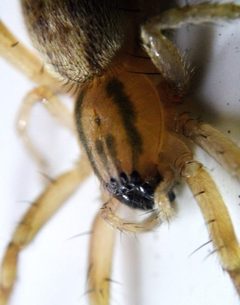
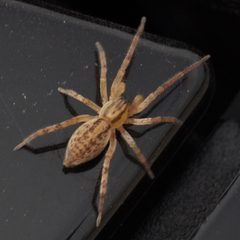
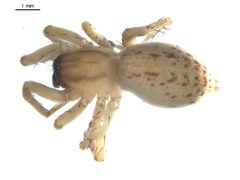
Hibana gracilis, commonly known as the garden ghost spider, is a small hunting spider in the Anyphaenidae. reach a maximum body length of about 8 millimeters, with most individuals around 6 millimeters. The is found throughout the United States and Canada, where it hunts insects on foliage and constructs silken retreats in curled leaves during daylight hours.
Pronunciation
How to pronounce Hibana gracilis: /hɪˈbɑːnə ɡrəˈsɪlɪs/
These audio files are automatically generated. While they are not always 100% accurate, they are a good starting point.
Identification
Pale coloration distinguishes ghost spiders from most other spider . Hibana gracilis specifically can be recognized by its small size (approximately 6 mm body length in typical specimens), pale translucent body, and long slender legs. The lacks the distinct groove in the center of the seen in some similar spiders, and does not possess an obvious tuft of curved setae on the front edge of the . reach a maximum of slightly more than 8 millimeters.
Images
Habitat
Found in vegetation including shrubs and trees. By day, individuals hide in curled leaves that they tie together with silk to form retreats. At night, they prowl foliage in search of prey. Frequently attracted to outdoor lighting where insects congregate.
Distribution
United States and Canada. Records include Vermont and other eastern states, with the occurring across North America.
Seasonality
Active during warmer months. have been observed in October in Massachusetts, suggesting activity extending into autumn in temperate regions.
Diet
Small insects, including . Has been observed feeding on insects attracted to outdoor lighting.
Behavior
hunter that does not construct webs to capture prey. Instead, prowls foliage actively pursuing insects. Constructs silken retreats in curled leaves for daytime shelter, binding the leaves together with silk. Recognizes and exploits outdoor lighting to locate insect prey.
Ecological Role
of small insects. Serves as prey for spider wasps, including Priocnemis minorata, which has been documented paralyzing Hibana gracilis as a for its larvae.
Human Relevance
Generally harmless to humans due to small size. Occasionally encountered near outdoor lighting or may enter structures. Not considered a pest .
Similar Taxa
- Cheiracanthium spp.Both are pale, long-legged hunting spiders that may be found near human habitation. Cheiracanthium (longlegged sac spiders) constructs sac-like silken retreats and belongs to Eutichuridae, whereas Hibana gracilis is in family Anyphaenidae and ties curled leaves together for retreats.
- Mimetus spp.Both are hunting spiders found in similar , but pirate spiders (Mimetidae) have long spines on their legs and four distinct patches, and prey on other spiders rather than insects.