
Hibana futilis
(Banks, 1898)
ghost spider
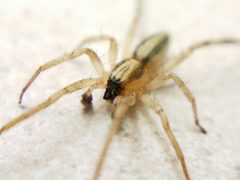
Hibana futilis is a small spider in the Anyphaenidae, commonly known as ghost spiders. reach a maximum body length of slightly over 8 millimeters. The is , hunting insects on foliage at night and hiding in silk-lined curled leaves by day. It is found from the United States through Central America to Venezuela and Cuba. Research has documented its restricted area searching following consumption of both prey and non-prey food, suggesting cognitive flexibility in foraging.
Pronunciation
How to pronounce Hibana futilis: /hɪˈbɑːnə ˈfjutiˌlɪs/
These audio files are automatically generated. While they are not always 100% accurate, they are a good starting point.
Identification
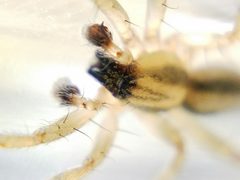
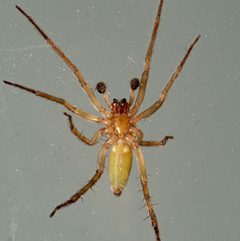
Pale coloration typical of ghost spiders. reach maximum body length of slightly over 8 millimeters. Distinguished from similar Hibana gracilis by subtle morphological differences; precise identification requires examination of genitalia. Lacks distinct groove in center of present in some related . No obvious tuft of curved setae on front edge of .
Images
Distribution
United States to Venezuela and Cuba; recorded from Mexico, Rica, and Central America.
Diet
Insects; specifically documented consuming of corn earworm (Helicoverpa zea) in cotton agricultural systems. Will accept non-prey food including dilute honey in laboratory settings.
Behavior
hunter that pursues prey on foliage. By day, hides in curled leaves tied together with silk. Exhibits restricted area searching (RAS) following consumption of food, characterized by elevated levels of localized movement and lowered . Can learn to recognize novel aroma cues associated with food resources. Crawls rapidly for extended distances when not engaged in restricted searching.
Ecological Role
of crop pests in agricultural systems, particularly cotton. Consumption of extra-floral nectar may enhance , growth, and .
Similar Taxa
- Hibana gracilisSimilar size, coloration, and ; distinguished by subtle morphological features requiring examination of genitalia
- Cheiracanthium speciesBoth are pale, , spiders found in similar ; Cheiracanthium lacks distinct groove and has different abdominal setae pattern
- Pirate spiders (Mimetidae)Both are prowling hunters, but pirate spiders have prominent leg spines and four patches; Mimetidae are spider rather than insect
Sources and further reading
- BugGuide
- Wikipedia
- GBIF taxonomy match
- iNaturalist taxon
- NCBI Taxonomy
- Catalogue of Life
- Bug Eric: Priocnemis minorata
- Bug Eric: Spider Sunday: Longlegged Sac Spiders
- Bug Eric: Halloween Special: Ghosts and Pirates
- Bug Eric: 2009
- Characterization of restricted area searching behavior following consumption of prey and non‐prey food in a cursorial spider, Hibana futilis