
Mallos
O. Pickard-Cambridge, 1902
Mexican Social Spiders
Species Guides
3Mallos is a of cribellate araneomorph spiders in the Dictynidae, first described by O. Pickard-Cambridge in 1902. The genus is notable for including social spider , particularly *Mallos gregalis*, which lives in groups and communicates through web vibrations. These spiders produce cribellate silk, a type of woolly, non-sticky silk used in prey capture. The genus has been the subject of systematic research, including studies on their spinning apparatus evolution.
Pronunciation
How to pronounce Mallos: /ˈmæloʊs/
These audio files are automatically generated. While they are not always 100% accurate, they are a good starting point.
Identification
Distinguished from related by systematic characters studied in taxonomic revisions; the presence of cribellate silk distinguishes members from ecribellate spiders. Social in *Mallos gregalis* may aid field identification where are observed.
Images
Appearance
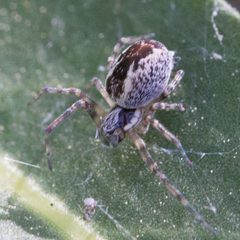
Cribellate spiders with the characteristic woolly silk-producing cribellum, a spinning plate located to the . Specific morphological details for the as a whole are not well documented in available sources.
Distribution
Primarily distributed in Mexico and adjacent regions; the 'Mexican Social Spiders' reflects this geographic concentration. Specific range boundaries for the are not well documented.
Diet
Exclusively predatory, as is characteristic of all spiders. Specific prey items for the are not documented.
Behavior
At least one , *Mallos gregalis*, exhibits social , living in groups and signaling conspecifics by vibrating the web. This cooperative web-building and communal living distinguishes it from the typically solitary habits of most spiders.
Ecological Role
Predatory; contributes to insect control through prey consumption. Specific ecological impacts are not quantified for this .
Similar Taxa
- MexitliaRelated within Dictynidae; both were subjects of Jason Bond's master's degree systematic research on spinning apparatus evolution and .
- Other Dictynidae generaShare cribellate silk production; distinguished by systematic characters and, in the case of *Mallos gregalis*, by documented social .
More Details
Systematic Research History
The Mallos was included in Jason Bond's 1995 master's thesis at Virginia Polytechnic Institute and State University, which focused on the of the spider genera Mallos and Mexitlia. This work contributed to understanding of spinning apparatus evolution in more primitive spiders.
Social Spider Biology
Mallos gregalis represents one of the relatively few documented cases of social in spiders, involving cooperative web maintenance, communal prey capture, and intraspecific communication through vibratory signals.