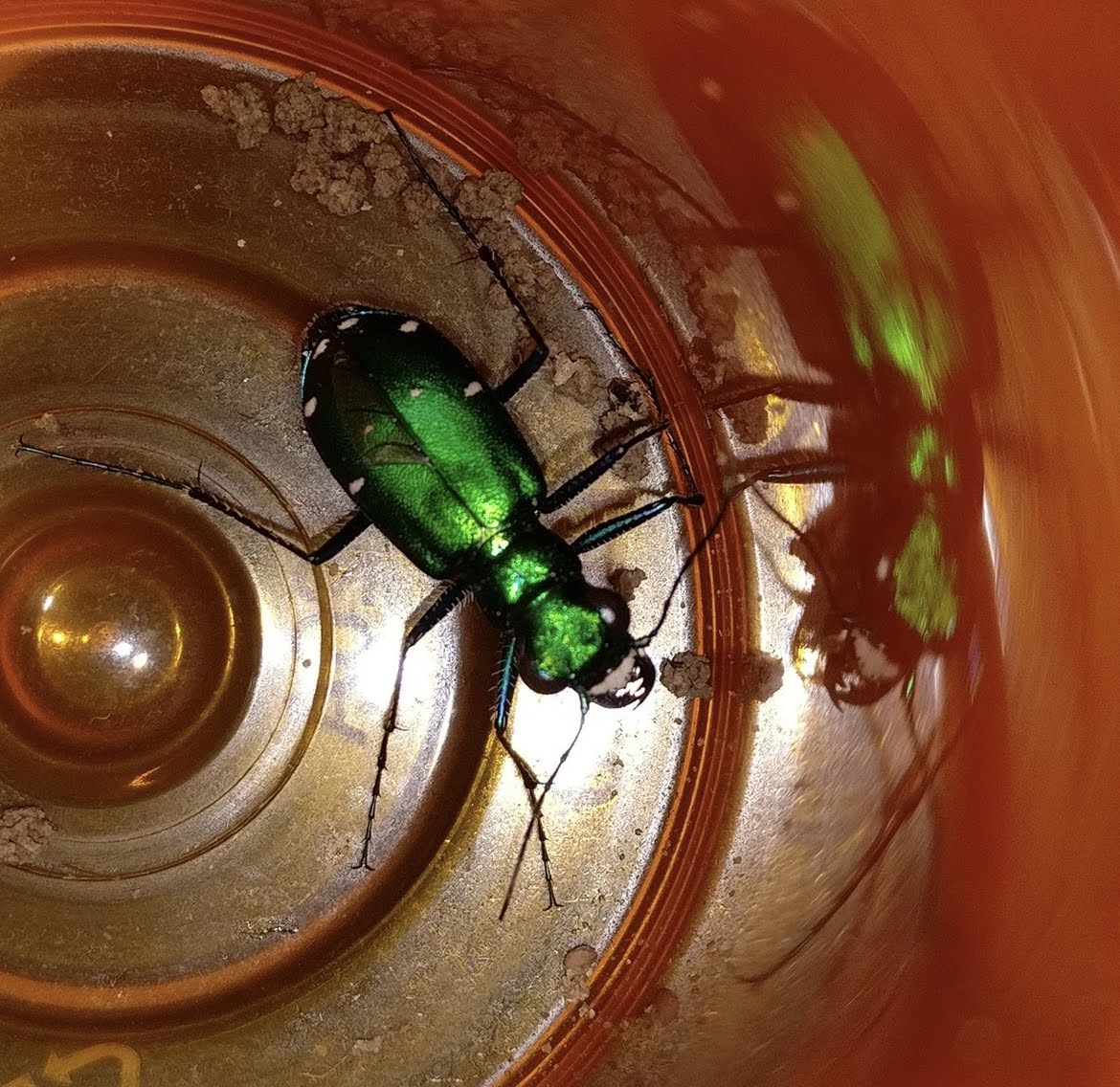
Agra rileyi is a species of ground beetle in the family Carabidae, described by Terry Erwin in 2017. It belongs to the large genus Agra, which comprises hundreds of species primarily distributed in the Neotropics. The species epithet honors someone with the surname Riley, though the specific honoree is not documented in available sources. Like other members of its genus, it is likely a predatory beetle inhabiting forested environments.
Agrilus abditus is a North American jewel beetle (family Buprestidae) described by George Henry Horn in 1891. The species belongs to the hyperdiverse genus Agrilus, which contains thousands of species worldwide. Based on field observations, adults have been collected by sweeping foliage of Quercus arizonica (Arizona white oak) in southeastern Arizona. The species appears to be associated with oak habitats in montane regions of the southwestern United States.
Agrilus albocomus is a species of jewel beetle (family Buprestidae) described by Fisher in 1928. It belongs to the hyperdiverse genus Agrilus, which contains nearly 4,000 described species and may be the largest genus in the animal kingdom. Like most Agrilus species, it is presumed to be a twig and branch borer utilizing recently dead wood for larval development. The specific epithet "albocomus" suggests white hair-like structures, possibly referring to setal patterns on the elytra or body.
metallic wood-boring beetle
Agrilus asperulus is a species of metallic wood-boring beetle in the family Buprestidae, described by Waterhouse in 1889. The species is found in Central America and North America. Like other members of the hyperdiverse genus Agrilus, it belongs to a group of primarily twig and branch borers. Specific biological details for this species remain poorly documented in the available literature.
Agrilus aureus is a species of metallic wood-boring beetle in the family Buprestidae. It belongs to the genus Agrilus, which is among the largest genera in the animal kingdom with nearly 4,000 described species. The species is found in Central America and North America. Like most members of its genus, it is presumed to develop as larvae in woody plant material, though specific host associations for this species have not been documented.
Agrilus barberi is a species of jewel beetle (family Buprestidae) described by Fisher in 1928. The species belongs to the hyperdiverse genus Agrilus, which contains over 3,000 described species worldwide. Based on the taxonomic placement and typical characteristics of the genus, this species likely exhibits the metallic coloration and wood-boring larval habits common to many Agrilus species. However, specific biological details for A. barberi remain poorly documented in available literature.
Agrilus catalinae is a species of metallic woodboring beetle (family Buprestidae) described by Josef N. Knull in 1940. As a member of the hyperdiverse genus Agrilus, which contains nearly 4,000 described species, this beetle is part of the largest genus in the animal kingdom. Like most Agrilus species, it is presumed to be a twig or branch borer in woody plants, though specific biological details remain poorly documented. The species epithet 'catalinae' likely refers to Santa Catalina Mountains in Arizona, suggesting a southwestern U.S. origin for the type specimen.
hawthorn agrilus
Agrilus crataegi is a species of metallic wood-boring beetle in the family Buprestidae. The species was described by Frost in 1912 and is found in North America. The common name "hawthorn agrilus" suggests an association with hawthorn (Crataegus), though specific biological details remain poorly documented. Like other members of the genus Agrilus, it is presumed to have larval development in woody plant tissue.
Agrilus dollii is a species of jewel beetle (family Buprestidae) described by Schaeffer in 1904. Like other members of the hyperdiverse genus Agrilus, it is a metallic woodboring beetle. The genus contains nearly 4,000 described species and may represent the largest genus in the animal kingdom. Most Agrilus species are twig and branch borers in recently dead wood, with adults typically found on foliage rather than flowers.
Agrilus duncani is a metallic wood-boring beetle in the family Buprestidae, described by Josef Knull in 1929. It belongs to the hyperdiverse genus Agrilus, which contains nearly 4,000 described species and may represent the largest genus in the animal kingdom. The species is recorded from both Central America and North America.
Agrilus eleanorae is a metallic wood-boring beetle in the family Buprestidae, described by Fisher in 1928. The species is distributed across Central America and North America. Like other members of the hyperdiverse genus Agrilus, it is presumed to develop as a larva in woody plant tissue, though specific host associations and biological details remain undocumented.
Agrilus exsapindi is a species of metallic wood-boring beetle in the family Buprestidae, described by Vogt in 1949. It belongs to the hyperdiverse genus Agrilus, which contains nearly 4,000 described species and may represent the largest genus in the animal kingdom. The species is known from North America, though specific details regarding its biology, host associations, and distribution within that range remain poorly documented. Like most members of its genus, it is presumed to be a twig or branch borer utilizing woody plants for larval development.
Agrilus illectus is a species of metallic wood-boring beetle in the family Buprestidae. It was described by Fall in 1901 and occurs in North America. Like other members of the genus Agrilus, it is a twig and branch borer that develops in wood. The species is poorly documented in the literature, with minimal published information on its biology, host associations, or distribution patterns beyond basic occurrence records.
Agrilus inhabilis is a species of jewel beetle (family Buprestidae) in the enormous genus Agrilus, which contains nearly 4,000 described species and may be the largest genus in the animal kingdom. The species was described by Kerremans in 1900 and has a broad geographic distribution spanning multiple continents. Like most Agrilus species, it is presumed to develop as a larva in woody plant tissue, though specific biological details for this species remain poorly documented.
Agrilus langei is a species of jewel beetle in the family Buprestidae. Like other members of the hyperdiverse genus Agrilus, it is a metallic woodboring beetle. The genus contains nearly 4,000 described species and is perhaps the largest genus in the animal kingdom. Most Agrilus species are twig and branch borers that develop in recently dead wood, though some attack living trees. The specific biology and host associations of A. langei remain poorly documented.
Beech Borer
Agrilus obsoletoguttatus is a small metallic wood-boring beetle in the family Buprestidae, native to North America. It is among the smallest jewel beetle species utilized as prey by the specialist predatory wasp Cerceris fumipennis, which provisions its underground nests with paralyzed buprestid beetles. The species has been documented in nest caches containing up to 13 individuals, reflecting its small size relative to larger buprestid prey.
Agrilus ometauhtli is a species of jewel beetle (family Buprestidae) described by Fisher in 1938. Like other members of the genus Agrilus, it is a metallic woodboring beetle. The genus Agrilus is hyperdiverse, containing nearly 4,000 described species and possibly representing the largest genus in the animal kingdom. Most Agrilus species are twig and branch borers in recently dead wood, though some attack living trees.
Agrilus subrobustus is a species of metallic wood-boring beetle in the family Buprestidae, described by Saunders in 1873. It is one of thousands of species in the hyperdiverse genus Agrilus, which may represent the largest genus in the animal kingdom. The species has been recorded from North America and Southern Asia, though specific biological details remain poorly documented.
Apical Click Beetle
Agriotes apicalis is a click beetle species in the family Elateridae, first described by LeConte in 1884. It occurs in western North America, with documented records from British Columbia, Canada. Like other members of the genus Agriotes, it possesses the characteristic clicking mechanism of the family, used for righting itself when overturned. The specific epithet 'apicalis' likely refers to a distinctive marking or feature at the apex of the elytra or body.
Arcane Click Beetle
Agriotes arcanus is a species of click beetle in the family Elateridae, first described by W.J. Brown in 1933. The species belongs to a genus containing numerous economically significant agricultural pests, though specific information about this particular species remains limited. It is known from Ontario, Canada, based on available distribution records. Like other members of Elateridae, adults possess the characteristic clicking mechanism that allows them to right themselves when flipped onto their backs.
Dark Click Beetle
Agriotes fucosus, commonly known as the Dark Click Beetle, is a species of click beetle in the family Elateridae. It is native to North America with documented records from several Canadian provinces including Alberta, Manitoba, New Brunswick, Newfoundland and Labrador, and Nova Scotia. The species is part of a genus containing agricultural pests whose larvae (wireworms) damage crop roots.
Agriotes insanus is a species of click beetle in the family Elateridae. It belongs to a genus that includes several agricultural pest species whose larvae (wireworms) damage crop roots and tubers. Specific ecological and biological details for A. insanus remain poorly documented in available sources.
Isabelline Click Beetle
Agriotes isabellinus is a click beetle (family Elateridae) known as the Isabelline Click Beetle. It is native to eastern Canada, with records from Ontario and Québec. As a member of the genus Agriotes, its larvae are likely wireworms, though specific life history details for this species remain poorly documented. The species has been detected through environmental DNA methods in studies targeting invasive pest detection.
Quebec Click Beetle
Agriotes quebecensis is a species of click beetle in the family Elateridae, native to eastern Canada. The species was described by Brown in 1933. Distribution records indicate occurrence in Manitoba, New Brunswick, Nova Scotia, Ontario, and Quebec. As a member of the genus Agriotes, the larvae likely develop as soil-dwelling wireworms, though specific life history details for this species remain undocumented.
Tardy Click Beetle
Agriotes tardus is a click beetle species in the family Elateridae, described by W.J. Brown in 1933. It is known from western Canada, with records from Alberta and British Columbia. The species is part of the economically important genus Agriotes, which includes several agricultural pests whose larvae (wireworms) damage crop roots and tubers. However, specific information about the biology and pest status of A. tardus itself remains limited in published literature.
Agriotina is a subtribe of click beetles (Elateridae) established by Laporte in 1840. It belongs to the tribe Agriotini within the subfamily Elaterinae. Members are characterized by morphological traits associated with the elaterid body plan, including the prosternal process that interacts with the mesosternum to enable the 'clicking' escape mechanism. The subtribe encompasses multiple genera of generally small to medium-sized beetles.
Two-banded Tortoise Beetle
A tortoise beetle in the family Chrysomelidae, distinguished by its flattened, shield-like body form typical of the subfamily Cassidinae. The species occurs in North America and Central America. As a member of the tortoise beetle group, it likely feeds on foliage, though specific host plants for this species are not well documented in available sources.
click beetles (subfamily)
Agrypninae is a subfamily of click beetles (family Elateridae) established by Candèze in 1857. It comprises at least 130 genera and more than 430 described species worldwide, with substantial diversity in the Australian, Neotropical, Afrotropical, and Palaearctic regions. The subfamily includes five recognized tribes: Agrypnini, Drilini, Hemirhipini, Oophorini, and Pseudomelanactini. Notable genera include Monocrepidius (formerly Conoderus), one of the largest genera in Elateridae with approximately 380 species, as well as Selasia, Lacon, Lolosia, and Microselasia.
Ahasverus longulus is a species of silvanid flat bark beetle in the family Silvanidae, first described by Blatchley in 1910. It is known from North America, with documented records from Canada including New Brunswick, Ontario, and Québec. As a member of Silvanidae, it is associated with bark and wood habitats, though specific ecological details remain limited.
Aidophus skelleyi is a small dung beetle species in the subfamily Aphodiinae, described in 2001 from Florida. As a member of the genus Aidophus, it belongs to a group of aphodiines characterized by reduced tarsal claws. The species is known only from the southeastern United States.
Airaphilus is a genus of beetles in the family Silvanidae, subfamily Silvaninae. The genus contains approximately 30 described species distributed across Europe, North Africa, Madagascar, and Japan. At least one species, Airaphilus abei, is flightless (apterous) and has been assessed as potentially endangered due to habitat loss. The genus was first described by Redtenbacher in 1858.
Alaudes is a genus of darkling beetles in the family Tenebrionidae, subfamily Pimeliinae, tribe Cnemeplatiini. The genus was revised in 2018, resulting in the description of new species from the southwestern United States and Mexico. It belongs to the subtribe Alaudina, which was established as part of that revisionary work. Members of this genus are part of a diverse radiation of tenebrionid beetles adapted to arid and semi-arid environments.
Alaudes californicus is a species of darkling beetle in the family Tenebrionidae, described by Aalbu, Caterino & Smith in 2018. The species is known from California and is one of few representatives of the genus Alaudes documented in the region. As a recently described species, detailed biological information remains limited.
Two-spotted Aleochara
Aleochara bimaculata is a species of rove beetle in the family Staphylinidae. It belongs to the large and diverse subfamily Aleocharinae, which contains thousands of species worldwide. The species name "bimaculata" refers to two spots, likely describing a distinctive marking on the elytra. As with many Aleochara species, it is probably associated with decaying organic matter and may have ecological importance in nutrient cycling.
Aleochara littoralis is a species of rove beetle in the family Staphylinidae, first described by Wollaston in 1864. The species is currently treated as a synonym of Aleochara obscurella in some taxonomic databases, though this status appears inconsistent across sources. It has been recorded from Europe, Morocco, and the Canary Islands.
Aleochara lucifuga is a small rove beetle in the subfamily Aleocharinae, characterized by the abbreviated elytra typical of Staphylinidae. The species was described by Casey in 1893 and is documented from multiple eastern and central U.S. states. It belongs to a large genus of predatory rove beetles, though specific natural history details for this species remain poorly documented.
Aleochara pacifica is a species of rove beetle in the family Staphylinidae. It is distributed along the Pacific coast of North America from British Columbia through California and Oregon to Washington, with records extending into Mexico. The species was originally described as Polistoma pacifica by Casey in 1893. Like other members of the genus Aleochara, it is likely associated with decaying organic matter and may have predatory or parasitoid relationships with fly puparia, though specific ecological studies for this species are limited.
Alethia is a genus of darkling beetles (family Tenebrionidae) described by Champion in 1888. The genus occurs in the Nearctic and Neotropical regions. Members of this genus are small beetles within the speciose family Tenebrionidae, which comprises primarily detritivorous and fungivorous species.
Alisalia is a genus of rove beetles (family Staphylinidae) containing 10 described species. The genus was established by Casey in 1911 and is classified within the subfamily Aleocharinae, tribe Oxypodini, and subtribe Meoticina. Species are distributed across North America, with most described from the early 20th century and two added in 2009.
Allandrus is a genus of fungus weevils in the family Anthribidae, established by LeConte in 1876. The genus comprises nine described species distributed across North America, Europe, and the Comoros. Members are associated with fungal hosts, consistent with the ecological profile of Anthribidae.
Allandrus populi is a fungus weevil species in the family Anthribidae, described by Pierce in 1930. The species is distributed across North America, with confirmed records from multiple Canadian provinces including Alberta, British Columbia, New Brunswick, and Nova Scotia. As a member of the fungus weevil family, it is associated with fungal hosts, though specific ecological details remain limited in published literature.
comb-clawed beetles
Alleculina is a subtribe of comb-clawed beetles within the darkling beetle family Tenebrionidae. Members of this group were formerly classified as a separate family (Alleculidae) but have been reclassified as a subfamily (Alleculinae) and subsequently as a subtribe within the Tenebrionidae. These beetles do not resemble 'classic' darkling beetles in appearance, presenting a challenge for identification. The subtribe includes genera such as Hymenorus.
Alloblackburneus is a genus of scarab beetles (family Scarabaeidae, subfamily Aphodiinae) described by Bordat in 2009. It belongs to the tribe Aphodiini, a group commonly known as small dung beetles. The genus is endemic to the Afrotropical region. Species in this genus are part of the diverse Aphodiinae fauna associated with decomposition and nutrient cycling in African ecosystems.
Allopoda is a genus of false flower beetles in the family Scraptiidae, established by LeConte in 1866. The genus contains three described species: Allopoda arizonica, Allopoda californica, and Allopoda lutea. These beetles are found in western North America. The genus belongs to the tribe Allopodini, which is named after it.
Allopodini is a tribe of small beetles within the family Scraptiidae, established by Franciscolo in 1964. These insects belong to the superfamily Tenebrionoidea and are part of the diverse beetle fauna of the order Coleoptera. Members of this tribe are classified within the subfamily Scraptiinae, a group commonly known as false flower beetles or scraptiid beetles. The tribe encompasses multiple genera of generally small, inconspicuous beetles.
Alobates barbatus is a species of darkling beetle in the family Tenebrionidae, described by Knoch in 1801. The genus Alobates is part of a diverse family of beetles commonly found in terrestrial habitats. The specific epithet 'barbatus' refers to a bearded or hairy characteristic, likely describing some aspect of the beetle's morphology. As with many Tenebrionidae, this species is likely associated with decaying organic matter and soil habitats.
Altica guatemalensis is a species of flea beetle in the family Chrysomelidae. It is one of many species in the large and diverse genus Altica, which is distributed across much of North and Central America. The genus is known for species associated with various host plants, though specific host relationships for A. guatemalensis remain poorly documented. Like other flea beetles, adults possess enlarged hind femora that enable their characteristic jumping escape response.
strawberry flea beetle
Altica ignita, commonly known as the strawberry flea beetle, is a flea beetle species in the family Chrysomelidae. It occurs in North America. As a member of the genus Altica, it shares the characteristic enlarged hind femora that enable flea beetles to jump when disturbed. The common name suggests an association with strawberry plants, though specific host relationships require confirmation.
Altica obliterata is a flea beetle (family Chrysomelidae, subfamily Galerucinae) described by John Lawrence LeConte in 1859. Like other members of the genus Altica, adults possess enlarged hind femora adapted for jumping, a characteristic trait of the tribe Alticini. The species occurs in North and Middle America, though specific details regarding its host plants, habitat preferences, and life history remain poorly documented in the available literature.