
Alisalia
Casey, 1911
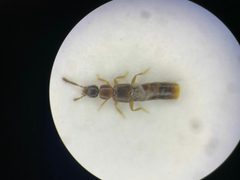
Alisalia is a of rove beetles ( Staphylinidae) containing 10 described . The genus was established by Casey in 1911 and is classified within the Aleocharinae, tribe Oxypodini, and subtribe Meoticina. Species are distributed across North America, with most described from the early 20th century and two added in 2009.
Pronunciation
How to pronounce Alisalia: /ˌælɪˈseɪliə/
These audio files are automatically generated. While they are not always 100% accurate, they are a good starting point.
Identification
Members of Alisalia can be distinguished from other Oxypodini by a combination of characters including the structure of the , pronotal shape, and male genitalia. The genus name Alisalia is feminine in gender, affecting epithet endings. Accurate identification to species level requires examination of microscopic characters and typically reference to the original descriptions by Casey (1911), Bernhauer (1909), Cameron (1922), or Klimaszewski & Webster (2009).
Images
Distribution
North America. Specific locality data varies by : A. antennalis, A. austiniana, A. brevipennis, A. delicata, A. parallela, and A. testacea were described from the United States; A. bistriata from Mexico; A. brunnea and A. picea from Central America (Cameron's localities); A. elongata and A. minuta were described from Canada (New Brunswick) in 2009.
Similar Taxa
- Other Oxypodini generaAlisalia shares the general body plan of small, compact aleocharine rove beetles with other members of the tribe Oxypodini. It is distinguished by subtle morphological characters of the , pronotum, and that require detailed examination.
More Details
Taxonomic History
The was erected by Thomas L. Casey in 1911 with A. antennalis as the type . Most species were described by Casey in that same publication. Two species were added by Cameron in 1922 from Central American material, and two additional species were described from Canada by Klimaszewski & Webster in 2009, expanding the known range northward.
Species List
The 10 described are: Alisalia antennalis Casey, 1911; Alisalia austiniana Casey, 1911; Alisalia bistriata (Bernhauer, 1909); Alisalia brevipennis Casey, 1911; Alisalia brunnea Cameron, 1922; Alisalia delicata Casey, 1911; Alisalia elongata Klimaszewski & Webster, 2009; Alisalia minuta Klimaszewski & Webster, 2009; Alisalia parallela Casey, 1911; and Alisalia picea Cameron, 1922; Alisalia testacea Casey, 1911.