
Alleculina
Laporte, 1840
comb-clawed beetles
Genus Guides
8- Alethia
- Hymenorus(comb-clawed beetles)
- Knausia
- Lobopoda
- Madreallecula
- Menoeceus
- Stenochidus
- Telesicles
Alleculina is a subtribe of comb-clawed beetles within the darkling beetle Tenebrionidae. Members of this group were formerly classified as a separate family (Alleculidae) but have been reclassified as a (Alleculinae) and subsequently as a subtribe within the Tenebrionidae. These beetles do not resemble 'classic' darkling beetles in appearance, presenting a challenge for identification. The subtribe includes such as Hymenorus.
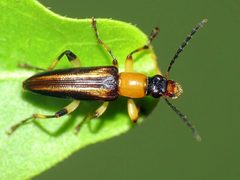
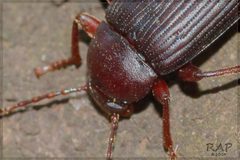
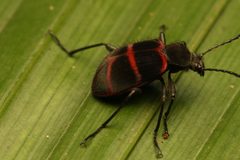
Pronunciation
How to pronounce Alleculina: /ˌælɛˈkjuːlɪnə/
These audio files are automatically generated. While they are not always 100% accurate, they are a good starting point.
Identification
Alleculina beetles can be distinguished from typical darkling beetles (Tenebrioninae) by their comb-like tarsal claws, from which their derives. Unlike many darkling beetles, they do not exhibit the slow, lumbering movement or -standing defensive seen in like Eleodes. They may superficially resemble ground beetles (Carabidae) in some features, but differ in having concealed and comb-clawed . Identification to genus or level typically requires examination of tarsal structure and other microscopic characters.
Images
Distribution
Distribution records exist for Colombia (CO), Denmark (DK), Norway (NO), and Sweden (SE), though this likely reflects limited sampling rather than the full range. As a group within the widespread Tenebrionidae, members likely occur across multiple continents.
Ecological Role
As part of the Tenebrionidae, members likely function as decomposers feeding on decaying plant matter and fungi, contributing to nutrient cycling in terrestrial .
Similar Taxa
- Carabidae (ground beetles)May resemble ground beetles in general form, but distinguished by concealed (vs. exposed in Carabidae), comb-clawed , and less rapid movement.
- Lagriinae (long-jointed beetles)Another group formerly treated as a separate , now also classified within Tenebrionidae; both Alleculina and Lagriinae represent aberrant darkling beetles that do not fit the typical darkling beetle .
- Eleodes and typical TenebrioninaeClassic darkling beetles often show slow movement, -standing defense, and wing covers in arid ; Alleculina lacks these characteristics and has distinctive comb-like tarsal claws.
More Details
Taxonomic history
Alleculina has undergone significant taxonomic revision. Formerly treated as the Alleculidae, the group was downgraded to Alleculinae within Tenebrionidae, and more recently to subtribe rank within tribe Alleculini. This reclassification reflects ongoing refinement of relationships within the superfamily Tenebrionoidea.
Identification challenges
The assimilation of Alleculina and Lagriinae into Tenebrionidae complicates field identification, as these groups do not conform to the stereotypical appearance of darkling beetles. No single morphological character is fully reliable for identification; use of dichotomous keys and microscopic examination is recommended.