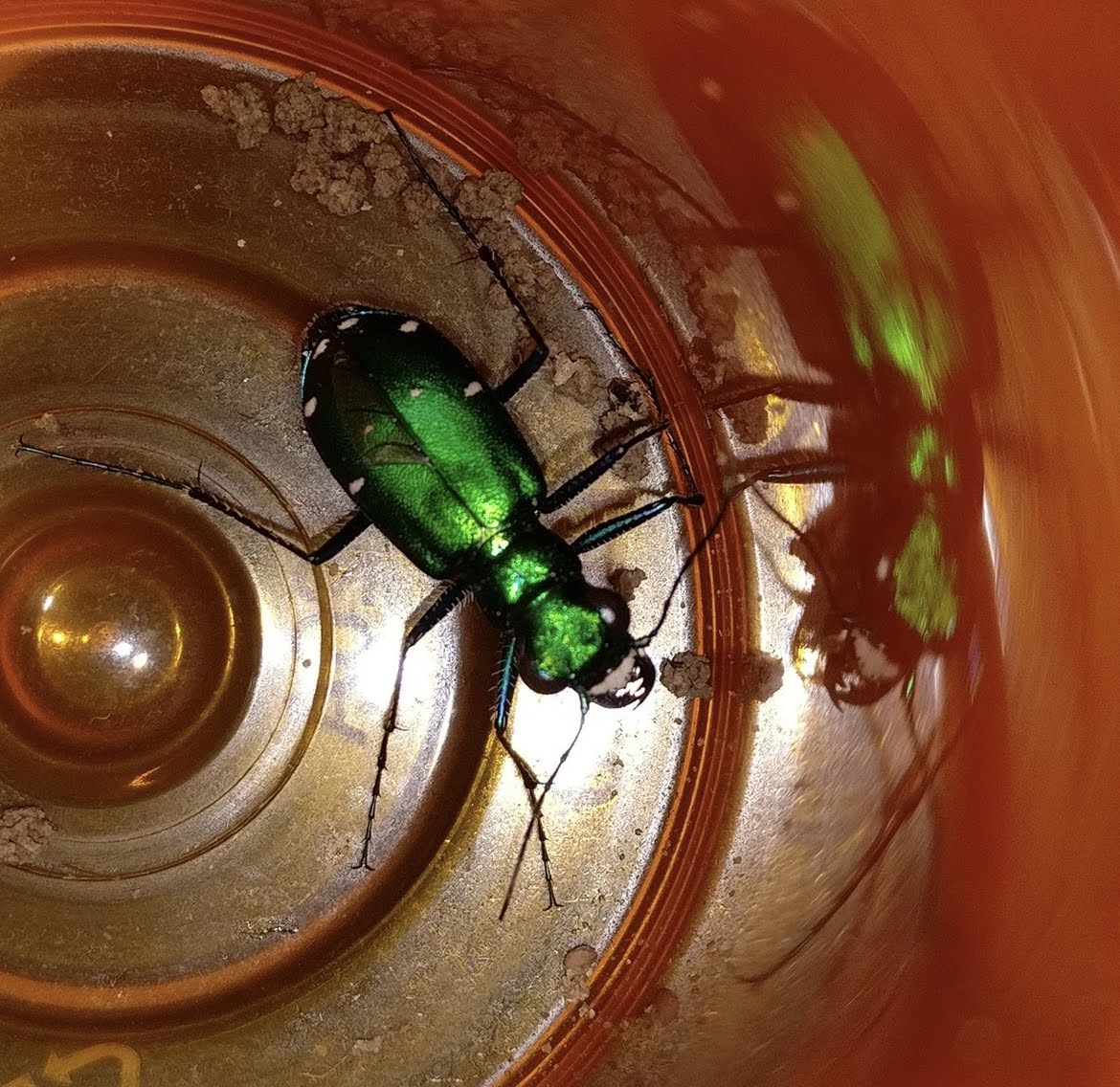
Altica prasina is a flea beetle species in the family Chrysomelidae, described by John Lawrence LeConte in 1857. The specific epithet "prasina" derives from Latin, meaning leek-green, likely referencing its coloration. As a member of the genus Altica, it possesses the enlarged hind femora characteristic of flea beetles, enabling jumping locomotion. The species occurs in North America, though detailed biological studies remain limited.
Altica texana is a species of flea beetle in the family Chrysomelidae, first described by Schaeffer in 1906. It belongs to the genus Altica, a large group of small, jumping leaf beetles commonly known as flea beetles due to their enlarged hind femora that enable them to leap when disturbed. The species is recorded from North America, though specific details about its biology and ecology remain poorly documented.
Amara angustata is a ground beetle species in the family Carabidae, native to North America. The species was first described by Thomas Say in 1823. It is currently recognized as a valid species in GBIF and iNaturalist databases, though Catalogue of Life lists it as an ambiguous synonym. The species belongs to the large genus Amara, which comprises numerous ground beetle species distributed across the Holarctic region.
Amara apachensis is a ground beetle species in the family Carabidae, first described by Casey in 1884. It belongs to the large genus Amara, which comprises numerous species of small to medium-sized beetles commonly found in diverse terrestrial habitats. The species is known from the United States, with distribution records indicating presence in North America. Like other members of Carabidae, it is presumed to be predatory or omnivorous, though specific ecological details remain poorly documented.
Amara aurata is a species of ground beetle in the family Carabidae, first described by Dejean in 1828. It belongs to the large genus Amara, which contains numerous species distributed across North America and other regions. As a member of Carabidae, it is part of a diverse family of predatory beetles commonly known as ground beetles.
Amara avida is a ground beetle species in the family Carabidae, first described by Thomas Say in 1823. It belongs to the large genus Amara, which contains numerous species of small to medium-sized carabid beetles found across North America. The species is recorded from Canada and the United States.
Amara bokori is a ground beetle species in the family Carabidae, described by Csiki in 1929. It belongs to the large genus Amara, which contains numerous species distributed across the Northern Hemisphere. The species has been recorded from holarctic regions including Alaska, Canada, Russia, and the contiguous United States.
Amara californica is a black-colored ground beetle in the family Carabidae. It belongs to the large genus Amara, which contains numerous species of small to medium-sized carabid beetles. The species has two recognized subspecies: A. c. californica and A. c. costaricensis.
Amara californica californica is a subspecies of ground beetle in the family Carabidae, first described by Dejean in 1828. It belongs to the genus Amara, a large and widespread group of carabid beetles commonly known as sun beetles. The subspecies designation indicates geographic variation within the species Amara californica, which is found in western North America.
Amara carinata is a species of ground beetle in the family Carabidae. It is native to North America, with documented occurrences in Canada and the United States. As a member of the genus Amara, it belongs to a diverse group of ground beetles commonly known as sun beetles or seed beetles.
Amara convexa is a seed-eating ground beetle in the family Carabidae. The species occurs in North America, with records from Canada and the United States. It belongs to the large genus Amara, which contains numerous similar-looking ground beetle species. As a member of the tribe Zabrini, it exhibits the typical morphology of seed-eating carabids.
Amara deparca is a ground beetle species in the family Carabidae, described by Thomas Say in 1830. It belongs to the large genus Amara, which contains numerous species of small to medium-sized carabid beetles found primarily in the Northern Hemisphere. Records indicate presence in Mexico and the United States.
Amara ellipsis is a species of seed-eating ground beetle in the family Carabidae. It was originally described as Celia ellipsis by Casey in 1918. The species is found in North America, with records from Canada and the United States. As a member of the genus Amara, it belongs to a group of ground beetles commonly known as sun beetles or seed beetles.
Rumble-backed Sunshiner
Amara eurynota is a species of seed-eating ground beetle in the family Carabidae. It occurs in North America and has also been recorded in parts of Europe including the former Yugoslavia, Albania, and Algeria. The species belongs to the large genus Amara, which comprises numerous ground beetle species commonly found in open habitats. It is known by the common name "Rumble-backed Sunshiner."
Amara gibba is a species of ground beetle in the family Carabidae, first described by John Lawrence LeConte in 1847. It belongs to the large genus Amara, which comprises numerous species of small to medium-sized carabid beetles distributed across the Northern Hemisphere. The species is recorded from North America, specifically from Canada and the United States. As with many members of genus Amara, specific ecological details remain poorly documented in accessible literature.
Amara harpalina is a species of ground beetle in the family Carabidae, described by John Lawrence LeConte in 1855. It belongs to the large genus Amara, which contains numerous species distributed across North America. The species is known from the United States with confirmed records of occurrence.
Amara impuncticollis is a ground beetle in the family Carabidae, first described by Thomas Say in 1823. The species is characterized by its seed-eating habit, distinguishing it from many predatory ground beetles. It occurs across North America, with records from Alaska, Canada, and the contiguous United States. Like other members of the genus Amara, it is associated with open, often disturbed habitats where seeds are abundant.
Amara musculis is a small ground beetle in the family Carabidae, originally described by Thomas Say in 1823 as Feronia musculis. It belongs to the genus Amara, a large group of seed-eating carabid beetles commonly known as sun beetles. The species is found in North America and measures 3.9–6.5 mm in length.
seed-eating ground beetle
Amara otiosa is a species of ground beetle in the family Carabidae, described by Casey in 1918. It is known to occur in North America, with records from the United States and Canada (Manitoba, New Brunswick). The species is classified as a seed-eating ground beetle, indicating a diet focused on seeds rather than predation.
Amara pallipes is a seed-eating ground beetle in the family Carabidae. The species is native to North America and has been recorded in Canada and the United States. As a member of the genus Amara, it belongs to a group of carabid beetles commonly known as sun beetles or seed beetles, many of which are associated with open habitats.
Red Harp Ground Beetle
Amara rubrica is a seed-eating ground beetle in the family Carabidae. It was described by Haldeman in 1843. The species is known to occur in North America, including Canada and the United States. As a member of the genus Amara, it belongs to a group of beetles commonly referred to as harp ground beetles.
A ground beetle species described by Hatch in 1949. It belongs to the genus Amara, a large and widespread group of carabid beetles commonly known as sun beetles or seed-eating ground beetles. The specific epithet 'sanjuanensis' suggests an association with the San Juan Islands or a San Juan geographic feature in the Pacific Northwest region of North America.
Amara sodalicia is a species of ground beetle in the family Carabidae, described by Thomas Casey in 1924. It belongs to the genus Amara, a large and widespread group of carabid beetles commonly known as sun beetles or seed-eating ground beetles. The species is recorded from the United States.
Amara spuria is a species of ground beetle in the family Carabidae, described by Lindroth in 1968. It belongs to the large genus Amara, commonly known as sun beetles. The species has been recorded from Alaska, Canada, and the contiguous United States.
Amara transberingiensis is a species of ground beetle in the family Carabidae. As a member of the large genus Amara, it belongs to a group of small to medium-sized carabid beetles commonly found in diverse terrestrial habitats. The specific epithet "transberingiensis" suggests a geographic association with the Bering region, though detailed ecological and distributional data for this species remain limited. Like other Amara species, it is likely a generalist predator or omnivore, but specific dietary and behavioral traits have not been documented.
Amarochara duryi is a species of rove beetle (family Staphylinidae) described by Casey in 1906. It belongs to the large subfamily Aleocharinae, one of the most diverse groups within Staphylinidae. The species is known from scattered records across northeastern North America, with documented occurrences in Canada (New Brunswick, Quebec) and the United States (Iowa, Illinois, Massachusetts). Like other aleocharine rove beetles, it is likely associated with decaying organic matter and moist microhabitats, though specific ecological details remain poorly documented.
Fenyes's Minute Rove Beetle
A small rove beetle in the genus Amarochara, described by Blatchley in 1910. It is one of 25 valid species recognized in the Holarctic revision of the genus. The species belongs to a group characterized by specific morphological traits and shares the genus-wide trait of apparently utilizing subterranean habitats for reproduction and hibernation.
Amblonoxia fieldi is a species of scarab beetle in the family Scarabaeidae. It was described by Fall in 1908. The species belongs to the subfamily Melolonthinae, commonly known as May beetles or June beetles. Very little specific information is available about this particular species in the published literature.
Beech False Darkling Beetle
Amblyctis praeses is a small false darkling beetle in the family Melandryidae, described by John Lawrence LeConte in 1879. It is known from eastern Canada, specifically Ontario and Québec. The species has received limited scientific attention, with minimal published information on its biology and ecology.
A small histerid beetle of the genus Amblyderus, recognized as an adventive species in certain regions. Members of this genus are generally associated with decaying organic matter and are often found in dung, carrion, or compost habitats. The specific epithet 'adventive-sp' suggests this represents a non-native or recently introduced population. As with many histerids, it likely serves as a predator or scavenger in decomposing substrates.
Amblyderus granularis is a small antlike flower beetle in the family Anthicidae, characterized by its compact body form and granular surface texture. The species was described by John Lawrence LeConte in 1850 and is known from eastern North America. Like other members of Anthicidae, it exhibits morphological convergence with ants, including an elongated pronotum and constricted body segments.
Amblyderus parviceps is a species of antlike flower beetle in the family Anthicidae, described by Casey in 1895. It is distributed across Central America and North America. The species belongs to a family commonly known as antlike flower beetles due to their resemblance to ants in form and behavior. Like other members of Anthicidae, it is likely associated with flowers and vegetation, though specific ecological details remain poorly documented.
Amblygnathus mexicanus is a species of ground beetle in the family Carabidae. It was described by Bates in 1882 and occurs in North America, with records from Mexico, Panama, and the United States. Like other members of the genus Amblygnathus, it is a ground-dwelling beetle, though specific ecological details remain poorly documented in published literature.
Ammodonus fossor is a species of darkling beetle (family Tenebrionidae) described by LeConte in 1847. The species epithet "fossor" (Latin for "digger") suggests fossorial (burrowing) habits, though specific behavioral documentation is limited. It is recorded from Ontario, Canada, with relatively few observations available. As a member of Tenebrionidae, it belongs to a large and diverse family of beetles primarily associated with arid and semi-arid environments, though many species occupy varied habitats.
Ammodonus tropicus is a species of darkling beetle in the family Tenebrionidae, described by Kirsch in 1866. It belongs to the tribe Ammodoniini, a group of small to medium-sized tenebrionids often associated with sandy or arid habitats. The species epithet 'tropicus' suggests a tropical distribution, which aligns with records from Colombia and Mexico.
Ampedus fuscatus is a click beetle in the family Elateridae, described from North America by Melsheimer in 1845. Like other members of the genus Ampedus, it possesses the characteristic prosternal process that produces the clicking mechanism for which the family is named. The species has been documented in Ontario, Canada, with limited observational records available.
Ampedus horni is a species of click beetle in the family Elateridae. The species belongs to the tribe Ampedini, a group characterized by often vivid coloration. Like other click beetles, it possesses the family-diagnostic prosternal process that enables the characteristic 'clicking' escape mechanism.
Sorrowful Click Beetle
Ampedus luctuosus is a click beetle in the family Elateridae, distributed across central and eastern Canada. The species is known from limited observations, with 11 records on iNaturalist. Like other members of its genus, it possesses the characteristic click mechanism that allows beetles to right themselves when overturned.
Ampedus melsheimeri is a species of click beetle (family Elateridae) described by Leng in 1918. The species belongs to a genus of beetles commonly associated with decaying wood and fungal substrates. Records indicate it occurs in central and eastern Canada, with scattered observations suggesting it may be uncommon or undercollected. As with many Ampedus species, detailed natural history information remains limited.
Ampedus nigricans is a click beetle species in the family Elateridae, first described by Germar in 1844. It is distributed across central and eastern Canada, with records from Alberta, Manitoba, New Brunswick, Nova Scotia, and Ontario. As a member of the click beetle family, it possesses the characteristic prosternal process that enables the distinctive clicking mechanism used for righting itself when overturned.
Red Click Beetle
Ampedus rubricus, commonly known as the Red Click Beetle, is a species of click beetle in the family Elateridae. The species was described by Thomas Say in 1825 and is native to eastern Canada. Adults are characterized by their reddish coloration and possess the family's namesake clicking mechanism for righting themselves when overturned. The species is relatively well-documented on citizen science platforms with over 300 observations recorded.
Ampedus sanguinipennis is a click beetle in the family Elateridae, native to eastern North America. The species name "sanguinipennis" refers to the blood-red wing coloration characteristic of this beetle. It is one of numerous Ampedus species distinguished by bright coloration, often in red or orange tones. Records indicate presence in eastern Canada and the northeastern United States.
Ampedus sayi is a species of click beetle in the family Elateridae, described by John Lawrence LeConte in 1853. It belongs to the genus Ampedus, which comprises numerous species of small to medium-sized beetles characterized by their ability to produce an audible clicking sound. The species is known from eastern Canada, with records from New Brunswick, Nova Scotia, and Ontario. As with other elaterids, it possesses a prosternal process that fits into a mesosternal groove, enabling the characteristic 'click' mechanism for righting itself when overturned.
Ampedus xanthomus is a click beetle in the family Elateridae. The species is known from a small number of observations, indicating it is either rare, poorly sampled, or restricted in range. As a member of the genus Ampedus, it possesses the characteristic click mechanism for righting itself when overturned. The specific epithet 'xanthomus' refers to yellow coloration, likely of body parts. Detailed biological information remains limited due to its rarity in collections and observations.
horned powder-post beetles
Amphicerus is a genus of horned powder-post beetles in the family Bostrichidae, established by LeConte in 1861. The genus comprises approximately 14 described species. Members are wood-boring beetles, with at least some species associated with woody plants including grapevines and pomegranates. The genus has been documented as a host for parasitoid wasps in the subfamily Doryctinae (Braconidae).
horned powder-post beetle
Amphicerus teres is a species of horned powder-post beetle in the family Bostrichidae. The species was described by Horn in 1878. It is known from North America. The common name "powder-post beetle" refers to the larval habit of boring into wood and reducing it to a fine, powdery frass.
Amphichroum maculatum is a species of rove beetle in the family Staphylinidae, subfamily Omaliinae. It is a small beetle found in western North America, with records from British Columbia south through Washington, Oregon, and California, and east to Nevada. The specific epithet "maculatum" (spotted) suggests a patterned appearance, though detailed morphological descriptions are limited in available sources. As a member of the Omaliinae, it likely inhabits moist terrestrial environments where these beetles are commonly encountered.
sap-feeding beetle
Amphicrossus ciliatus is a species of sap-feeding beetle in the family Nitidulidae. It occurs across a broad geographic range spanning the Caribbean Sea, Central America, and North America. As a member of Nitidulidae, it is associated with fermenting plant materials, sap flows, and fungal substrates.
Amphicyrta dentipes is a species of pill beetle in the family Byrrhidae. It belongs to a genus of small, compact beetles adapted to moist habitats. The species epithet "dentipes" refers to toothed feet, a characteristic feature of this group. Very little specific information has been published about this particular species.
trout-stream beetle
Amphizoa striata is a species of trout-stream beetle in the family Amphizoidae, found in western North America. It measures 13–15 millimeters in length and possesses distinctive morphological features on its front tarsi, including a well-developed groove on the posterior surface and grooves bearing long hair-like setae. The species inhabits cold, fast-flowing streams in the Pacific Northwest.