
Ampedus rubricus
(Say, 1825)
Red Click Beetle
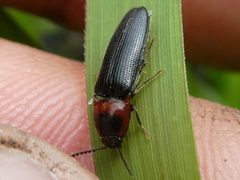
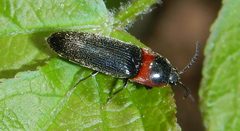
Ampedus rubricus, commonly known as the Red Click Beetle, is a of click beetle in the Elateridae. The species was described by Thomas Say in 1825 and is native to eastern Canada. are characterized by their reddish coloration and possess the family's namesake clicking mechanism for righting themselves when overturned. The species is relatively well-documented on citizen science platforms with over 300 observations recorded.
Pronunciation
How to pronounce Ampedus rubricus: /ˈæmpɪdəs ˈruːbrɪkəs/
These audio files are automatically generated. While they are not always 100% accurate, they are a good starting point.
Identification
The combination of uniformly reddish coloration, serrate , and the typical Ampedus body shape (elongate, somewhat flattened, parallel-sided) distinguishes this . It lacks the black and yellow or black and red patterning seen in many such as Ampedus nigricollis or Ampedus balteatus. Examination of the prosternal process and its fit into the mesosternal cavity may be required for definitive identification, as coloration alone can be variable and similar species exist.
Images
Habitat
Associated with wooded areas and forests. Larvae of Ampedus generally develop in decaying wood, suggesting this species occupies with sufficient dead wood substrate. are often found on vegetation or at light.
Distribution
Eastern Canada: recorded from Manitoba, New Brunswick, Nova Scotia, Ontario, and Prince Edward Island. The distribution appears centered in the eastern and central Canadian provinces, with no confirmed records from the United States or western Canada in available data.
Seasonality
activity period is not precisely documented, but based on related and iNaturalist observation patterns, adults are likely active from late spring through summer (approximately May to August).
Behavior
possess the characteristic clicking mechanism of Elateridae: a prosternal spine engages with a mesosternal groove to produce a violent snap that can launch the into the air, allowing it to right itself when on its back. This is shared across the and has been observed in this .
Ecological Role
Larvae of Ampedus are generally saproxylic, developing in decaying wood and contributing to wood decomposition and nutrient cycling in forest . may serve as prey for birds and other .
Human Relevance
No significant economic or agricultural impact documented. Occasionally encountered by naturalists and photographed for citizen science platforms. Not known to be a pest of crops or stored products.
Similar Taxa
- Ampedus nigricollisSimilar size and body form, but distinguished by black pronotum contrasting with reddish ; A. rubricus has uniformly reddish coloration.
- Ampedus balteatusOverlapping distribution and similar ; distinguished by black with yellow or reddish transverse bands or markings, versus uniform reddish coloration in A. rubricus.
- Ampedus sanguinolentusSimilar reddish coloration; may require examination of structural characters such as pronotal shape and prosternal-mesosternal junction for definitive separation.
More Details
Taxonomic note
The Ampedus has undergone taxonomic revision, and some former have been moved to other genera. A. rubricus remains in Ampedus as currently classified. The authority citation as (Say, 1825) indicates the species was originally described in a different genus (likely Elater) and later transferred to Ampedus.
Data quality
Much of the available information for this comes from citizen science observations (iNaturalist) and specimen records (GBIF). Detailed biological studies specifically targeting this species appear limited in the published literature.