
Amblyctis praeses
LeConte, 1879
Beech False Darkling Beetle
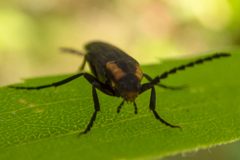
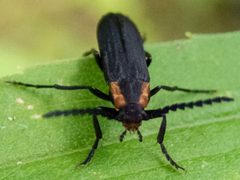
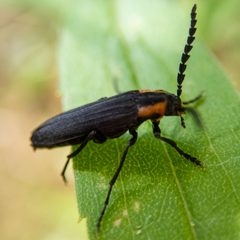
Amblyctis praeses is a small in the Melandryidae, described by John Lawrence LeConte in 1879. It is known from eastern Canada, specifically Ontario and Québec. The has received limited scientific attention, with minimal published information on its and .
Pronunciation
How to pronounce Amblyctis praeses: /æmˈblɪktɪs ˈpreɪsiːz/
These audio files are automatically generated. While they are not always 100% accurate, they are a good starting point.
Identification
Members of the Amblyctis are small to medium-sized beetles with elongate bodies and moderately long . Specific diagnostic features for A. praeses have not been published in readily accessible literature. The may be distinguished from other Melandryidae by examination of male genitalia and subtle differences in body proportions, though these require knowledge.
Images
Habitat
The suggests association with beech (Fagus) trees, though this relationship has not been formally documented in published sources.
Distribution
Recorded from Ontario and Québec, Canada. No published records from the United States are known.
Host Associations
- Fagus - suspectedImplied by 'Beech ', but not confirmed in published literature
Similar Taxa
- Other Amblyctis species-level similarity in body form; requires examination of and other fine structural characters for reliable separation
- Other Melandryidae genera-level resemblance in general habitus; differs in antennal structure, tarsal formula, and other technical characters
More Details
Nomenclatural note
The specific epithet 'praeses' is Latin for 'guardian' or 'protector', though the etymological significance is unknown
Data scarcity
Only one iNaturalist observation exists for this , and it is rarely encountered in entomological collections. Published biological information is essentially absent