
Melandryidae
Leach, 1815
False Darkling Beetles
Subfamily Guides
2- Malandryinae
- Osphya(false darkling beetles)
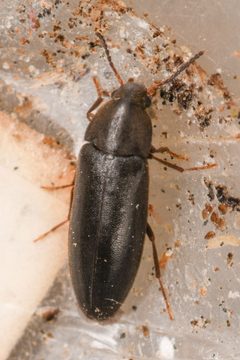
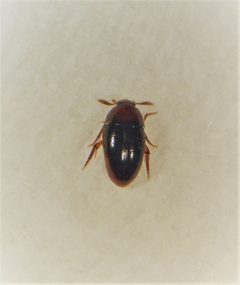
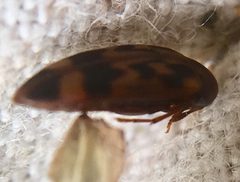
, or , is a of beetles in the superfamily Tenebrionoidea containing approximately 420 in 60 . Members are found worldwide and are primarily associated with rotting wood and wood-decomposing fungi in both larval and stages. The family has a fossil record extending back to at least the mid-Cretaceous (Albian-Cenomanian) with specimens in Burmese amber, and the tribe Hypulini is documented from late Eocene Baltic amber. Many species are saproxylic, inhabiting dead and decaying wood in forest .
Pronunciation
How to pronounce Melandryidae: //mɛlænˈdɹɪɪˌdiː//
These audio files are automatically generated. While they are not always 100% accurate, they are a good starting point.
Identification
can be distinguished from true darkling beetles (Tenebrionidae) by their association with rotting wood and fungi rather than arid environments, and by various morphological features of the and . Within the , such as Marolia are characterized by specific setal patterns—M. alicantina is the only European Marolia with erect setae on the and pronotum. identification often relies on pronotal punctuation , pronotal base shape, and male genitalia () structure.
Images
Habitat
Forest , primarily associated with rotting wood and wood-decomposing fungi. Specific documented habitats include Quercus rotundifolia (holm oak) forests in Spain, Leigongshan National Nature Reserve in Guizhou Province, China, and various forest types across Lithuania. The Eocene fossil Madelinia gedanoposita originated from northern European Eocene forests preserved in Baltic amber.
Distribution
Worldwide distribution. Documented occurrences include: Europe (Lithuania with 19 confirmed , Spain, Croatia, Greece), Asia (China with at least nine Melandrya species, Myanmar for mid-Cretaceous fossils), North Africa (Morocco/Algeria for Marolia grandis), and North America (Colombia, Denmark, Norway, Sweden, Vermont USA per GBIF). The oldest fossils are from mid-Cretaceous Burmese amber of Myanmar.
Diet
Associated with wood-decomposing fungi; specific dietary details beyond this association are not documented.
Host Associations
- Quercus rotundifolia - /collection siteAll specimens of Marolia alicantina collected using window traps on this oak in Spain
- Wood-decomposing fungi - associationLarvae and generally associated with rotting wood and wood-decomposing fungi
Life Cycle
Larval and stages described for Serropalpus coxalis; larvae and pupae have been documented. Complete with , larva, pupa, and adult stages, though specific developmental timing is not well documented across the .
Behavior
Many are flightless and saproxylic, inhabiting dead wood and forest litter. Window trap collections suggest some species are attracted to or captured in association with standing or fallen dead wood.
Ecological Role
Saproxylic beetles contributing to wood decomposition and nutrient cycling in forest through association with rotting wood and wood-decomposing fungi.
Human Relevance
Subject of taxonomic and faunistic research; some serve as indicators of forest quality and dead wood availability. No documented agricultural or economic significance.
Similar Taxa
- TenebrionidaeTrue darkling beetles; distinguished by arid preferences and different morphological features of and
- TetratomidaeRelated in Tenebrionoidea; historically confused or grouped with , separated based on morphological and ecological differences
More Details
Fossil Record
The has a significant fossil record. The oldest fossils are from mid-Cretaceous (Albian-Cenomanian) Burmese amber of Myanmar. The extinct Madelinia gedanoposita from late Eocene Baltic amber establishes that the tribe Hypulini dates back to at least the Eocene epoch.
Taxonomic History
Authored by Leach in 1815. Formerly included Tetratomidae, which is now treated as a separate . Classification within Tenebrionoidea has been refined through molecular and morphological studies.
Sources and further reading
- BugGuide
- Wikipedia
- GBIF taxonomy match
- iNaturalist taxon
- NCBI Taxonomy
- Catalogue of Life
- The first new genus of the tribe Hypulini Seidlitz (Coleoptera: Melandryidae) described from late Eocene Baltic amber
- Description of Marolia alicantina sp. nov. (Coleoptera: Melandryidae) from Spain and new distribution records of Marolia species
- Faunistic review of Tetratomidae and Melandryidae (Coleoptera: Tenebrionoidea) in Lithuania with an annotated checklist of the species
- An unusual new species of Melandrya Fabricius, 1801 (Coleoptera: Melandryidae) with new distributional notes for two additional Melandrya from Southwest China
- The Life History of Serropalpus coxalis, with a Description of the Larva and Pupa (Coleoptera: Melandryidae)
- A study on the Melandryidae (Coleoptera) of Mount Leigong, Guizhou Province, Southwest China, with descriptions of three new species and a checklist of Chinese melandryid species.