
Osphya
Illiger, 1807
false darkling beetles
Species Guides
2- Osphya lutea
- Osphya varians(Variable False Darkling Beetle)
Osphya is a of false darkling beetles (Coleoptera: Melandryidae: Osphyinae) comprising approximately seven to ten described . The genus originated in the mid-Cretaceous and exhibits a discontinuous, uneven distribution across the Northern Hemisphere, with highest in the Mediterranean region of Europe. It is considered a relict insect group with conservative ecological preferences.
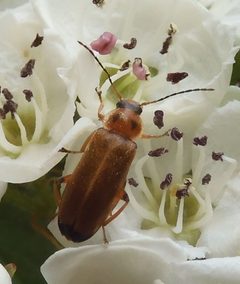
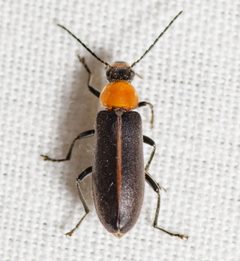
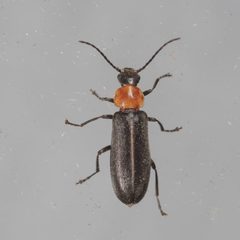
Pronunciation
How to pronounce Osphya: //ˈɒs.fi.ə//
These audio files are automatically generated. While they are not always 100% accurate, they are a good starting point.
Identification
Members of Osphya can be distinguished from other Melandryidae by their placement in the Osphyinae. The is characterized by morphological features including specific antennal and body structures that separate it from related false darkling beetles. A key to East Asian has been published based on morphological characters.
Images
Habitat
Warm, stable, and rainy climates. High suitability areas are concentrated in the European Mediterranean region and the western coast of the USA. In Asia, suitable is restricted to small patches in northeast Afghanistan, southwest India, and parts of southern China.
Distribution
Northern Hemisphere only. Discontinuous distribution across three main regions: USA (western coast, south end, and eastern region separated by Rocky Mountains into three isolated areas), Mediterranean Europe (including westernmost Asia, with highest —9 , 32%), and South and East Asia (13 narrowly distributed species). Specific records from Denmark, Norway, Sweden, and Chinese mainland (Shennongjia National Natural Reserve, Hubei).
Behavior
The shows a conservative preference for warm, stable, rainy climates. Modeling studies indicate a tendency to expand distribution toward higher latitudes in response to climate warming from past to future conditions.
Ecological Role
Considered a relict insect group of conservation concern. Asian are at particular risk due to narrow geographic distributions and may vanish without collection efforts. The serves as a subject for studying and macroecological responses to long-term climate change.
Human Relevance
Subject of biogeographic and climate change research due to its relict status and sensitivity to climate warming. Conservation attention is warranted, particularly for narrowly distributed Asian .
Similar Taxa
- Other Melandryidae generaOsphya is distinguished by its placement in the Osphyinae; other false darkling beetles belong to different subfamilies within Melandryidae
More Details
Taxonomic uncertainty
counts vary between sources: Wikipedia lists about seven described species, while recent literature cites up to 28 species. Several new species were described in 2025 from China.
Phylogenetic placement
Mitochondrial -based places Osphya within Tenebrionoidea, with O. sinensis sister to O. bipunctata.
Sources and further reading
- BugGuide
- Wikipedia
- GBIF taxonomy match
- iNaturalist taxon
- NCBI Taxonomy
- Catalogue of Life
- First Record of Osphya (Melandryidae: Osphyinae) from Chinese Mainland Based on Morphological Evidence and Mitochondrial Genome-Based Phylogeny of Tenebrionoidea
- Climate Change Impacts on the Potential Distribution Pattern of Osphya (Coleoptera: Melandryidae), an Old but Small Beetle Group Distributed in the Northern Hemisphere