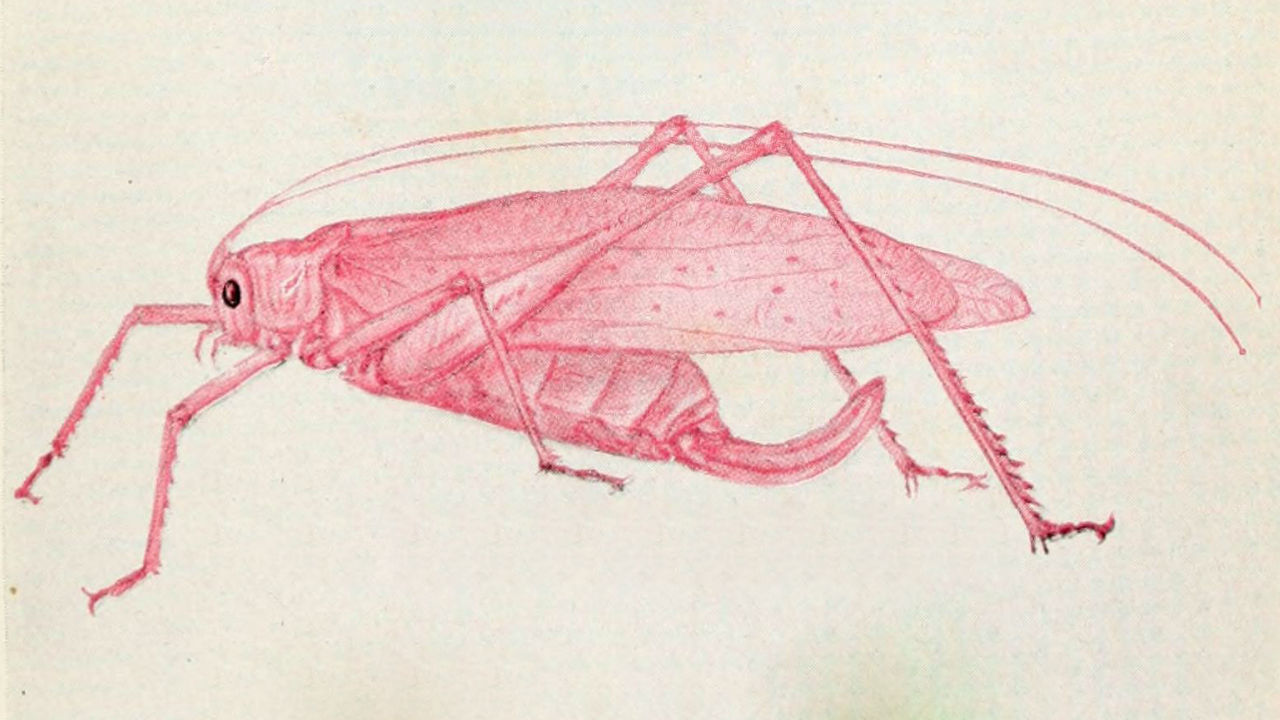
California thread-leg katydid, short-tail thread-leg katydid
Arethaea brevicauda is a species of phaneropterine katydid in the family Tettigoniidae, commonly known as the California thread-leg katydid or short-tail thread-leg katydid. It is characterized by its slender, thread-like legs and relatively short cerci compared to other members of the genus. The species is native to western North America and is active primarily during the warmer months.
Carita thread-leg katydid
Arethaea carita is a species of phaneropterine katydid in the family Tettigoniidae, described by Scudder in 1902. It is commonly known as the Carita thread-leg katydid. The species belongs to the genus Arethaea, a group characterized by their slender, thread-like legs. It occurs in North America with confirmed records from the southwestern United States and Mexico.
Mojave Thread-leg Katydid, Coyotero Thread-leg Katydid
Arethaea coyotero is a species of phaneropterine katydid in the family Tettigoniidae, commonly known as the Mojave thread-leg katydid or coyotero thread-leg katydid. The species was described by Hebard in 1935. It belongs to the genus Arethaea, a group characterized by their elongated, thread-like hind legs. Distribution records indicate presence in Arizona and Nevada.
thin-footed thread-leg katydid
Arethaea gracilipes is a species of phaneropterine katydid in the family Tettigoniidae, commonly known as the thin-footed thread-leg katydid. The species was described by Thomas in 1870 and is found in North America. It is characterized by its slender, thread-like legs that give the species its common name. The genus Arethaea is part of the tribe Insarini, a group of katydids known for their elongated, delicate morphology.
Stilt-walker Katydid
Arethaea grallator, commonly known as the stilt-walker katydid, is a species of phaneropterine katydid in the family Tettigoniidae. It was described by Scudder in 1877 and is found in North America, with confirmed records from Oklahoma and Texas. The species belongs to a genus characterized by elongated, slender body proportions.
Mescalero Thread-leg Katydid
Arethaea mescalero is a species of thread-leg katydid in the family Tettigoniidae, described by Hebard in 1936. This phaneropterine katydid is endemic to sand dune habitats in the southwestern United States, particularly in New Mexico. The species is characterized by its slender, elongated legs adapted for life in sandy environments. It is one of several species in the genus Arethaea, commonly known as thread-leg katydids, which are specialized for sandy habitats.
Eastern Thread-leg Katydid
Arethaea phalangium is a katydid species in the family Tettigoniidae, commonly known as the eastern thread-leg katydid. It belongs to the genus Arethaea, which is characterized by species with extremely slender, thread-like legs—an adaptation referenced in both the genus name and the specific epithet 'phalangium' (meaning 'spider-like'). The species is found in the southeastern United States.
Rio Grande thread-leg katydid, Rio Grande katydid
Arethaea phantasma is a species of phaneropterine katydid in the family Tettigoniidae, commonly known as the Rio Grande thread-leg katydid. It was described by Rehn & Hebard in 1914. The species is characterized by extremely slender, thread-like legs that give the genus its common name. It occurs in sand dune habitats and arid regions of the southwestern United States and northern Mexico.
Southern Yellow-winged Grasshopper, Southern Yellowwinged Grasshopper
Arphia granulata is a band-winged grasshopper in the family Acrididae, commonly known as the southern yellow-winged grasshopper. It is native to North America, with confirmed records from Florida and Georgia. The species belongs to the genus Arphia, which includes several other yellow-winged and red-winged grasshoppers with similar flight displays and habitat preferences.
Asemoplus is a genus of short-horned grasshoppers in the family Acrididae, established by Scudder in 1897. The genus comprises at least three described species: Asemoplus hispidus, A. montanus (Montana grasshopper), and A. sierranus. It belongs to the tribe Podismini within the subfamily Melanoplinae. The genus is native to western North America.
Montana Grasshopper
Asemoplus montanus, commonly known as the Montana grasshopper, is a species of spur-throated grasshopper in the family Acrididae. The species was originally described by Bruner in 1885 under the genus Bradynotes. It is currently classified within the genus Asemoplus, which belongs to the tribe Podismini. The species is found in North America, with confirmed distribution records from Washington state.
Asemoplus sierranus is a species of short-horned grasshopper in the family Acrididae, first described by Hebard in 1936. It belongs to the subfamily Melanoplinae and tribe Podismini. The species is known from California and broader North America. It is a member of the genus Asemoplus, which comprises small to medium-sized grasshoppers.
shield-backed katydids
Ateloplus is a genus of shield-backed katydids in the family Tettigoniidae, first described by Scudder in 1894. The genus contains approximately eight described species, distributed primarily in the southwestern United States. Species within this genus are characterized by their shield-like pronotum that extends over the abdomen, a trait common to the shield-backed katydid group. The genus includes the yellow shieldback (Ateloplus luteus), named for its distinctive coloration.
Coconino Shieldback
Ateloplus coconino is a shield-backed katydid species described by Hebard in 1935. It belongs to the family Tettigoniidae, a group commonly known as bush crickets or katydids. The species is known from the southwestern United States, with records from Arizona and California. As a member of the genus Ateloplus, it possesses the characteristic shield-like pronotum that extends backward over the abdomen, a trait that gives these insects their common name.
Western Shieldback
Ateloplus hesperus, commonly known as the Western Shieldback, is a species of katydid in the family Tettigoniidae. First described by Hebard in 1934, this insect is native to western North America, with confirmed distribution records from California. It belongs to the shieldback katydids, a group characterized by their distinctive pronotal morphology. The species is part of the diverse Orthoptera fauna of the western United States, though detailed biological studies remain limited.
Yellow Shieldback
Ateloplus luteus, commonly known as the yellow shieldback, is a species of shield-backed katydid in the family Tettigoniidae. It is found in North America, with confirmed distribution records from Arizona. The species was described by Caudell in 1907. As a member of the shield-backed katydid group, it possesses the characteristic enlarged pronotum that extends backward over the abdomen, giving these insects their common name.
Schwarz's Shieldback
Ateloplus schwarzi is a species of shield-backed katydid in the family Tettigoniidae. It is found in North America, with distribution records from Arizona. The species was described by Caudell in 1907. As a member of the shield-backed katydid group, it possesses the characteristic enlarged pronotum that extends backward over the abdomen.
Eastern Shieldbacks
Atlanticus is a genus of katydids in the family Tettigoniidae, commonly known as eastern shieldbacks. The genus comprises at least 50 described species distributed discontinuously across North America and temperate eastern Asia. These insects belong to the tribe Drymadusini within the subfamily Tettigoniinae. Species in this genus are predatory, possessing enlarged mandibles adapted for capturing and consuming other insects.
American shieldback, American shield-bearer
Atlanticus americanus, commonly known as the American shieldback or American shield-bearer, is a species of shield-backed katydid in the family Tettigoniidae. It is found in North America. The species was first described by Saussure in 1859 and includes two recognized subspecies: Atlanticus americanus americanus and Atlanticus americanus hesperus.
robust shieldback, robust shield-bearer
Atlanticus gibbosus, commonly called the robust shieldback or robust shield-bearer, is a species of shield-backed katydid in the family Tettigoniidae. It is found in the southeastern United States, with records from Alabama, Florida, Georgia, and South Carolina. The species is part of the subfamily Tettigoniinae and tribe Drymadusini, characterized by the shield-like pronotum that extends backward over the abdomen.
Atlanticus glaber is a North American katydid (family Tettigoniidae) in the tribe Drymadusini. The species is known from Florida and has been documented as prey of the Great Golden Digger wasp (Sphex ichneumoneus). Like other members of the genus Atlanticus, it belongs to a group of shield-backed katydids with terrestrial habits.
Atascosa Gem Grasshopper
Aztecacris gloriosa is a species of spur-throated grasshopper in the family Acrididae, commonly known as the Atascosa Gem Grasshopper. The species name refers to its type locality near Atascosa Peak in Arizona. It is a small grasshopper measuring 16–25 mm in length and is restricted to the southwestern United States and Mexico.
groundhoppers, pygmy grasshoppers
Batrachideinae is a taxonomically stable subfamily of pygmy grasshoppers (Tetrigidae) characterized by antennae with 18–22 segments, distinguishing them from other Tetrigidae which have fewer than 16. The subfamily comprises approximately 25 genera in three tribes with pantropical distribution across the Americas, Africa, tropical Asia, and Australia. It is particularly diverse in the Neotropical region, where the genus Scaria exhibits complex biogeographic patterns linked to Amazonian diversification and Andean uplift.
short-winged coneheads
Belocephalus is a genus of short-winged conehead katydids comprising approximately eight described species. Members of this genus are characterized by abbreviated wing development and are endemic to the southeastern United States. The genus was established by Scudder in 1875 and belongs to the tribe Copiphorini within the subfamily Conocephalinae.
Davis's conehead
Belocephalus davisi, commonly known as Davis's conehead, is a species of katydid in the family Tettigoniidae. It belongs to the tribe Copiphorini, a group characterized by their distinctive cone-shaped head projections. The species was described by Rehn and Hebard in 1916 and is native to the southeastern United States.
Palmetto Conehead
Belocephalus sabalis, commonly known as the palmetto conehead, is a species of katydid in the family Tettigoniidae. It belongs to the conehead subfamily Conocephalinae, characterized by the distinctive forward-projecting cone on the head. The species is native to North America, with records primarily from Florida and the southeastern United States.
Wingless Mountain Grasshopper
Booneacris glacialis, commonly known as the wingless mountain grasshopper, is a species of spur-throated grasshopper in the family Acrididae. It is endemic to mountainous regions of eastern North America. The species is notable for being flightless, an adaptation to its high-elevation habitat. Three subspecies are currently recognized, varying in geographic distribution across the northern Appalachians and adjacent ranges.
Willamette wingless grasshopper
Booneacris polita, commonly known as the Willamette wingless grasshopper, is a flightless species of spur-throated grasshopper in the family Acrididae. It is endemic to the Pacific Northwest region of North America, with records primarily from Oregon. As its common name indicates, this species lacks functional wings, a trait that distinguishes it from most other grasshoppers and reflects its adaptation to stable, localized habitats.
least katydid
Brachyinsara is a genus of phaneropterine katydids in the family Tettigoniidae, established by Rehn & Hebard in 1914. The genus contains at least two described species: Brachyinsara hemiptera (least katydid) and Brachyinsara magdalenae. These katydids are part of the tribe Insarini within the subfamily Phaneropterinae, a group known for their often small size and arboreal habits.
Chilcotin Grasshopper
Buckellacris chilcotinae is a species of spur-throated grasshopper in the family Acrididae, commonly known as the Chilcotin Grasshopper. The species was originally described as Bradynotes chilcotinae by Hebard in 1922 and later transferred to the genus Buckellacris. It occurs in western North America with documented records from British Columbia and Washington. Two subspecies are recognized: the nominate B. c. chilcotinae and B. c. tacoma.
conehead katydids
Bucrates is a genus of conehead katydids (Tettigoniidae: Conocephalinae) in the tribe Copiphorini, established by Burmeister in 1838. Species in this genus are characterized by their elongated, cone-shaped heads and are found in both North and South America. The genus has been documented in the southeastern and southwestern United States as well as parts of Brazil.
Grasshoppers, Locusts, and Allies, Short-horned Grasshoppers
Caelifera is a suborder of Orthoptera comprising approximately 12,000 described species across 2,400 genera, including grasshoppers, ground-hoppers (Tetrigoidea), and pygmy mole crickets (Tridactyloidea). The group is distinguished from the other orthopteran suborder Ensifera by short antennae, enlarged hind legs adapted for jumping, and a stout, chisel-like ovipositor (the source of its Latin name meaning 'chisel-bearing'). Caelifera represents one of the oldest lineages of chewing herbivorous insects, with fossil records extending to the latest Permian. The suborder is divided into two infraorders: Tridactylidea (pygmy mole crickets and extinct relatives) and Acrididea (grasshoppers and ground-hoppers).
Calliscelio rubiclavus is a species of parasitoid wasp in the family Scelionidae. Members of this genus are egg parasitoids, primarily targeting the eggs of Orthoptera (grasshoppers, crickets, and katydids). The species was described in the 20th century as part of taxonomic revisions of the genus Calliscelio. Like other scelionids, it likely plays a role in regulating orthopteran populations.
leaf-rolling crickets
Camptonotus is a genus of leaf-rolling crickets in the family Gryllacrididae, characterized by their habit of constructing shelters from leaves. The genus was established by Philip Reese Uhler in 1864. Species in this genus are found in the Americas, with the type species being Camptonotus carolinensis. These crickets are notable prey for certain wasp species, including the Katydid Wasp (Sphex nudus).
Carolina leaf-roller, Carolina Leafroller Cricket
Camptonotus carolinensis, commonly known as the Carolina leaf-roller, is a species of raspy cricket in the family Gryllacrididae. It occurs in the eastern United States and has been recorded from states including Illinois, Indiana, Maryland, Missouri, and Ontario, Canada. The species is notable as prey for the katydid wasp Sphex nudus, which has been observed carrying paralyzed individuals to its nest.
shield-backed katydids, longwings
Capnobotes is a North American genus of shield-backed katydids (family Tettigoniidae) containing approximately nine described species. Members are commonly known as "longwings" due to their elongated forewings. The genus was established by Scudder in 1897 and is primarily distributed across arid and semi-arid regions of the southwestern United States and northern Mexico. Species exhibit morphological diversity in body form and wing structure, with common names reflecting these traits (slender, sooty, spatulate, etc.).
Arizona longwing
Capnobotes arizonensis, commonly known as the Arizona longwing, is a species of shield-backed katydid in the family Tettigoniidae. The species was first described by Rehn in 1904 under the basionym Drymadusa arizonensis. It is native to southwestern North America, with documented occurrences in Arizona, California, and Nevada. As a member of the shield-backed katydid group, it belongs to a lineage characterized by their distinctive pronotal morphology.
slender longwing
Capnobotes attenuatus, commonly known as the slender longwing, is a species of shield-backed katydid in the family Tettigoniidae. It was described by Rentz and Birchim in 1968. The species is found in western North America, with records from California.
sooty longwing
Capnobotes fuliginosus, commonly known as the sooty longwing, is a large katydid species found in arid regions of western North America and Mexico. First described by Cyrus Thomas in 1872, this species reaches up to 75 mm in length and is characterized by its brownish-gray coloration, long wings, and notably darker hindwings that are displayed when the insect is startled. It produces a loud, continuous, shrill song and is known to be preyed upon by the wasp Palmodes praestans.
one-tooth longwing
Capnobotes unodontus, the one-tooth longwing, is a shield-backed katydid in the family Tettigoniidae. It was described by Rentz and Birchim in 1968. The species is known from California and has been documented in limited observations.
Alpine camel cricket
Ceuthophilus alpinus is a species of camel cricket in the family Rhaphidophoridae. It is native to North America and has been documented in Colorado and Montana. Like other members of its genus, it is likely adapted to cool, moist environments. The species is distinguished from the congeneric grasshopper Melanoplus alpinus by its placement in a different family.
Arizona camel cricket
Ceuthophilus arizonensis, the Arizona camel cricket, is a camel cricket species in the family Rhaphidophoridae. It is native to North America, with records from Arizona. Like other members of its genus, it is wingless and adapted to dark, moist habitats.
Ceuthophilus lamellipes is a species of camel cricket in the family Rhaphidophoridae, described by Rehn in 1907. Like other members of the genus Ceuthophilus, it is wingless and adapted to dark, moist habitats. The species is recorded from Arizona and is part of a diverse North American genus containing approximately 90 species. As a camel cricket, it possesses the characteristic hump-backed appearance, elongated antennae, and powerful jumping legs typical of this group.
Mississippi camel cricket
Ceuthophilus mississippi, the Mississippi camel cricket, is a species of camel cricket in the family Rhaphidophoridae. It is found in North America. As a member of the genus Ceuthophilus, it shares the characteristic humpbacked appearance and cave-dwelling habits typical of camel crickets, though specific details about this species remain limited in available sources.
huachuca camel cricket
Ceuthophilus paucispinosus, known as the huachuca camel cricket, is a species of camel cricket in the family Rhaphidophoridae. It is a wingless, humpbacked insect with exceptionally long antennae, typical of the genus Ceuthophilus. The species has been documented in Arizona and is part of the diverse North American camel cricket fauna comprising roughly 90 species in this genus.
variegated camel cricket
Ceuthophilus variegatus is a camel cricket species described by Scudder in 1894. Like other members of the genus Ceuthophilus, it possesses the characteristic humpbacked appearance, extraordinarily long antennae, and powerful hind legs that define camel crickets. The species is recorded from northeastern Mexico and Texas, placing it in the southern portion of the genus's North American range. As with other Ceuthophilus species, it likely inhabits dark, damp environments including caves, woodlands, and human structures.
Yavapai Camel Cricket
Ceuthophilus yavapai is a camel cricket species in the family Rhaphidophoridae, first described by Hubbell in 1936. It belongs to a genus of wingless crickets commonly associated with dark, humid habitats. The species is known from Arizona and is part of the North American camel cricket fauna, which includes species often found in caves, woodlands, and occasionally human structures. Like other Ceuthophilus, it likely possesses the enlarged hind legs and long antennae characteristic of camel crickets.
A subspecies of band-winged grasshopper in the family Acrididae, known for its complex acoustic and visual communication behaviors. Males produce sounds by rubbing the inner surface of the hind femora against the tegmina. Sexual behavior is mediated through cyclic female receptivity phases, with males employing stridulations, vibrations, and visual signals to communicate with both sexes.
Mendocino Green-striped Grasshopper
Chortophaga mendocino is a band-winged grasshopper in the family Acrididae, first described by Rentz in 1977. It is endemic to California and closely related to the more widespread Chortophaga viridifasciata (green-striped grasshopper). The species is poorly studied compared to its congeners, with limited published information on its biology and ecology.
Ring-clawed Deer Fly
Chrysops cincticornis is a deer fly in the family Tabanidae, first described by Walker in 1848. It is commonly known as the Ring-clawed Deer Fly. The species has been documented in Vermont and other parts of the United States, with 291 observations recorded on iNaturalist. Research on this species has focused on its oviposition behavior and fecundity, with laboratory studies showing females deposit eggs in gelatinous masses on mud substrates near water, averaging 156 eggs per female.