
Belocephalus sabalis
Davis, 1912
Palmetto Conehead
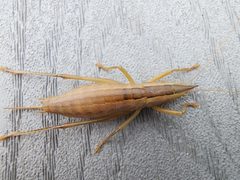
Belocephalus sabalis, commonly known as the palmetto conehead, is a of in the Tettigoniidae. It belongs to the conehead Conocephalinae, characterized by the distinctive forward-projecting cone on the . The species is native to North America, with records primarily from Florida and the southeastern United States.
Pronunciation
How to pronounce Belocephalus sabalis: //ˌbɛloʊˈsɛfələs ˈsæbəlɪs//
These audio files are automatically generated. While they are not always 100% accurate, they are a good starting point.
Identification
Distinguished from other North American conehead by the shape and structure of the cone. Differs from Pyrgocorypha uncinata (hook-faced conehead), which has a distinctly hooked tip on its cone. Separated from Neoconocephalus by cone ; Belocephalus lacks the hooked cone tip found in some related genera. The specific cone shape of B. sabalis distinguishes it from B. subapterus, which has a similarly shaped cone but is restricted to the southeastern coastal plain.
Images
Appearance
A with a prominent, forward-projecting cone-shaped structure (fastigium) extending from the . The cone is a defining feature of the Belocephalus. Body form typical of conehead katydids with elongated, slender build. Coloration not explicitly documented in available sources.
Habitat
Associated with palmetto vegetation, as indicated by the . Likely inhabits areas with suitable plants in subtropical and warm temperate regions of the southeastern United States.
Distribution
Recorded from Florida and the southeastern United States. Distribution centered in the coastal plain region of the southeastern U.S.
Similar Taxa
- Pyrgocorypha uncinataBoth are North American conehead katydids with prominent cones, but P. uncinata has a distinctly hooked tip on the cone while Belocephalus sabalis does not.
- Belocephalus subapterusSame with similarly shaped cone, but B. subapterus is strictly restricted to the southeastern coastal plain and does not occur in Arkansas.
- Neoconocephalus speciesCommon conehead katydids in the same tribe, but Neoconocephalus lack the distinctive hooked or specialized cone tip seen in Belocephalus.
More Details
Taxonomic history
Described by Davis in 1912. The Belocephalus is placed in tribe Copiphorini within Conocephalinae.
Observation records
As of available data, the has 42 observation records on iNaturalist. GBIF records confirm presence in Florida and broader North America.