
Arethaea phantasma
Rehn & Hebard, 1914
Rio Grande thread-leg katydid, Rio Grande katydid
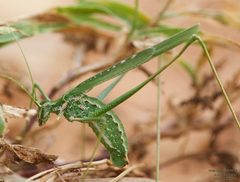
Arethaea phantasma is a of phaneropterine in the Tettigoniidae, commonly known as the Rio Grande thread-leg katydid. It was described by Rehn & Hebard in 1914. The species is characterized by extremely slender, thread-like legs that give the its . It occurs in sand dune and arid regions of the southwestern United States and northern Mexico.
Pronunciation
How to pronounce Arethaea phantasma: /ˌærɪˈθiːə fænˈtæzmə/
These audio files are automatically generated. While they are not always 100% accurate, they are a good starting point.
Identification
Members of the Arethaea are distinguished from other katydids by their exceptionally long, slender legs—particularly the hind legs, which appear thread-like and delicate. Arethaea phantasma can be separated from by subtle differences in body proportions and genitalia, though detailed examination is typically required for definitive identification. The overall body form is gracile with an elongated, slender .
Images
Habitat
Sand dune and adjacent arid shrublands, particularly in areas with sparse vegetation cover. The is associated with loose sandy substrates characteristic of dune systems.
Distribution
Recorded from Texas and adjacent regions of North America. Distribution records indicate presence in the southwestern United States, with the likely extending into northern Mexico given the continuity of suitable dune .
Similar Taxa
- Arethaea mescaleroAnother thread-leg in the same , sharing the characteristic elongated slender legs and sand dune preferences. A. mescalero has been documented in similar habitats in New Mexico and may overlap in range with A. phantasma.
- Other Arethaea speciesMultiple occur in the southwestern United States and Mexico, distinguished primarily by subtle morphological differences in body proportions, pronotal shape, and male genitalia. Accurate identification typically requires examination of these structural features.
Sources and further reading
- BugGuide
- Wikipedia
- GBIF taxonomy match
- iNaturalist taxon
- Catalogue of Life
- New Guide Details Management of Invasive Scale Insect in Florida
- St. Mary's survivors – Cicadas of Brood XIX — Bug of the Week
- Bark Beetle Identification: There’s an App for That, Too
- Mantispidae | Beetles In The Bush
- July | 2024 | Beetles In The Bush