
Arethaea
Stål, 1876
Thread-legged Katydids
Species Guides
14- Arethaea ambulator(Hill Country Thread-leg Katydid)
- Arethaea arachnopyga(Big Bend Thread-leg Katydid)
- Arethaea brevicauda(California thread-leg katydid)
- Arethaea carita(Carita thread-leg katydid)
- Arethaea constricta(Prairie Thread-leg Katydid)
- Arethaea coyotero(Mojave Thread-leg Katydid)
- Arethaea gracilipes(thin-footed thread-leg katydid)
- Arethaea grallator(Stilt-walker Katydid)
- Arethaea mescalero(Mescalero Thread-leg Katydid)
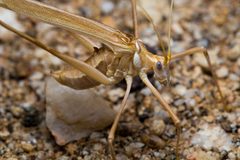
Arethaea is a of katydids in the Tettigoniidae, commonly known as thread-legged katydids. The genus contains at least 14 described distributed primarily in western and southwestern North America. Species in this genus are characterized by their elongated, slender legs and are typically associated with arid and semi-arid including sand dunes, grasslands, and shrublands.

Pronunciation
How to pronounce Arethaea: /ˌærɪˈθiːə/
These audio files are automatically generated. While they are not always 100% accurate, they are a good starting point.
Identification
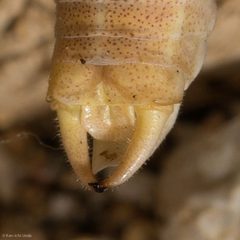
Members of Arethaea can be distinguished from other by their extremely long, thread-like hind legs that give the group its . The genus is placed in the tribe Insarini within the Phaneropterinae. -level identification typically requires examination of male genitalia and other subtle morphological features; many species have restricted geographic ranges that aid in identification.
Images
Habitat
of Arethaea inhabit arid and semi-arid environments including sand dune systems, desert grasslands, pinyon-juniper woodlands, and oak shrublands. They are often found in sandy substrates and areas with sparse vegetation. One species, Arethaea mescalero, has been observed in sand dune in eastern New Mexico.
Distribution
The Arethaea occurs in western and southwestern North America, with records from the United States (Alabama, Arizona, California, Colorado, New Mexico, Oklahoma, Texas) and Mexico. Individual often have restricted ranges; for example, Arethaea ambulator is associated with the Hill Country of Texas, Arethaea brevicauda occurs in California, and Arethaea mescalero is found in the Mescalero Sands region of New Mexico.
Behavior
Arethaea mescalero has been observed to be attracted to artificial lights at night in sand dune , suggesting activity patterns typical of many .
Similar Taxa
- InsaraBoth Arethaea and Insara belong to the tribe Insarini and share similar body plans with elongated legs; Arethaea is distinguished by even more extremely elongated, thread-like hind legs and different male genitalia structure.
- ScudderiaScudderia are also Phaneropterinae katydids but belong to a different tribe (Scudderiini); they lack the extremely elongated legs characteristic of Arethaea and typically inhabit more mesic environments.
More Details
Etymology
The name Arethaea is derived from Greek mythology, though the specific reference is not clearly documented in available sources.
Taxonomic history
The was established by Carl Stål in 1876. Many were described by Morgan Hebard in the 1930s and by Rehn & Hebard in the early 20th century, reflecting intensive collecting in the American Southwest during that period.