
Booneacris glacialis
(Scudder, 1862)
Wingless Mountain Grasshopper
Booneacris glacialis, commonly known as the wingless mountain , is a of spur-throated grasshopper in the Acrididae. It is to mountainous regions of eastern North America. The species is notable for being flightless, an to its high-elevation . Three are currently recognized, varying in geographic distribution across the northern Appalachians and adjacent ranges.
Pronunciation
How to pronounce Booneacris glacialis: /buːnˈækɹɪs ɡlæˈsiːəlɪs/
These audio files are automatically generated. While they are not always 100% accurate, they are a good starting point.
Identification
Distinguished from other Melanoplinae by the complete absence or extreme reduction of wings (brachyptery or aptery). The extended pronotum that partially covers the is diagnostic. Similar flightless grasshoppers in the Booneacris include B. mormon, which occurs in western North America and is geographically separated. Other flightless Melanoplinae such as Melanoplus spretus (now extinct) and certain Podisma differ in pronotal shape and body proportions. The spur on the throat (characteristic of Melanoplinae) is present but may be reduced.
Images
Appearance
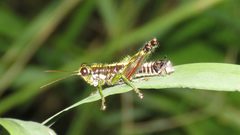
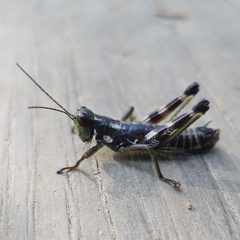
A medium-sized, robust with reduced or absent wings. The pronotum extends backward over the , partially covering the wing pads in brachypterous forms. Coloration is typically cryptic, with mottled brown or gray tones that blend with rocky substrates. Hind are enlarged and muscular, adapted for jumping rather than . The exhibits in size, with females generally larger than males.
Habitat
High-elevation montane environments, primarily rocky alpine and subalpine zones. Occurs above treeline and in krummholz vegetation zones. Associated with exposed rock , scree slopes, and tundra-like meadows. Vegetation is sparse, consisting primarily of low-growing forbs, grasses, and cushion plants adapted to short growing seasons.
Distribution
to eastern North America. Documented from the Presidential Range and other high peaks of the White Mountains in New Hampshire, the Green Mountains of Vermont, and the Appalachian highlands of Virginia. The B. g. canadensis extends the range into Ontario, Canada. Distribution is fragmented, restricted to isolated mountain summits and ridges above approximately 1,200 meters elevation.
Seasonality
are active during the brief alpine growing season, typically from late June through August depending on elevation and snowmelt. Activity is constrained by snow cover duration at high elevations. Nymphs likely overwinter, with development resuming following spring thaw.
Life Cycle
(hemimetabolous). Specific details of laying, nymphal development, and stages are not well documented. Given the short growing season at high elevations, a two-year is plausible but unconfirmed.
Behavior
Flightless, relying on jumping for locomotion. Activity patterns are , with individuals basking on rocks and foraging among low vegetation. The wingless condition is an to the windy, exposed conditions of alpine environments where would be energetically costly and hazardous.
Ecological Role
Herbivore in alpine and subalpine . Likely contributes to nutrient cycling through consumption and processing of plant material. Serves as prey for alpine-inhabiting birds, small mammals, and predatory insects.
Human Relevance
No significant direct human impact. The is of conservation interest due to its restricted, fragmented distribution and vulnerability to climate change affecting alpine . May serve as an for alpine health.
Similar Taxa
- Booneacris mormonGeographically separated western North American ; also flightless but occurs in the Rocky Mountains and Great Basin ranges
- Melanoplus spretusExtinct flightless formerly of western plains; differed in larger size and prairie rather than alpine
- Podisma speciesOther flightless Melanoplinae with overlapping range in Palearctic; distinguished by different pronotal and body proportions
More Details
Subspecies
Three recognized: B. g. glacialis (Scudder, 1863) - nominate form of the White Mountains; B. g. canadensis (E. M. Walker, 1903) - Ontario ; B. g. amplicerca (Caudell, 1936) - Virginia populations. Subspecies differ subtly in body proportions and male genitalia.
Conservation status
Not formally assessed by IUCN, but restriction to alpine zones makes vulnerable to climate warming and upward treeline .