
Booneacris
Rehn & Randell, 1962
Wingless Mountain Grasshoppers
Species Guides
3- Booneacris alticola(Marys Peak Wingless Grasshopper)
- Booneacris glacialis(Wingless Mountain Grasshopper)
- Booneacris polita(Willamette wingless grasshopper)
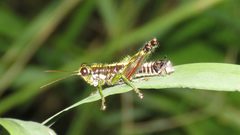
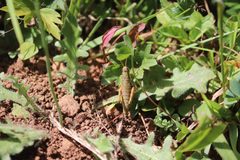
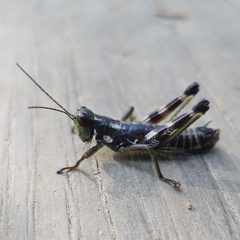
Booneacris is a of spur-throated grasshoppers in the Acrididae, established by Rehn & Randell in 1962. The genus contains four described , all characterized by reduced or absent wings. These grasshoppers are restricted to mountainous regions of western North America, with species found at high elevations. The "Wingless Mountain Grasshoppers" reflects their most distinctive trait and preference.
Pronunciation
How to pronounce Booneacris: //ˌbuːniˈækrɪs//
These audio files are automatically generated. While they are not always 100% accurate, they are a good starting point.
Identification
Members of Booneacris can be distinguished from other Acrididae by their wingless or short-winged condition (brachypterous or ), a trait shared by all four described . As spur-throated grasshoppers, they possess a peg-like projection on the surface of the throat (prosternal spine), placing them in the Melanoplinae. The is further characterized by its high-elevation distribution in western North America, which helps separate it from morphologically similar lowland genera. Specific species identification requires examination of male genitalia and subtle differences in coloration and body proportions.
Images
Habitat
Booneacris inhabit high-elevation mountain environments. Booneacris alticola occurs on Marys Peak in the Oregon Coast Range. Booneacris glacialis is found in alpine and subalpine zones of the Rocky Mountains. Booneacris polita is restricted to the Willamette Valley region of Oregon. These are characterized by cool temperatures, short growing seasons, and open vegetation structure.
Distribution
Western North America. Documented from Oregon (Marys Peak, Willamette Valley), the Rocky Mountains (Colorado, Wyoming, Montana), and disjunct in the northeastern United States (New Hampshire, New York, Virginia) and Ontario, Canada. The eastern records likely represent isolated alpine populations.
Behavior
Booneacris are flightless due to reduced or absent wings. This winglessness is an to the windy, exposed conditions of their high-elevation where would be energetically costly and hazardous. The limited capacity of these grasshoppers contributes to their restricted geographic ranges and localized structure.
Similar Taxa
- MelanoplusBoth are spur-throated grasshoppers in Melanoplinae. Melanoplus is a much larger with greater morphological diversity; most have fully developed wings and broader geographic ranges. Booneacris is distinguished by consistent winglessness and high-elevation specialization.
- PodismaAnother of wingless grasshoppers in tribe Podismini. Podisma are primarily Palearctic in distribution, whereas Booneacris is Nearctic. The genera share the wingless trait but differ in geographic range and subtle morphological features of the male genitalia.
More Details
Etymology
The name Booneacris honors the Boone , particularly Dr. Daniel Boone, an entomologist who collected extensively in the western United States. The suffix -acris is derived from Greek 'akris,' meaning locust or .
Conservation considerations
The restricted ranges and specificity of Booneacris , particularly B. alticola on Marys Peak and B. polita in the Willamette Valley, may make them vulnerable to habitat loss and climate change. However, formal conservation assessments have not been published for these species.