
Dendrotettix
Packard, 1890
Species Guides
3- Dendrotettix australis(Scrub Pine Grasshopper)
- Dendrotettix quercus(post oak grasshopper)
- Dendrotettix zimmermanni(Carolina Oak Grasshopper)
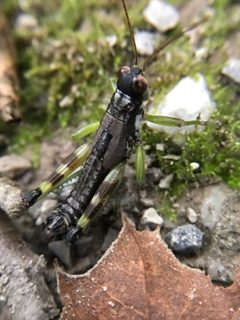
Dendrotettix is a of spur-throated grasshoppers in the Acrididae, containing at least three described distributed in the southeastern United States. Species include the scrub pine (D. australis), post oak grasshopper (D. quercus), and Carolina oak grasshopper (D. zimmermanni). Cytogenetic studies have identified numbers of 2n=23 (male) and 2n=24 (female) with an XO sex determination system, distinguishing this genus from related such as Boonacris and Appalachia.


Pronunciation
How to pronounce Dendrotettix: //ˌdɛn.drəʊˈtɛt.ɪks//
These audio files are automatically generated. While they are not always 100% accurate, they are a good starting point.
Identification
Spur-throated grasshoppers in this can be distinguished from related genera Boonacris and Appalachia by cytogenetic characteristics: Dendrotettix possess 2n=23 (male) and 2n=24 (female) with XO sex determination, whereas related genera show different chromosome numbers and structural karyotypic differences. Specific morphological diagnostic features for field identification are not well documented in available sources.
Images
Habitat
Associated with oak and pine based on of constituent (scrub pine, post oak, Carolina oak grasshoppers).
Distribution
Southeastern United States; Texas.
Similar Taxa
- BoonacrisRelated wingless with which Dendrotettix shares sympatry; distinguished cytologically by number (Boonacris: 2n=21 male, 2n=22 female; Dendrotettix: 2n=23 male, 2n=24 female)
- AppalachiaRelated largely sympatric ; distinguished by karyotypic structural differences despite shared count of 2n=23 (male) and 2n=24 (female)