
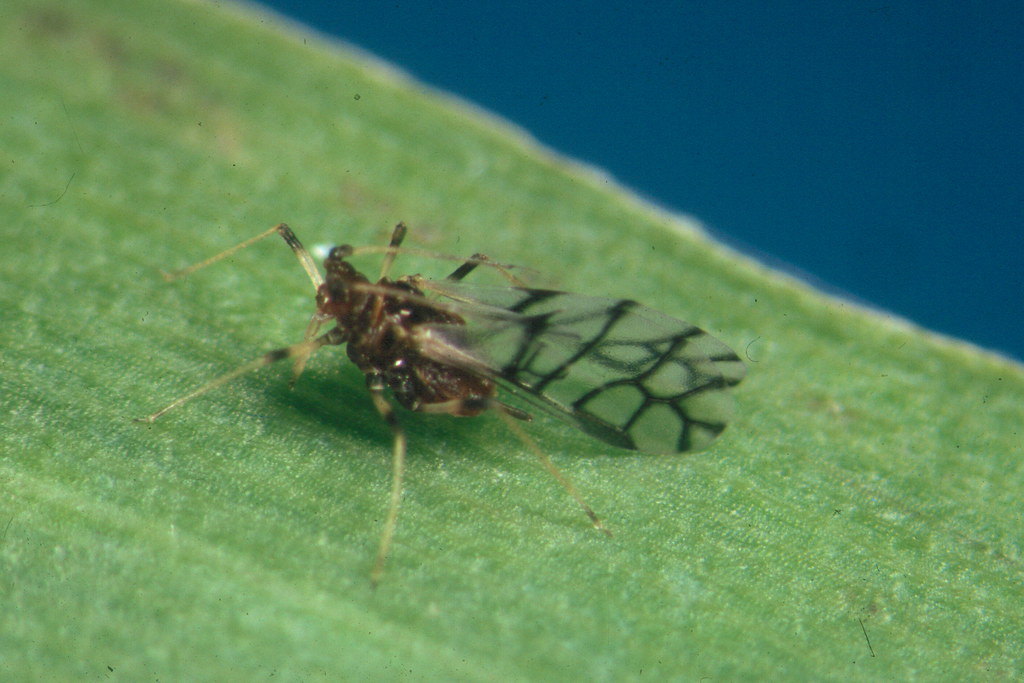
People usually talk about aphids like they are already explained. Tiny green bugs. Bad for the roses. Spray them, squish them, move on. That is not wrong. It is just a very small version of the story.
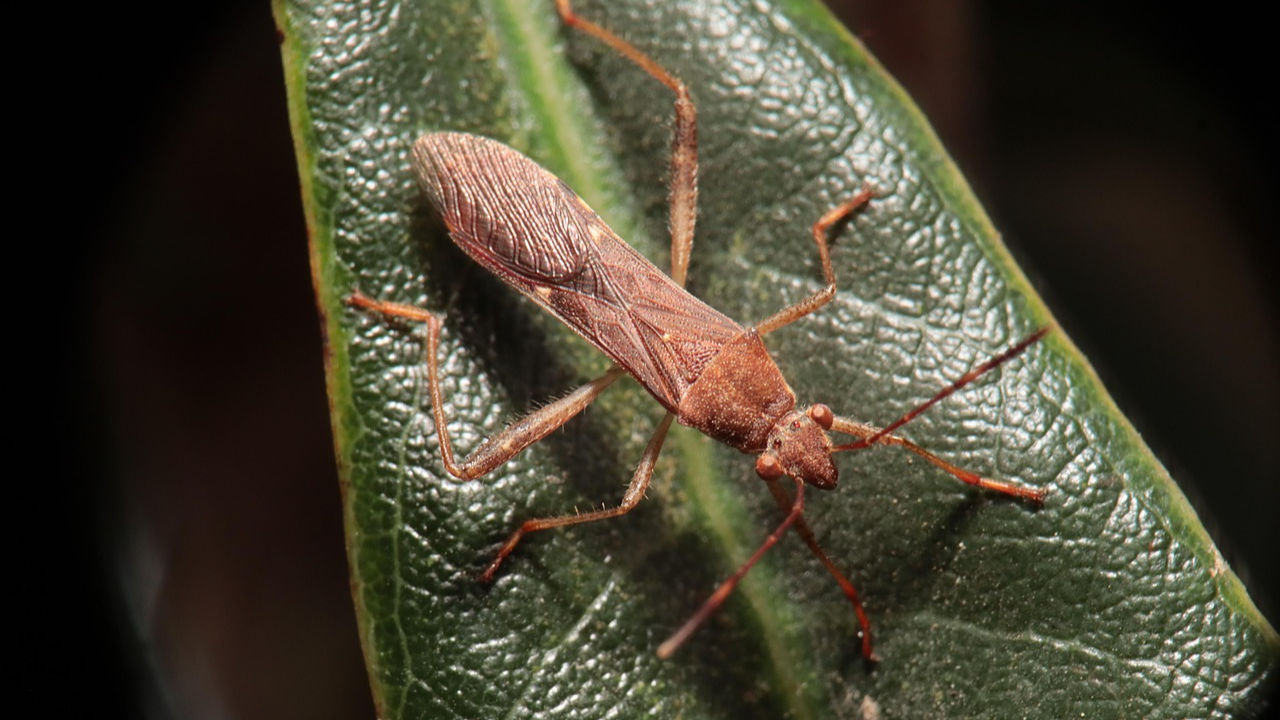
Pentacora sphacelata is a species of shore bug in the family Saldidae, first described by Uhler in 1877 under the basionym Salda sphacelata. As a member of the Chiloxanthinae subfamily, it belongs to a lineage of true bugs adapted to shoreline and wetland habitats. The species exhibits a notably broad geographic distribution spanning multiple continents, including the Caribbean, Europe, Northern Asia (excluding China), Central America, North America, and South America.
Pentagramma bivittata is a species of delphacid planthopper in the family Delphacidae. It has been recorded from British Columbia, Kansas, Nebraska, Ohio, and Texas in North America, with broader distribution reported across the Caribbean, Central America, and South America. As a member of the subfamily Asiracinae and tribe Idiosystanini, it belongs to a specialized group within the planthopper family Delphacidae.
Pentagramma douglasensis is a species of planthopper in the family Delphacidae, first described by Penner in 1947. It belongs to the tribe Idiosystanini within the subfamily Asiracinae. The species is known from North America. Like other delphacids, it possesses a characteristic movable spur on the hind tibia. Information about its biology and ecology remains limited.
Peregrinus is a genus of planthoppers in the family Delphacidae (Hemiptera: Auchenorrhyncha), established by Kirkaldy in 1904. The genus is classified within the subfamily Delphacinae and tribe Delphacini. It belongs to the superfamily Delphacoidea, one of the largest groups of fulgoromorphan planthoppers. Species in this genus are part of the diverse assemblage of delphacid planthoppers found across various habitats.
Perigenes constrictus is a species of seed bug in the family Rhyparochromidae, commonly referred to as a dirt-colored seed bug. It occurs across North America and Central America. The species was described by Thomas Say in 1831. Like other members of its family, it is likely associated with ground-level habitats and seed-feeding ecology, though specific biological details remain poorly documented in published sources.
dirt-colored seed bug
Perigenes similis is a species of dirt-colored seed bug in the family Rhyparochromidae, first described by Barber in 1906. It belongs to the true bugs (Hemiptera) and is characterized by its dull, earth-toned coloration typical of the group. The species has been documented in Florida with specific notes on its habits and habitats, though detailed biological information remains limited.
predatory stink bugs
Perillus is a genus of predatory stink bugs in the family Pentatomidae, native to North America. The genus contains approximately seven described species, with Perillus bioculatus (two-spotted stink bug) being the most extensively studied due to its use as a biological control agent against the Colorado potato beetle. Members of this genus are characterized by their predatory habits, using piercing-sucking mouthparts to immobilize prey with toxic venom before liquefying and consuming tissues. Several species have been introduced to Europe and Asia for biocontrol purposes, with P. bioculatus establishing expanding populations in southeastern Europe.
Perillus confluens is a species of predatory stink bug in the family Pentatomidae. It is found in Central America and North America. As a member of the genus Perillus, it is a predaceous true bug that actively hunts and kills prey using toxic venom and digestive enzymes.
Perillus lunatus is a species of predatory stink bug in the family Pentatomidae, described by Knight in 1952. Like other members of the genus Perillus, it belongs to the subfamily Asopinae, which contains predatory rather than phytophagous stink bugs. The genus Perillus is best known for P. bioculatus, the two-spotted stink bug, a significant biological control agent of the Colorado potato beetle. Perillus lunatus shares the predatory habits characteristic of this genus, though specific details of its biology are less documented than those of its congener P. bioculatus.
Perillus splendidus is a species of predatory stink bug in the family Pentatomidae. It is native to North America and Central America. As a member of the genus Perillus, it shares the predatory habits characteristic of this group, though specific prey records for this species remain limited in the available literature.
Common Maple Aphid
Periphyllus testudinaceus, known as the Common Maple Aphid, is a sap-feeding insect in the family Aphididae. It is associated with maple trees (Acer species) and has been documented across parts of Europe. The species exhibits typical aphid morphology with soft bodies and piercing-sucking mouthparts adapted for extracting plant fluids.
dirt-colored seed bug
Peritrechus convivus is a species of seed bug in the family Rhyparochromidae, first described by Stål in 1858. It is a member of the dirt-colored seed bug group, characterized by subdued coloration typical of this family. The species has a broad distribution spanning the Holarctic region, with records from Europe, Northern Asia, and North America. Its wide geographic range suggests ecological adaptability, though specific habitat preferences remain poorly documented.
dirt-colored seed bug
Peritrechus fraternus is a species of seed bug in the family Rhyparochromidae, described by Uhler in 1871. It belongs to a group commonly referred to as dirt-colored seed bugs, characterized by their dull, earth-toned coloration. The species occurs across much of North America and extends into Central America. Records indicate presence in Canada, the United States, and Mexico.
Persis is a genus of planthoppers in the family Derbidae, order Hemiptera. These insects belong to the subfamily Derbinae and tribe Cenchreini. The genus was established by Carl Stål in 1862. Members of Derbidae are typically associated with woody plants and are known for their distinctive wing morphology.
Persis arizonensis is a derbid planthopper in the family Derbidae, order Hemiptera. It is a small, presumably phytophagous insect known from limited records in Arizona and Sonora, Mexico. The species was described in 1986 and remains poorly documented in published literature.
Persis ferox is a species of planthopper in the family Derbidae, described by O'Brien in 1986. It belongs to the order Hemiptera, a group of true bugs characterized by piercing-sucking mouthparts. The species is known from the southwestern United States and northwestern Mexico. As a member of the Derbidae, it is likely associated with plant-feeding habits typical of this family, though specific ecological details remain poorly documented.
Petrusa is a genus of planthoppers in the family Flatidae, subfamily Flatinae. Members of this genus are found in the Neotropical region, with Petrusa epilepsis being a notable species associated with seagrape and other host plants in the Caribbean. The genus is characterized by the typical flatid morphology with wings held tent-like over the body and parallel cross-veins along the costal margin of the forewings.
Phalacrococcus is a genus of soft scale insects (Hemiptera: Coccidae) established in 2010. The genus contains at least one exotic species, Phalacrococcus howertoni, which has been documented in Florida. As a member of the Coccidae family, these insects are sessile, sap-feeding pests that produce protective waxy coverings.
Croton Scale
Phalacrococcus howertoni is a soft scale insect in the family Coccidae, described by Hodges and Hodgson in 2010. The species has been documented in Florida and is known by the common name Croton Scale. As a member of the Coccidae, it possesses the protective waxy covering characteristic of soft scales.
Prairie Spittlebug
Philaenarcys bilineata, commonly known as the prairie spittlebug, is a species of spittlebug in the family Aphrophoridae. It is found in North America, with documented occurrences in Alberta, British Columbia, Missouri, New Brunswick, and the Northwest Territories. The species inhabits prairies and boreal forests, and is part of the true bug order Hemiptera. As a spittlebug, it produces the characteristic frothy 'spittle' as a nymph, which serves as protection and moisture retention.
Sand Plain Spittlebug
Philaenarcys killa, known as the Sand Plain Spittlebug, is a species of spittlebug in the family Aphrophoridae. It was described by Hamilton in 1979. The species belongs to the tribe Philaenini and is one of the documented members of the genus Philaenarcys. Records indicate presence in the north-central United States and adjacent Canada.
Salt Marsh Spittlebug
Philaenarcys spartina is a spittlebug species in the family Aphrophoridae, first described by Hamilton in 1979. It is associated with salt marsh habitats, specifically with Spartina grasses, as indicated by its specific epithet. The species has been recorded in eastern Canada including New Brunswick, Nova Scotia, and Québec. As a member of the spittlebug family, it likely produces characteristic frothy spittle masses as nymphs, though specific life history details remain poorly documented.
spittlebugs
Philaronia is a genus of spittlebugs in the family Aphrophoridae, established by Ball in 1899. The genus contains five described species distributed in North America. Members of this genus are part of the froghopper group, known for the nymphal stage's production of protective spittle masses.
Philaronia abjecta is a spittlebug species in the family Aphrophoridae, first described by Uhler in 1876. It is distributed across parts of North America and has been recorded as far north as Alaska and Alberta. The species belongs to a genus of relatively small, inconspicuous spittlebugs.
Philaronia canadensis is a species of spittlebug (family Aphrophoridae) native to North America. The species was described by Walley in 1929. It is one of approximately 11 species in the genus Philaronia, which is part of the tribe Philaenini within the spittlebug family. The species is known from western North America, with records from British Columbia, California, and Idaho.
Phimodera is a genus of shield-backed bugs in the family Scutelleridae, established by Germar in 1839. It is the type genus of the tribe Phimoderini. Species have been documented from Africa, Europe, and North America, with confirmed records from Denmark, Norway, and Sweden. The genus comprises relatively small, often cryptically colored shield bugs.
red date scale
Phoenicococcus is a genus of scale insects in the family Phoenicococcidae. The genus contains P. marlatti, commonly known as the red date scale, which is a significant pest of cultivated date palms (Phoenix dactylifera). Species in this genus are phloem-feeding insects that infest palm hosts. The genus is distinguished by its specialized association with palms and its morphological features typical of the family Phoenicococcidae.
Phoenicocoris australis is a species of plant bug in the family Miridae, first described by Blatchley in 1926. It is a member of the genus Phoenicocoris, a group of mirids associated with conifers. The species is known from Florida, USA, and appears to have a restricted distribution within the southeastern United States. As with many mirids, specific ecological details remain poorly documented in published literature.
collared nabid, yellow-collared nabid
Phorticus collaris is a species of damsel bug in the family Nabidae, commonly known as the collared nabid or yellow-collared nabid. It was first described by Stål in 1873. The species has been documented across Central America and North America, with recent first records from Costa Rica, Guatemala, Nicaragua, and Panama extending its known distribution range. Like other nabid bugs, it is a predatory true bug.
Phrictopyga is a genus of delphacid planthoppers in the family Delphacidae, established by Caldwell in 1951. The genus comprises approximately 12 described species. These insects belong to the diverse group of fulgoromorph planthoppers within the order Hemiptera. At least one species, Phrictopyga holmgreni, has been documented from Argentina.
Phylini is a tribe of plant bugs within the subfamily Phylinae (family Miridae, order Hemiptera). The tribe contains at least 440 described species distributed across three subtribes: Keltoniina, Oncotylina, and Phylina. Members are predominantly Holarctic in distribution, with significant representation in the Palearctic, Nearctic, and Neotropical regions. The type genus is Phylus. Several genera within Phylini have been subject to recent taxonomic revision, including Wallabicoris from Australia.
Phyllodinus is a genus of delphacid planthoppers in the family Delphacidae. The genus contains six described species distributed across Asia and North America. It was established by Van Duzee in 1897. Species in this genus are small, jumping insects associated with grasses and sedges.
Phylloxera auburnensis is a gall-forming insect in the family Phylloxeridae, closely related to aphids. Like other phylloxerans, it induces abnormal plant growths (galls) on its host through chemical secretions that manipulate plant tissue development. The species is part of a genus containing several economically significant pests, including grape phylloxera (Daktulosphaira vitifoliae, formerly Phylloxera vitifoliae) and pecan phylloxera species. Specific details about P. auburnensis hosts and distribution remain limited in available literature.
pecan leaf phylloxera
Phylloxera caryaefallax, commonly known as the pecan leaf phylloxera, is a small, soft-bodied, gall-forming insect closely related to aphids. It is a significant pest of pecan trees (Carya illinoinensis), causing distinctive galls to form exclusively on leaf tissue. Unlike the related pecan phylloxera (Phylloxera devastatrix), which attacks shoots and nuts and causes more severe economic damage, this species is generally less destructive though heavy infestations can cause defoliation. The insect has a complex life cycle involving multiple generations per season and overwinters as eggs protected within the bodies of deceased females.
pecan phylloxera
Phylloxera caryaegummosa is a tiny, soft-bodied insect in the family Phylloxeridae, closely related to aphids. It is a significant pest of pecan (Carya illinoinensis), causing galls to form on shoots and nuts. This species is considered more damaging than pecan leaf phylloxera (Phylloxera notabilis), which affects only leaves. Heavy infestations can reduce yield, impair tree vitality, and curtail subsequent production. The insect has a complex life cycle involving multiple generations and forms, with winter survival as eggs protected within the bodies of dead females.
pecan phylloxera, pecan stem phylloxera
Phylloxera caryaeren is a small, soft-bodied, gall-forming insect closely related to aphids that attacks pecan trees (Carya illinoinensis). It is considered the most damaging phylloxera species on pecans because it attacks shoots and developing nuts, unlike the pecan leaf phylloxera which only affects foliage. Heavy infestations can reduce current-year yield, impair tree vitality, and reduce production in subsequent years. The insect is sedentary and cannot fly long distances, so infestations spread slowly from tree to tree.
pecan phylloxera, pecan nut phylloxera
Phylloxera caryaesemen is a small, soft-bodied, gall-forming insect closely related to aphids that attacks pecan trees (Carya illinoinensis). It is considered the most damaging phylloxera species on pecans because it attacks shoots and developing nuts, unlike the related pecan leaf phylloxera which feeds only on leaves. Heavy infestations can reduce current-year yield, impair tree vitality, and diminish subsequent production. The insect induces abnormal plant growths (galls) by secreting substances that stimulate tissue development, with nymphs completing development inside these protective structures.
pecan leaf phylloxera, pecan phylloxera
Phylloxera caryaesepta is a tiny, soft-bodied insect in the family Phylloxeridae, closely related to aphids. It is a significant pest of pecan trees (Carya illinoinensis), forming conspicuous galls on leaves, twigs, and nuts. The species survives winter as eggs in bark crevices, with nymphs emerging during spring bud break to feed on new growth. Unlike the related pecan leaf phylloxera (Phylloxera notabilis) which attacks only leaves, P. caryaesepta damages shoots and nuts, making it more economically destructive. Heavy infestations can reduce yield, impair tree vitality, and curtail subsequent production.
Phylloxera chippokesiensis is a gall-forming insect in the family Phylloxeridae, closely related to aphids. Like other phylloxerans, it induces abnormal plant growths (galls) on host tissues through chemical secretions that redirect plant development. The species is named for Chippokes Plantation in Virginia, indicating an association with specific geographic or host plant contexts. As with congeners, it likely has a complex life cycle involving parthenogenetic reproduction within galls and seasonal transitions between winged and wingless forms.
Phylloxera echinus is a species of gall-forming insect in the family Phylloxeridae, closely related to aphids. Like other phylloxerans, this species induces abnormal plant growths (galls) on host plants through chemical secretions that manipulate plant tissue development. The specific host associations and gall morphology of P. echinus have not been well documented in available literature. The genus Phylloxera contains several economically important species, most notably the grape phylloxera (Daktulosphaira vitifoliae), though P. echinus itself appears to be poorly studied.
Phylloxera floridana is a species of phylloxeran, a small sap-sucking insect in the family Phylloxeridae. Phylloxerans are closely related to aphids and are known for inducing galls on host plants. The genus Phylloxera includes species that are significant agricultural pests, most notably the grape phylloxera (Daktulosphaira vitifoliae), though specific information about P. floridana's biology, host associations, and economic impact appears to be limited in available literature.
Phylloxera georgiana is a gall-forming insect in the family Phylloxeridae, closely related to aphids. Like other phylloxerans, this species induces abnormal plant growths (galls) on its host plant through chemical secretions that manipulate plant development. The species was described by Pergande in 1904. Very few specific details about its biology, host associations, or distribution have been documented in the available literature.
Phylloxera glabra is a species of phylloxeran, a group of small, soft-bodied insects closely related to aphids within the family Phylloxeridae. Like other phylloxerans, this species induces gall formation on host plants through chemical secretions that manipulate plant tissue development. The species was described by von Heyden in 1837 and has been recorded from parts of Europe including Belgium, Denmark, and Norway. Phylloxerans exhibit complex life cycles involving multiple generations and both sexual and parthenogenetic reproduction.
Phylloxera intermedia is a species of phylloxeran, a group of tiny, soft-bodied insects closely related to aphids. Like other phylloxerans, it induces gall formation on host plants through chemical secretions that manipulate plant tissue development. The species was described by Pergande in 1904. Specific details about its host associations and biology are limited in available literature, though phylloxerans generally have complex life cycles involving both sexual and parthenogenetic generations.
Phylloxera killianae is a gall-forming insect in the family Phylloxeridae, closely related to aphids. Like other phylloxerans, it induces abnormal plant growths (galls) on host tissues through chemical secretions during feeding. The species overwinters as eggs in bark crevices, with nymphs emerging in spring to feed on new growth and stimulate gall formation. Specific host associations and detailed biology of P. killianae remain poorly documented compared to economically significant relatives such as the grape phylloxera (Daktulosphaira vitifoliae) and pecan phylloxera species.
Phylloxera paludis is a species of phylloxeran insect in the family Phylloxeridae, order Hemiptera. Phylloxerans are small, soft-bodied, sap-sucking insects closely related to aphids. Members of the genus Phylloxera are known for inducing gall formation on host plants through chemical secretions that alter plant tissue development. The specific epithet "paludis" suggests an association with marsh or wetland habitats, though detailed ecological studies of this particular species appear limited in the available literature.
pecan phylloxera
Phylloxera perniciosa, commonly known as the pecan phylloxera, is a gall-forming insect that attacks shoots and nuts of pecan trees (Carya illinoinensis). It is considered the most damaging phylloxera species affecting pecans, causing galls that reduce yield, impair tree vitality, and curtail subsequent production. The insect is closely related to aphids and survives winter as eggs in bark crevices. Unlike the pecan leaf phylloxera, which only forms galls on leaves, this species attacks reproductive and vegetative shoots, making it economically significant in commercial pecan production.
Phylloxera picta is a species of gall-forming insect in the family Phylloxeridae, closely related to aphids. Like other phylloxerans, it induces abnormal plant growths (galls) on host trees through chemical secretions that manipulate plant tissue development. The species overwinters as eggs and has a complex life cycle involving multiple generations and both winged and wingless forms.
pecan leaf phylloxera
Phylloxera rimosalis is a tiny, soft-bodied insect closely related to aphids that forms galls exclusively on pecan leaves. It is one of two economically important phylloxera species attacking pecans, the other being the more damaging pecan phylloxera (Phylloxera devastatrix) which attacks shoots and nuts. Extensive infestations of P. rimosalis may cause some defoliation, but the species is generally less destructive than its congener. The insect has been observed in Texas and is managed as a pest of commercial pecan orchards.
Phylloxera russellae is a small, soft-bodied insect in the family Phylloxeridae, closely related to aphids. Like other phylloxerans, it induces gall formation on host plants through chemical secretions that manipulate plant tissue development. The species was described by Stoetzel in 1981. Members of the genus Phylloxera are known for complex life cycles involving multiple generations and forms, including winged and wingless morphs.