
Phylloxera auburnensis
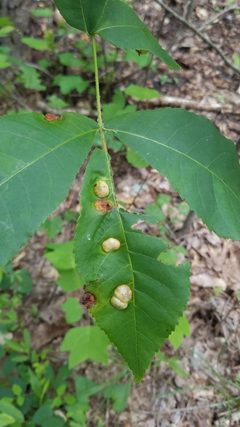
Phylloxera auburnensis is a gall-forming insect in the Phylloxeridae, closely related to aphids. Like other phylloxerans, it induces abnormal plant growths (galls) on its through chemical secretions that manipulate plant tissue development. The is part of a containing several economically significant pests, including grape phylloxera (Daktulosphaira vitifoliae, formerly Phylloxera vitifoliae) and pecan phylloxera species. Specific details about P. auburnensis hosts and distribution remain limited in available literature.
Pronunciation
How to pronounce Phylloxera auburnensis: /fɪˈlɒksɪrə ɔːbərˈnɛnsɪs/
These audio files are automatically generated. While they are not always 100% accurate, they are a good starting point.
Identification
Identification to level requires examination of gall on the plant and microscopic analysis of specimens. Phylloxera species are distinguished by host association, gall structure, and subtle morphological differences in wing venation and segmentation. P. auburnensis is not among the most commonly referenced phylloxera species in agricultural literature, suggesting it may be less economically significant or more geographically restricted than pecan or grape-feeding relatives. Genetic analysis or taxonomic keys would be necessary for definitive identification.
Images
Habitat
Associated with deciduous hardwood trees, particularly hickory (Carya) based on -level patterns. Phylloxerans require rapidly expanding young plant tissue for gall induction, occurring primarily in spring when leaf and shoot buds are breaking. Galls provide the protected microenvironment where nymphs feed and develop.
Distribution
Specific distribution records for P. auburnensis are sparse. The Phylloxera is primarily Nearctic in distribution, with highest diversity in eastern North America. The epithet "auburnensis" may reference Auburn, Alabama, or the Auburn region, suggesting southeastern United States origin, though this is speculative without confirmation.
Seasonality
and gall formation occur in spring coinciding with bud break. Multiple may occur within a single growing season, with winged forms dispersing to new growth or host trees in late spring to early summer. occurs as in bark crevices or within dried galls.
Diet
Phloem sap obtained through inserted into vascular tissue. Feeding stimulates gall formation, which provides both nutrition and shelter.
Host Associations
- Carya - probable primary -level association inferred from related Phylloxera ; specific for P. auburnensis not confirmed in available sources
Life Cycle
overwinter in bark crevices. Nymphs hatch in spring and induce galls on new growth. Development completes within galls; winged emerge and disperse. Parthenogenetic occurs during summer ; sexual forms and egg production occur in fall to produce eggs. Exact number of generations per year for P. auburnensis is undocumented.
Behavior
Nymphs are sedentary, remaining within galls throughout development. are weak fliers and disperse relatively short distances compared to many . Gall induction involves chemical secretion that redirects plant differentiation, creating a hollow structure lined with nutritive tissue. This manipulation of plant development is the defining behavioral characteristic of the .
Ecological Role
As a gall-former, creates microhabitats that may be used by other organisms (). Heavy can reduce plant vigor and photosynthetic capacity, though most phylloxeran cause primarily cosmetic damage. Serves as prey for including lacewings, lady beetles, and predatory mites. Contributes to nutrient cycling through gall and fall.
Human Relevance
Not documented as a significant agricultural or horticultural pest. Related (pecan phylloxera, grape phylloxera) are major economic pests, but P. auburnensis appears to lack comparable economic impact based on absence from pest management literature. No specific control recommendations are documented for this species.
Similar Taxa
- Phylloxera caryaecaulisAlso infests Carya (hickory) and produces similar leaf and petiole galls; distinguished by gall and range specifics
- Phylloxera devastratrixPecan phylloxera, a major pest of pecan (Carya illinoinensis); distinguished by gall formation on shoots and nuts rather than leaves, and by economic significance
- Daktulosphaira vitifoliaeGrape phylloxera, the most economically destructive phylloxeran; formerly classified in Phylloxera, now placed in separate genus; distinguished by grape (Vitis) association and root-feeding damage
- Aphididae (aphids)Superficially similar soft-bodied, gall-forming or free-living sap feeders; distinguished by presence of cornicles (siphunculi) on , different wing venation, and typically more complex with extensive alternation
More Details
Taxonomic note
The Phylloxera has undergone significant taxonomic revision. The most notorious "phylloxera," the grape phylloxera, is now classified as Daktulosphaira vitifoliae, not Phylloxera vitifoliae. P. auburnensis remains in the genus Phylloxera sensu stricto, which primarily contains associated with hickory, pecan, and related Juglandaceae .
Research gap
This is notably absent from major agricultural extension publications and economic entomology references, suggesting either restricted distribution, minor economic importance, or taxonomic uncertainty. The iNaturalist observation count of 7 indicates it is rarely encountered or reported by naturalists.
Sources and further reading
- BugGuide
- iNaturalist taxon
- Insects and mites that feed on leaves - AgriLife Extension Entomology
- Managing Insect and Mite Pests of Commercial Pecans in Texas - AgriLife Extension Entomology
- Meet 'The Moth Man' at Bohart Museum's Moth Night | Bug Squad
- A Victory for the Bees | Bug Squad
- Gall darn it! Gall insects on hickory, oak, and elm, Phylloxera caryaecaulis, Andricus palustris, Colopha ulmicola — Bug of the Week
- grape phylloxera Archives - Entomology Today