
Phylloxera caryaecaulis
(Fitch, 1855)
Hickory Gall Phylloxera
Phylloxera caryaecaulis is a small, soft-bodied, gall-forming insect closely related to aphids. It induces distinctive globular galls on hickory leaves and petioles, primarily affecting mockernut hickory (Carya tomentosa) and other hickory . The species overwinters as deposited on bark or near old galls, with nymphs emerging during bud break in spring to initiate gall formation. Unlike some related phylloxeran species that attack pecan shoots and nuts, P. caryaecaulis is primarily a leaf-gall former and is not considered economically damaging to its trees.
Pronunciation
How to pronounce Phylloxera caryaecaulis: //fɪˈlɒksərə kəˌraɪəˈkɔːlɪs//
These audio files are automatically generated. While they are not always 100% accurate, they are a good starting point.
Identification
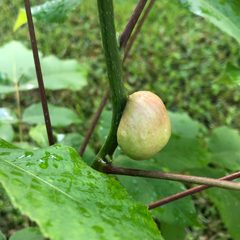
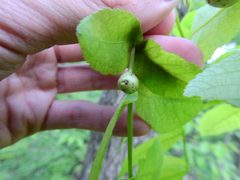
Identified by the presence of globular, succulent galls on hickory leaf blades and petioles in spring. Galls are green to reddish, marble-shaped, and hollow. Distinguishable from pecan phylloxera (Phylloxera devastatrix) by association (hickory vs. pecan) and gall location (leaves/petioles vs. shoots and nuts). Distinguished from gall wasps on oaks by the softer, more succulent texture of phylloxeran galls and the specific association with hickory rather than oak.
Images
Habitat
Deciduous forests and landscapes containing hickory trees, particularly mockernut hickory. Found on rapidly expanding new leaf tissue in spring.
Distribution
Eastern North America, documented on hickory in regions where Carya spp. occur, including the eastern and central United States.
Seasonality
hatch during bud break in spring (March-April, depending on latitude). Galls develop through spring; winged emerge in late May. Sexual forms mate and deposit eggs on bark in late spring to summer.
Diet
Phloem sap extracted from hickory leaf and petiole tissue using .
Host Associations
- Carya tomentosa - primary mockernut hickory; primary documented
- Carya spp. - various hickory
Life Cycle
Overwinters as deposited on bark crevices or near old galls. Eggs hatch in spring coinciding with bud break. Fundatrix nymphs settle on expanding leaves or petioles, feed, and induce gall formation. The fundatrix matures inside the gall and produces eggs parthenogenetically. Nymphs develop within the gall, eventually becoming winged forms. Galls split open in late May, releasing winged that migrate to leaf undersurfaces to produce sexual forms. Males and females mate; females deposit eggs on bark. Some sources suggest a more complex cycle with additional , but details are not fully resolved.
Behavior
Nymphs are sedentary, remaining within protective galls throughout development. are mobile and disperse to new feeding sites. Fundatrices induce gall formation through chemical secretions that alter plant tissue development.
Ecological Role
Creates microhabitats (galls) that may provide shelter for other organisms. Feeding activity extracts plant nutrients but typically causes minimal harm to established trees. Part of the native insect associated with hickory .
Human Relevance
Not considered an economically significant pest; galls cause primarily cosmetic damage. No management typically required. Occasionally noticed by homeowners and naturalists due to conspicuous gall formation on ornamental hickories.
Similar Taxa
- Phylloxera devastatrixAlso forms galls on Carya, but attacks pecan shoots and nuts rather than leaves; causes more significant economic damage
- Phylloxera notabilisAnother hickory-associated phylloxeran; specific gall and tissue preferences differ
- Andricus spp. (oak gall wasps)Also induce globular galls, but on oaks rather than hickories; galls are typically harder and more woody
More Details
Gall development mechanism
Chemicals secreted by the feeding fundatrix stimulate abnormal differentiation in hickory tissue, creating a hollow, nutrient-rich gall that serves as both food source and protective chamber.
Parthenogenesis
The founding female (fundatrix) reproduces parthenogenetically, producing hundreds to over a thousand without mating—an unusual reproductive strategy that enables rapid establishment within the gall.
Sources and further reading
- BugGuide
- GBIF taxonomy match
- iNaturalist taxon
- NCBI Taxonomy
- Catalogue of Life
- Insects and mites that feed on leaves - AgriLife Extension Entomology
- Managing Insect and Mite Pests of Commercial Pecans in Texas - AgriLife Extension Entomology
- Meet 'The Moth Man' at Bohart Museum's Moth Night | Bug Squad
- A Victory for the Bees | Bug Squad
- Gall darn it! Gall insects on hickory, oak, and elm, Phylloxera caryaecaulis, Andricus palustris, Colopha ulmicola — Bug of the Week
- grape phylloxera Archives - Entomology Today