
Daktulosphaira vitifoliae
(Fitch, 1855)
Grape Phylloxera
, commonly known as grape phylloxera, is a minute -like insect in the Phylloxeridae that is the most destructive pest of commercial grapevines worldwide. Native to eastern North America, it was accidentally introduced to Europe in the 1860s, where it devastated Vitis vinifera vineyards and nearly destroyed the wine industry. The insect has a complex involving both root-feeding and leaf-galling forms, with high transcriptional plasticity enabling rapid to different grapevine . It reproduces parthenogenetically for most but can produce sexual forms and under certain conditions.
Pronunciation
How to pronounce Daktulosphaira vitifoliae: //dæktjʊloʊˈsfaɪrə ˌvɪtɪˈfoʊli.iː//
These audio files are automatically generated. While they are not always 100% accurate, they are a good starting point.
Identification
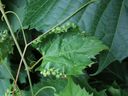
Distinguished from true aphids (Aphididae) by placement in Phylloxeridae, with which it shares the superfamily Phylloxeroidea. Distinguished from other phylloxerids by exclusive or primary association with Vitis . Leaf galls on grapevines—small, pouch-like growths on the undersides of leaves—are diagnostic when present. Root-feeding forms require microscopic examination; their presence is indicated by nodosities (hook-shaped swellings) and tuberosities (nodular swellings) on roots, along with honeydew production and associated . Molecular identification may be necessary to distinguish from other grape-associated Phylloxeridae.
Images
Appearance
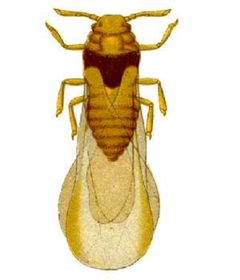
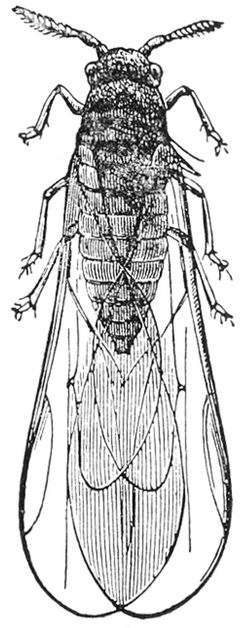
Minute, soft-bodied insect resembling a small . are yellowish to greenish, oval-shaped, and approximately 1 mm in length. Winged forms () have membranous wings. Root-feeding forms are found on grape roots, while leaf-galling forms induce characteristic galls on leaves. The insect has typical of Hemiptera.
Habitat
Strictly associated with grapevines (Vitis spp.). Occupies two distinct microhabitats: leaf tissue where gall-forming forms occur, and root tissue where feeding forms cause characteristic swellings. Thrives in vineyards, commercial grape production areas, and wild grape . Soil conditions affect root-feeding populations; well-drained sandy soils favor population growth.
Distribution
Native to eastern North America. Introduced and established in all major grape-producing regions worldwide including Europe (first detected France 1863), South America, Australia, New Zealand, and South Africa. Present throughout North American grape-growing regions. In Europe, genetic structure shows differentiation between northern (above 43° latitude) and southern , possibly reflecting differences in reproductive mode.
Seasonality
Activity varies by and reproductive mode. Anholocyclic (parthenogenetic) populations reproduce year-round on roots in favorable climates. Holocyclic populations produce sexual forms and in autumn; eggs hatch in spring. In southern Brazil, overwintering eggs have been found on rootstock trunks. Leaf-galling forms typically active during growing season when foliage is present.
Diet
Strictly phytophagous on grapevines (Vitis spp.). Feeds on phloem sap of grape roots and leaves. Root-feeding forms extract nutrients from root phloem, causing characteristic nodosities and tuberosities. Leaf-galling forms feed within protective galls on leaf tissue. Cannot complete development on lignified roots of some rootstocks such as 'Paulsen 1103' (Vitis berlandieri × Vitis rupestris) and Vitis rotundifolia 'Magnolia'.
Host Associations
- Vitis vinifera - primary European wine grape; highly susceptible; most suitable for development and
- Vitis labrusca - American grape ; lower than on V. vinifera
- Vitis berlandieri × Vitis riparia 'Teleki 5C' - rootstocknormally , but some aggressive strains show
- Vitis berlandieri × Vitis rupestris 'Paulsen 1103' - rootstocklignified roots prevent nymphal development; may occur on trunk
- Vitis rotundifolia 'Magnolia' - 100% first instar mortality on roots
- Vitis vinifera × Seyval 'BRS Lorena' - supports complete biological cycle
Life Cycle
Complex with multiple forms. Typically includes: (1) fundatrix (stem mother) that hatches from and produces leaf galls; (2) gallicole forms that develop within leaf galls and produce winged migrants; (3) radicole forms that colonize roots and reproduce parthenogenetically; (4) in some , sexual forms (males and oviparae) that mate and produce overwintering eggs. Some populations are permanently parthenogenetic (anholocyclic) on roots. Development from egg to completed in 4-6 weeks under favorable conditions on susceptible .
Behavior
Exhibits rapid and widespread transcriptional plasticity when transferred to different , with 37% of expressed genes showing differential expression. Upregulates genes encoding predicted secretory effectors, detoxification , and -associated proteins when feeding on non-native hosts. Forms characteristic protective galls on leaves through manipulation of plant development, including reconfiguration of stomata to create feeding sites where none normally exist. Clonal predominates; winged forms disperse to new plants.
Ecological Role
As a gall-forming herbivore, manipulates plant physiology to create nutrient-rich feeding structures. Acts as engineer on native Vitis in North America. In invaded regions, functions as destructive agricultural pest. Galls have been demonstrated to accumulate soil contaminants including 1,4-dioxane and heavy metals at concentrations higher than surrounding plant tissues, suggesting potential use as bioindicators of pollution.
Human Relevance
Most economically significant pest of grapevines globally. Historical devastation of European wine industry in 1860s-1880s led to development of grafting European scions onto American rootstocks, which remains the primary management strategy. Continues to threaten viticulture through to resistant rootstocks and of aggressive . Research subject for studies of - , transcriptional plasticity, and gall formation mechanisms. Galls have been investigated as novel pollution detection tools (phytoscreening) for subsurface contaminants.
Similar Taxa
- Pemphigus spp.Other root-feeding aphids that may be confused with grape phylloxera in casual observation; distinguished by -level characters and specificity
- Aphididae (true aphids)Superficially similar body form; distinguished by taxonomic placement in Phylloxeridae, gall-forming , and complex with both root and leaf forms
- Other PhylloxeridaeCongeneric and related ; require molecular or detailed morphological analysis for separation
More Details
Transcriptional Plasticity
-wide studies show D. vitifoliae exhibits exceptionally high transcriptional responsiveness to , with 4,820 genes (37% of expressed genes) differentially expressed across host comparisons. This plasticity involves enrichment of predicted secretory effectors (odds ratio 8.3), suggesting active manipulation of host plant physiology. A novel proline-rich gene cluster tandemly arrayed in the genome shows strong correlation with across hosts.
Historical Impact
The introduction of D. vitifoliae to France in the 1860s caused the Great French Wine Blight, devastating vineyards across Europe and forcing the adoption of American rootstocks for European grape —a practice that continues today.
Pollution Detection Applications
Research at Wayne State University has demonstrated that grape phylloxera-induced galls accumulate 1,4-dioxane and other soil contaminants at concentrations significantly higher than surrounding plant tissues, with detection sensitivity exceeding traditional groundwater well sampling in some cases.
Sources and further reading
- BugGuide
- GBIF taxonomy match
- iNaturalist taxon
- NCBI Taxonomy
- Catalogue of Life
- Meet 'The Moth Man' at Bohart Museum's Moth Night | Bug Squad
- How Some Insects Turn Plants Into Pollution Detectors
- The Insects Behind the Weird Growths on Plants
- Daktulosphaira vitifoliae Archives - Entomology Today
- Rice Root Aphid: An Insect Surprise on Indoor-Grown Cannabis
- Transfer to different host grapevines causes rapid and widespread transcriptional plasticity in the specialist insect Daktulosphaira vitifoliae
- Effects of Short-term Spontaneous Mutation Accumulation for Life History Traits in Grape Phylloxera, Daktulosphaira vitifoliae
- The Biology, Physiology and Host–Plant Interactions of Grape Phylloxera Daktulosphaira vitifoliae
- Genetic structure of an introduced pest, grape phylloxera (Daktulosphaira vitifoliaeFitch), in Europe
- Occurrence of Sexual Reproduction ofDaktulosphaira vitifoliae(Hemiptera: Phylloxeridae) in Southern Brazil and Biology and Fertility Life Table in Grapevine Cultivars
- HOST PERFORMANCE OF AUSTRIAN GRAPE PHYLLOXERA (DAKTULOSPHAIRA VITIFOLIAE FITCH) CLONAL LINEAGES: FIRST RESULTS
- The development and reproduction of grape phylloxera (Daktulosphaira vitifoliae Fitch) strains of Hungarian vine-districts in root-bioassays