
Perillus
Stål, 1862
predatory stink bugs
Species Guides
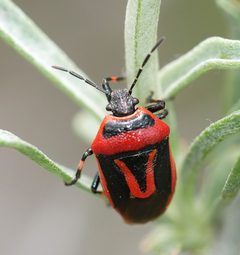
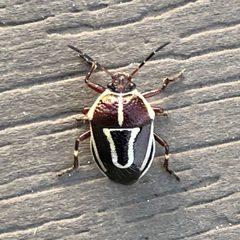
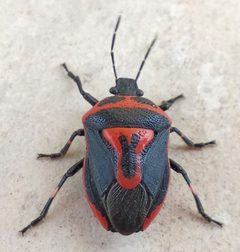
7Perillus is a of predatory stink bugs in the Pentatomidae, native to North America. The genus contains approximately seven described , with Perillus bioculatus (two-spotted ) being the most extensively studied due to its use as a agent against the Colorado potato beetle. Members of this genus are characterized by their predatory habits, using to immobilize prey with toxic venom before liquefying and consuming tissues. Several species have been introduced to Europe and Asia for biocontrol purposes, with P. bioculatus establishing expanding in southeastern Europe.
Pronunciation
How to pronounce Perillus: /pɛˈrɪl.lʊs/
These audio files are automatically generated. While they are not always 100% accurate, they are a good starting point.
Images
Habitat
Agricultural fields, particularly potato plantations; gardens with Solanaceae crops; arid cold steppes and temperate zones with no dry season; ragweed stands. In Europe, established occupy foothill areas of the Carpathians and Eastern Alps, with potential for expansion into northern pre-alpine Italy, southern France, and the northeastern Iberian Peninsula.
Distribution
Native to North America. Introduced and established in Europe: Bulgaria, Greece, Hungary (first detected October 2023, nationwide establishment by June 2024), Moldavia, Romania, Serbia, Russia, Ukraine, and Türkiye. Expanding north-northwest from southeastern European . Predicted suitable includes southeastern Europe with potential expansion into Carpathian foothills, Eastern Alps, northern Italy, southern France, and northeastern Iberian Peninsula.
Seasonality
Multivoltine under favorable climatic conditions; activity period sensitive to temperature extremes affecting nymphal development and formation; enter facultative reproductive diapause under short-day conditions.
Diet
Specialized of Colorado potato beetle (Leptinotarsa decemlineata) , larvae, and ; exhibits dietary drift to alternative prey including turnip caterpillars (Agrotis segetum), ragweed leaf beetle (Zygogramma suturalis), olive-shaded bird-dropping moth (Tarachidia candefacta), Chrysomela populi, Chrysolina herbacea, Ophraella communa, and Galeruca tanaceti larvae.
Host Associations
- Solanum tuberosum - prey_locationPotato plants serve as foraging ; damaged plants release volatile sesquiterpenoids that attract
- Ambrosia artemisiifolia - prey_locationRagweed stands support alternative prey
Life Cycle
Hemimetabolous development with , five nymphal instars, and stages; all active stages are predatory; females lay 100-1000 eggs; facultative reproductive in adults triggered by short ; preoviposition period varies with prey type and photoperiod.
Behavior
Active hunter using olfactory cues to locate prey; detects volatile compounds released by -damaged plants as foraging beacons; attack involves gentle insertion of to inject paralytic venom and digestive , liquefying prey tissues for consumption; simultaneous mating and observed; strong tendency to aggregate; influenced by temperature, instar, physiological age, and .
Ecological Role
agent of agricultural pests; relative abundance of 5-15 individuals/m² can eliminate need for in potato fields; on native and introduced insects may impact insect in newly colonized areas; facilitates naturalization through dietary flexibility.
Human Relevance
Intentionally introduced to multiple countries for biocontrol of Colorado potato beetle; mass release programs attempted from 1930s-1970s in France, Czechoslovakia, Hungary, Italy, Poland, USSR, and Yugoslavia; recent citizen science campaigns document expanding European ; rearing on artificial diets developed for commercial production.
Similar Taxa
- Podisus maculiventrisSpined soldier bug shares predatory habit, pentatomid , and use as biocontrol agent; distinguished by prominent spines on pronotum and broader prey range including caterpillars and other soft-bodied insects
- Euthyrhynchus floridanusFlorida predatory stink bug shares bright coloration and predatory ; distinguished by more robust body and different geographic distribution
- Arilus cristatusWheel bug shares predatory habit and piercing-sucking feeding mechanism; distinguished by distinctive wheel-like crest and assassin bug (Reduviidae) classification
More Details
Olfactory Foraging Mechanism
Research by Weissbecker et al. demonstrated that Perillus bioculatus detects volatile sesquiterpenoids released by potato plants damaged by Colorado potato beetle feeding, using these chemical cues to locate prey patches in agricultural fields.
Photoperiod-Diapause Relationship
Critical for 50% induction varies with prey type: 15L:9D for females feeding on large larvae versus 14.5L:9.5D for those feeding on and small larvae, indicating prey quality influences strategy.
European Introduction History
Multiple introduction attempts from 1930s-1970s were initially considered unsuccessful; small self-sustaining persisted undetected in Balkans and Türkiye until recent decades when range expansion accelerated, likely facilitated by climate change and dietary flexibility.
Sources and further reading
- BugGuide
- Wikipedia
- GBIF taxonomy match
- iNaturalist taxon
- NCBI Taxonomy
- Catalogue of Life
- Stink Bugs Suck | Bug Squad
- Bugs in orange and black, predator and prey: Two-spotted stink bug, Perillus bioculatus, and Colorado potato beetle, Leptinotarsa decemlineata — Bug of the Week
- Bugs in orange and black, Part 3 – Trick or treat? Two-spotted stink bug, Perillus bioculatus, has a lethal trick that turns Colorado potato beetle, Leptinotarsa decemlineata, into a tasty treat — Bug of the Week
- Heroes of the true bug clan: Two spotted stink bug, Perillus bioculatus, and spined soldier bug, Podisus maculiventris — Bug of the Week
- Archive — Bug of the Week
- Bug of the Week celebrates ten years! — Bug of the Week
- Distribution of Perillus bioculatus (Fabricius, 1775) in Serbia
- Dispersal of Perillus bioculatus, a Stinkbug Predator of the Colorado Potato Beetle
- Past, present and future of the two-spotted stink bug (Perillus bioculatus) in Europe revealed by citizen science
- The Introduction of Perillus bioculatus into Europe to Control the Colorado Beetle
- Life History and Cost Analysis for Continuous Rearing of Perillus bioculatus (Heteroptera: Pentatomidae) on a Zoophytogenous Artificial Diet
- EFFECTS OF PHOTOPERIOD AND PREY TYPE ON DIAPAUSE TENDENCY AND PREOVIPOSITION PERIOD IN PERILLUS BIOCULATUS (HEMIPTERA: PENTATOMIDAE)
- First records of Mustha spinosula and Perillus bioculatus (Heteroptera: Pentatomidae) in Romania