
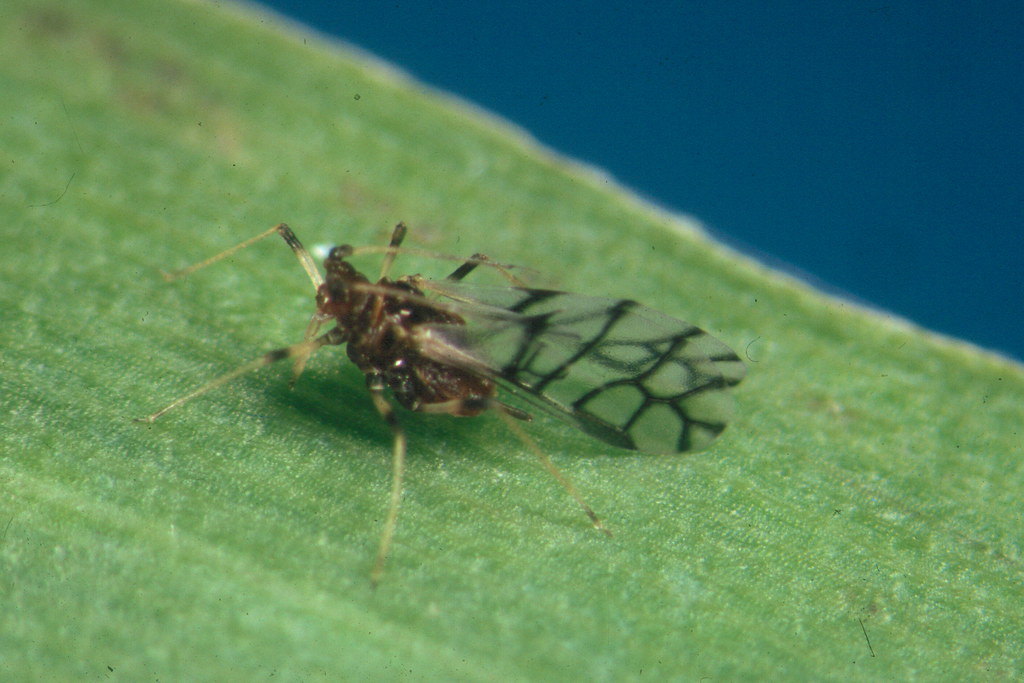
People usually talk about aphids like they are already explained. Tiny green bugs. Bad for the roses. Spray them, squish them, move on. That is not wrong. It is just a very small version of the story.
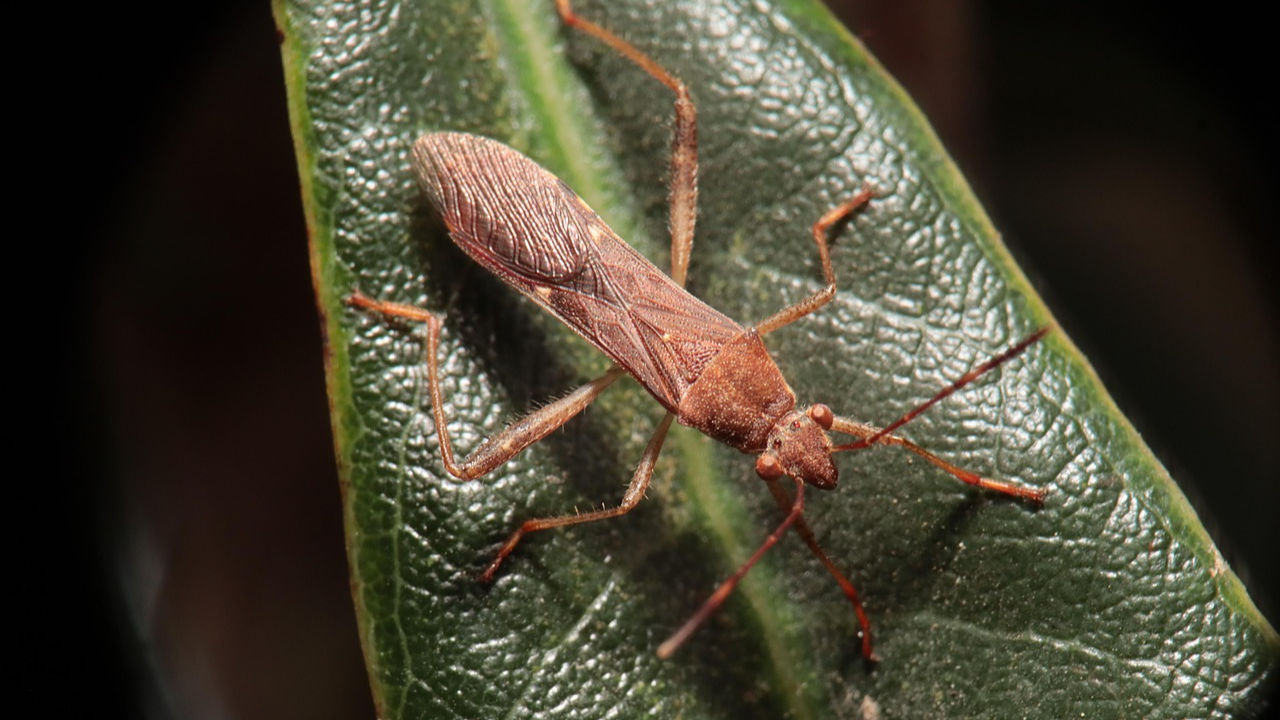
Pacific pelagic water strider, Silvery Sea Skater
Halobates sericeus is an oceanic sea skater in the family Gerridae, one of the few insects adapted to life on the open sea. It inhabits pelagic marine environments across the Pacific Ocean and adjacent regions. The species exhibits photoperiod-dependent aggregation behavior, with adults and late-instar larvae forming more frequent and longer-lasting groups under short-day conditions compared to long-day conditions.
Sotol Plant Bug
Halticotoma andrei is a species of plant bug in the family Miridae, described by Knight in 1968. It is known from the southwestern United States, particularly Arizona. The species is commonly referred to as the Sotol Plant Bug, suggesting an association with sotol plants (Dasylirion spp.) in its native range. As a member of the Miridae, it possesses the characteristic piercing-sucking mouthparts typical of true bugs.
fleahoppers, jumping plant bugs
Halticus is a genus of fleahoppers in the family Miridae, containing at least 20 described species. Members are commonly known as jumping plant bugs due to their characteristic leaping behavior. Some species are economically significant agricultural pests, particularly of cotton and sweet potato, while at least one species has been identified as a putative vector of phytoplasma plant pathogens.
Halticus intermedius is a species of plant bug in the family Miridae, first described by Uhler in 1904. The species is documented from North America, with specific records from New Mexico and West Virginia. As a member of the genus Halticus, it belongs to a group of small, jumping plant bugs commonly known as fleahoppers.
Halyini is a tribe of stink bugs within the family Pentatomidae. The tribe has historically served as a provisional grouping for numerous genera, many of which have subsequently been reassigned to other tribes. Current taxonomy recognizes multiple genera within Halyini, including Halys and Neohalys, though the precise generic composition remains subject to revision. The tribe is characterized by morphological features of the male and female terminalia, which are important for species-level identification.
Brown Marmorated Stink Bug, BMSB
Halyomorpha halys is an invasive shield bug native to East Asia that has become a major agricultural and nuisance pest across North America, Europe, and beyond. First detected in Pennsylvania in 1998, it has spread to at least 47 U.S. states, 4 Canadian provinces, and numerous European countries. The species is highly polyphagous, feeding on over 300 plant species across 49 families, with particular preference for Rosaceae. Its invasion success is facilitated by high mobility, broad host range, and absence of natural enemies in invaded ranges. Natural control is emerging through adventive populations of the egg parasitoid Trissolcus japonicus and other native predators and pathogens.
Hamana is a genus of leafhoppers in the family Cicadellidae, subfamily Iassinae, established by DeLong in 1942. These insects belong to the tribe Gyponini and are part of the diverse leafhopper fauna within the Hemiptera. The genus is recognized in major taxonomic databases including Catalogue of Life, GBIF, and NCBI Taxonomy. Species within Hamana are distributed across various regions, with 576 observations recorded on iNaturalist. Like other leafhoppers, members of this genus are sap-feeding insects associated with vegetation.
Haplaxius is a genus of cixiid planthoppers (Hemiptera: Cixiidae) in the tribe Oecleini, containing at least 60 described species with a New World distribution. The genus was reinstated by Emeljanov in 1989 for New World species formerly placed in Myndus. Several species are economically significant as vectors of phytoplasmas causing lethal diseases in palms. Haplaxius crudus transmits Candidatus Phytoplasma palmae, the causal agent of lethal yellowing in coconut palms and lethal wilt in oil palms, causing substantial agricultural losses in the Caribbean, Central America, South America, and the southern United States.
Haplaxius balli is a species of planthopper in the family Cixiidae, described by Kramer in 1979. It belongs to the tribe Oecleini within the subfamily Cixiinae. The species is known from Arizona, USA, based on distribution records. Like other cixiid planthoppers, it is a member of the infraorder Fulgoromorpha, characterized by their distinctive head morphology and wing venation patterns.
Haplaxius beameri is a species of planthopper in the family Cixiidae, described by Ball in 1933. It belongs to the tribe Oecleini within the subfamily Cixiinae. Distribution records indicate occurrence in Arizona.
Haplaxius catalinus is a species of planthopper in the family Cixiidae, first described by Ball in 1933. It belongs to the tribe Oecleini, a group of cixiids characterized by particular wing venation and genitalia structures. The species has been documented in the southwestern United States. Cixiidae planthoppers are generally small, cryptic insects with reduced wings in many species, though specific details for H. catalinus remain limited in published literature.
Haplaxius flocki is a species of planthopper in the family Cixiidae, first described by Kramer in 1979. It belongs to the tribe Oecleini within the subfamily Cixiinae. As a member of the Fulgoromorpha, it shares characteristics with other cixiid planthoppers, though specific details about its biology remain limited in available literature. The species is known from the southwestern United States and adjacent Mexico.
Haplaxius fulvus is a planthopper species in the family Cixiidae, first described by Osborn in 1903. It belongs to the tribe Oecleini within the subfamily Cixiinae. The species has been recorded from multiple states in the eastern and central United States. Like other cixiid planthoppers, it is likely associated with host plants where nymphs develop underground feeding on roots.
Haplaxius glyphis is a species of planthopper in the family Cixiidae, described by Kramer in 1979. It belongs to a genus of small, inconspicuous insects that inhabit forested and vegetated environments. The species is recorded from northeastern North America, with documented occurrences in the United States and Canada.
Haplaxius impiger is a species of planthopper in the family Cixiidae, first described by Ball in 1902. It belongs to the tribe Oecleini within the subfamily Cixiinae. Records indicate presence in Colorado and New Mexico, though specific ecological details remain limited in available sources.
Haplaxius lunatus is a species of planthopper in the family Cixiidae, first described by Van Duzee in 1909 as Myndus lunatus. It belongs to the tribe Oecleini within the subfamily Cixiinae. The species is part of the diverse Hemipteran fauna of North America, with records from Florida. Like other cixiids, it is a small, delicate planthopper with reduced wings in some individuals.
Haplaxius nigrifrons is a species of planthopper in the family Cixiidae, first described by Ball in 1937. It belongs to the tribe Oecleini within the subfamily Cixiinae. The species is known from Texas based on distribution records. As with other cixiid planthoppers, it is likely associated with vascular plants, though specific ecological details remain poorly documented.
Haplaxius ovatus is a cixiid planthopper in the family Cixiidae, order Hemiptera. It has been documented in association with switchgrass (Panicum virgatum), a perennial grass native to North America. The species was described by Ball in 1933 and occurs in multiple U.S. states including Delaware, Georgia, Illinois, and Iowa, as well as Guizhou Province in China.
Haplaxius rubidus is a species of planthopper in the family Cixiidae, first described by Ball in 1933. It belongs to the suborder Auchenorrhyncha within the order Hemiptera. The species has been documented in Texas. As a member of the Cixiidae family, it shares characteristics with other planthoppers that feed on plant vascular tissues using piercing-sucking mouthparts.
Haplaxius wheeleri is a species of planthopper in the family Cixiidae, described by Wilson in 1996. It belongs to the tribe Oecleini within the subfamily Cixiinae. The species has been documented from the northeastern United States, specifically New Jersey and Pennsylvania. As a member of the Auchenorrhyncha, it is a phloem-feeding insect associated with vascular plants.
scentless plant bugs
Harmostes is a genus of scentless plant bugs in the family Rhopalidae, established by Burmeister in 1835. The genus comprises approximately 32 species distributed from Canada to southern South America, with seven species documented in the United States. Members of this genus are distinguished by their lack of scent glands, a characteristic that separates them from related true bugs. They serve as prey for solitary wasps in the genus Dryudella, which paralyze them as provisions for their offspring.
Harmostes dorsalis is a species of scentless plant bug in the family Rhopalidae. It is found across Central America, North America, and South America. The species was first described by Burmeister in 1835.
Hebata bifurcata is a species of leafhopper in the family Cicadellidae, first described by DeLong in 1931. It belongs to the order Hemiptera, a group characterized by piercing-sucking mouthparts. The species has been documented in several eastern U.S. states.
Hebata volsella is a species of leafhopper in the family Cicadellidae, first described by Hamilton in 1987. It belongs to the order Hemiptera, a group of insects characterized by piercing-sucking mouthparts. The species is known from eastern Canada, with records from Nova Scotia and Québec. Like other leafhoppers, it likely feeds on plant sap using its specialized mouthparts.
Hebecephalus occidentalis is a leafhopper species in the family Cicadellidae, first described by Beamer and Tuthill in 1935. It belongs to the subfamily Deltocephalinae, one of the largest and most diverse groups of leafhoppers. The species is known from western North America, with records from Alaska, Alberta, British Columbia, Colorado, and Manitoba. As with most members of its family, it is presumed to feed on plant phloem sap using piercing-sucking mouthparts.
Hecalus is a genus of leafhoppers in the family Cicadellidae, subfamily Deltocephalinae, and tribe Hecalini. The genus was established by Stål in 1864. Recent records from Dampa Tiger Reserve in Mizoram, India have documented species including Hecalus facialis and Hecalus wallengrenii, contributing to an updated understanding of the genus's distribution in India.
Heliria is a genus of treehoppers in the family Membracidae, established by Stål in 1867. The genus contains thirteen described species distributed in North America. Members of this genus are phytophagous insects associated with woody host plants. At least one species, Heliria praealta, has been documented feeding on chokecherry (Prunus virginiana).
Heliria gemma is a species of treehopper in the family Membracidae, described by Ball in 1925. It belongs to the tribe Telamonini within the subfamily Smiliinae. Treehoppers in this family are characterized by their enlarged pronotum that often forms elaborate projections. The species has been recorded in the northeastern and midwestern United States.
Helochara deltoides is a leafhopper species in the family Cicadellidae, described by Hamilton in 1986. It belongs to the genus Helochara, which is placed in the tribe Cicadellini within the subfamily Cicadellinae. As a member of the leafhopper family, it possesses the characteristic piercing-sucking mouthparts and hind legs modified for jumping that define this diverse group of hemipterans. The species epithet 'deltoides' suggests a triangular or delta-shaped feature, though the specific morphological basis for this name is not documented in the provided sources.
Henribautia is a genus of leafhoppers (Cicadellidae) in the subfamily Typhlocybinae, established by Young & Christian in 1952. As members of the tribe Typhlocybini, these insects are small, delicate leafhoppers characterized by reduced wing venation. The genus is part of the diverse New World leafhopper fauna, though specific biological details remain poorly documented.
Henribautia beameri is a species of leafhopper in the family Cicadellidae, first described by Christian in 1953. It belongs to the subfamily Typhlocybinae, a group commonly known as typhlocybine leafhoppers. The species is known from Arizona. As a member of this subfamily, it likely feeds on plant phloem sap, though specific host plants and detailed biology remain undocumented.
A species of leafhopper in the family Cicadellidae, subfamily Typhlocybinae. Described by McAtee in 1924, this species is placed in the genus Henribautia, a group of small, delicate leafhoppers typically associated with specific host plants. The species epithet honors an individual named Hubbard, a common pattern in early 20th century entomological nomenclature.
Henrylygus is a small genus of plant bugs in the family Miridae, established by Schwartz & Foottit in 1998. The genus contains two described species: H. nubilus and H. ultranubilus. Both species were originally described under different genera (Lygus and Lygocoris respectively) and later transferred to Henrylygus. The genus belongs to the large and diverse mirid fauna of North America.
Henrylygus ultranubilus is a species of plant bug in the family Miridae. It was described by Knight in 1917. The species has a transcontinental distribution across North America.
Hepzygina is a genus of leafhoppers in the family Cicadellidae, subfamily Typhlocybinae, and tribe Erythroneurini. The genus was formally described by Dietrich and Dmitriev in 2006. Like other erythroneurine leafhoppers, members of this genus are small, plant-feeding insects that inhabit diverse terrestrial environments. The genus is represented by relatively few documented observations.
Hepzygina milleri is a species of leafhopper in the family Cicadellidae, subfamily Typhlocybinae, described by Beamer in 1929. The species belongs to the tribe Erythroneurini, a group of small leafhoppers commonly associated with vascular plants. Records indicate occurrence in the southwestern United States, specifically Arizona and Texas. The genus Hepzygina is part of the diverse membracoid lineage of sap-feeding insects.
dirt-colored seed bug
Heraeus coquilletti is a species of dirt-colored seed bug in the family Rhyparochromidae, first described by Barber in 1914. It belongs to the genus Heraeus within the tribe Myodochini. The species is known from North America, with records from the United States. Like other members of Rhyparochromidae, it is likely associated with seed-feeding habits, though specific ecological details for this species remain poorly documented.
dirt-colored seed bug
Heraeus plebejus is a species of dirt-colored seed bug in the family Rhyparochromidae, first described by Carl Stål in 1874. It is distributed across North America, Central America, and the Caribbean. As a member of the Rhyparochromidae, it belongs to a family of true bugs commonly associated with seeds and ground-level habitats. The species has been documented in the United States, Canada, Mexico, the Bahamas, Haiti, and various Caribbean islands.
water boatman
Hesperocorixa atopodonta is a species of water boatman described by Hungerford in 1927. It belongs to the family Corixidae, a group of aquatic true bugs known for their oar-like hind legs adapted for swimming. The species is native to North America and is part of the genus Hesperocorixa, which includes several similar aquatic insect species.
Hesperocorixa interrupta is a species of water boatman in the family Corixidae, first described by Thomas Say in 1825. It belongs to a genus of aquatic true bugs distributed across North America. Water boatmen in this family are characterized by their oar-like hind legs adapted for swimming and their aquatic lifestyle in freshwater habitats.
Hesperocorixa kennicottii is a species of water boatman in the family Corixidae. It is a small aquatic true bug found in North American freshwater habitats. The species was described by Philip R. Uhler in 1897. Like other members of the genus Hesperocorixa, it is adapted to life in lentic and slow-moving waters.
water boatman
Hesperocorixa laevigata is a species of water boatman (family Corixidae) described by Uhler in 1893. It is distributed across Central America and North America. As a member of the Nepomorpha, it is an aquatic true bug adapted to life in freshwater environments. The species is one of approximately 47 observed records on iNaturalist, indicating it is documented but not extensively studied.
Hesperocorixa obliqua is a species of water boatman in the family Corixidae, first described by Hungerford in 1925. It belongs to the genus Hesperocorixa, a group of aquatic true bugs adapted to freshwater environments. The species is recorded from North America, though specific details about its biology and ecology remain limited in published sources.
Hesperoctenes is a genus of parasitic bugs in the family Polyctenidae, first described by Kirkaldy in 1906. Members of this genus are ectoparasites of bats (Chiroptera). The genus is distributed in Colombia and likely broader Neotropical regions, though published records are limited. As polyctenids, they represent a specialized lineage of hemipteran parasites adapted to mammalian hosts.
cactus bugs
Hesperolabops is a genus of plant bugs in the family Miridae, established by Kirkaldy in 1902. The genus contains nine described species distributed primarily in the Americas, with several species associated with cactus hosts. The most well-known member is Hesperolabops gelastops, commonly called the cactus bug. Species in this genus are generally found in arid and semi-arid regions where their host plants occur.
Hesperotingis mississippiensis is a species of lace bug in the family Tingidae. Lace bugs (family Tingidae) are small, flattened true bugs known for their distinctive reticulated, lace-like forewings. Members of the genus Hesperotingis are found in the Nearctic region. The species epithet mississippiensis indicates an association with the Mississippi region, though specific details about this species' biology remain poorly documented in the available literature.
Nettle Ground Bug (for H. urticae)
Heterogaster is a genus of seed bugs in the family Heterogastridae, comprising approximately 11 species. Nine species occur in the Old World, and two in the New World. The genus includes H. urticae, commonly known as the Nettle Ground Bug. Species in this genus have been subjects of taxonomic revision to distinguish Nearctic and Palearctic representatives.
Flathorn Plant Bugs
Heterotoma is a genus of plant bugs in the family Miridae (Hemiptera: Heteroptera). Members are commonly known as flathorn plant bugs. The genus includes species such as Heterotoma merioptera, which has been recorded from Germany and may be expanding its range in association with climate warming. As mirid bugs, they possess the characteristic piercing-sucking mouthparts typical of the family.
Heza similis is a species of assassin bug described by Carl Stål in 1859. It belongs to the family Reduviidae, a diverse group of predatory true bugs. The species has a broad distribution spanning the Caribbean Sea, Central America, North America, and South America. As a member of the Harpactorinae subfamily, it likely exhibits the typical assassin bug predatory lifestyle, though specific biological details remain poorly documented in the scientific literature.
Holcostethus is a genus of shield bugs in the family Pentatomidae, subfamily Pentatominae. The genus comprises 18 described species distributed across multiple continents. Members of this genus share the characteristic shield-shaped body form typical of the family. Like other pentatomids, they possess scent glands that produce a defensive odor.