
Halobates sericeus
Eschscholtz, 1822
Pacific pelagic water strider, Silvery Sea Skater
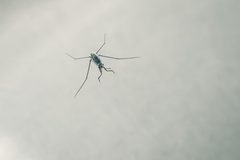
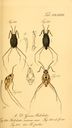
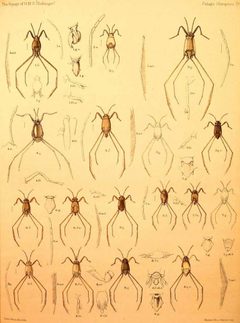
Halobates sericeus is an oceanic sea skater in the Gerridae, one of the few insects adapted to life on the open sea. It inhabits pelagic marine environments across the Pacific Ocean and adjacent regions. The exhibits -dependent , with and late-instar larvae forming more frequent and longer-lasting groups under short-day conditions compared to long-day conditions.
Pronunciation
How to pronounce Halobates sericeus: //hæloʊˈbeɪtiːz sɛˈrɪsiəs//
These audio files are automatically generated. While they are not always 100% accurate, they are a good starting point.
Identification
Images
Habitat
Open ocean pelagic environments; surface waters of the Pacific Ocean and adjacent seas. Found in marine where water temperatures exceed 25°C, based on co-occurrence patterns with congeneric .
Distribution
East Pacific, Indo-West Pacific, North America, Oceania, Australia, and temperate Asia. Documented collection records from 18 locations in the East China Sea area (27°10′N–33°24′N, 124°57′E–129°30′E).
Life Cycle
Development includes at least five larval instars; 5th instar larvae have been documented in field collections. and early instars presumably develop on the ocean surface, though specific details of embryonic and early nymphal stages are not reported.
Behavior
Exhibits influenced by : under short-day conditions (10.5L:13.5D) at 23±2°C, and 5th instar larvae aggregate more frequently and remain in groups longer (mean 43.0±108.1 seconds) compared to long-day conditions (14.5L:9.5D, mean 7.6±3.1 seconds). Mating behavior has been observed in laboratory settings.
Ecological Role
One of the few insects occupying the open ocean ; likely contributes to surface as both and prey, though specific trophic interactions are not documented.
Similar Taxa
- Halobates micansCongeneric oceanic sea skater with overlapping distribution; distinguished by temperature preference and selection patterns
- Halobates germanusCongeneric co-occurring in warm Pacific waters; H. sericeus can be differentiated by its specific thermal preferences and photoperiodic behavioral responses
Sources and further reading
- BugGuide
- Wikipedia
- GBIF taxonomy match
- iNaturalist taxon
- NCBI Taxonomy
- Bruner Spurthroated Grasshopper
- Meloidae Holdings | Entomology Research Museum
- Geographical distribution of three oceanic Halobates spp. and an account of the behaviour of H. sericeus (Heteroptera: Gerridae)
- Comparison of temperature preference for habitat among three species of oceanic sea skaters, <i>Halobates micans</i>,<i> H. germanus</i> and <i>H. sericeus</i>