
People usually talk about aphids like they are already explained. Tiny green bugs. Bad for the roses. Spray them, squish them, move on. That is not wrong. It is just a very small version of the story.
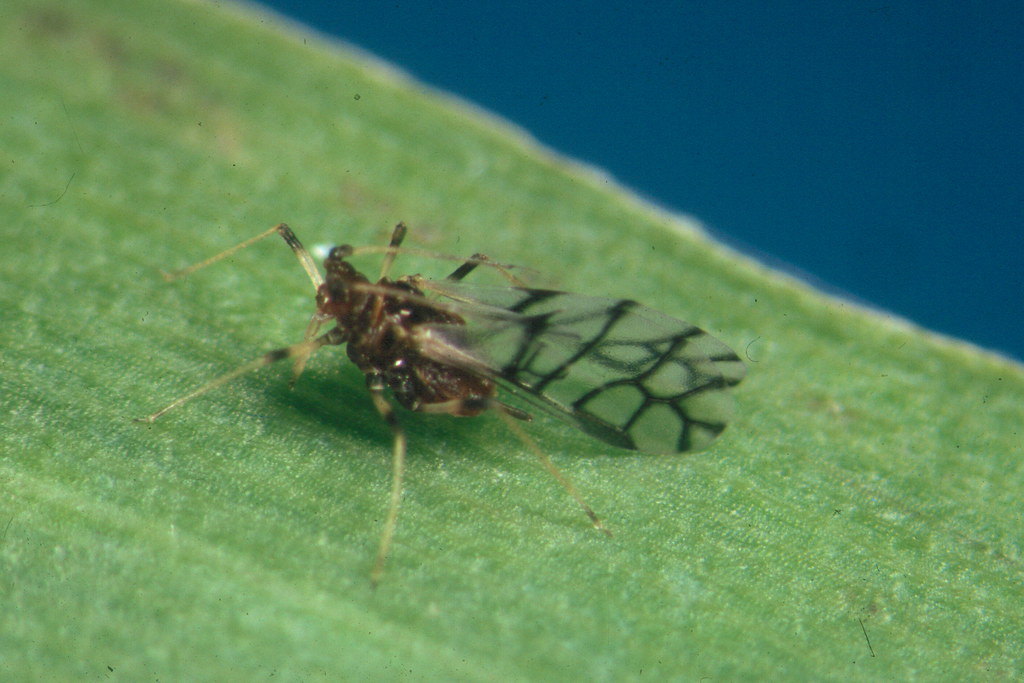
Glycaspis is a genus of plant-parasitic psyllids in the family Aphalaridae. Species in this genus are strongly associated with Eucalyptus host plants. The genus includes at least two described species: Glycaspis brimblecombei (red gum lerp psyllid), a significant invasive pest of eucalyptus plantations worldwide, and Glycaspis granulata. Many Glycaspis species exhibit high host specificity, often restricted to single Eucalyptus species or closely related host groups. The genus is native to Australia, where it shows patterns of short-range endemism linked to host plant distribution.
jumping soil bugs
Glyptocombus is a genus of minute jumping soil bugs in the family Schizopteridae, first described by Heidemann in 1906. The genus was long considered monotypic, containing only G. saltator, until 2018 when three additional species were described from the United States and Mexico. These insects belong to the infraorder Dipsocoromorpha, a group of small predatory true bugs adapted to life in soil and leaf litter. The genus is among the more poorly known groups of Heteroptera due to their cryptic habits and small size.
Glyptocombus saltator is a minute true bug in the family Schizopteridae, described by Heidemann in 1906. It belongs to the infraorder Dipsocoromorpha, a group of small predatory or cryptic heteropterans often found in leaf litter and other concealed microhabitats. The species epithet "saltator" suggests jumping ability, a trait common in this group. Very little is known about its specific biology due to its small size and cryptic habits.
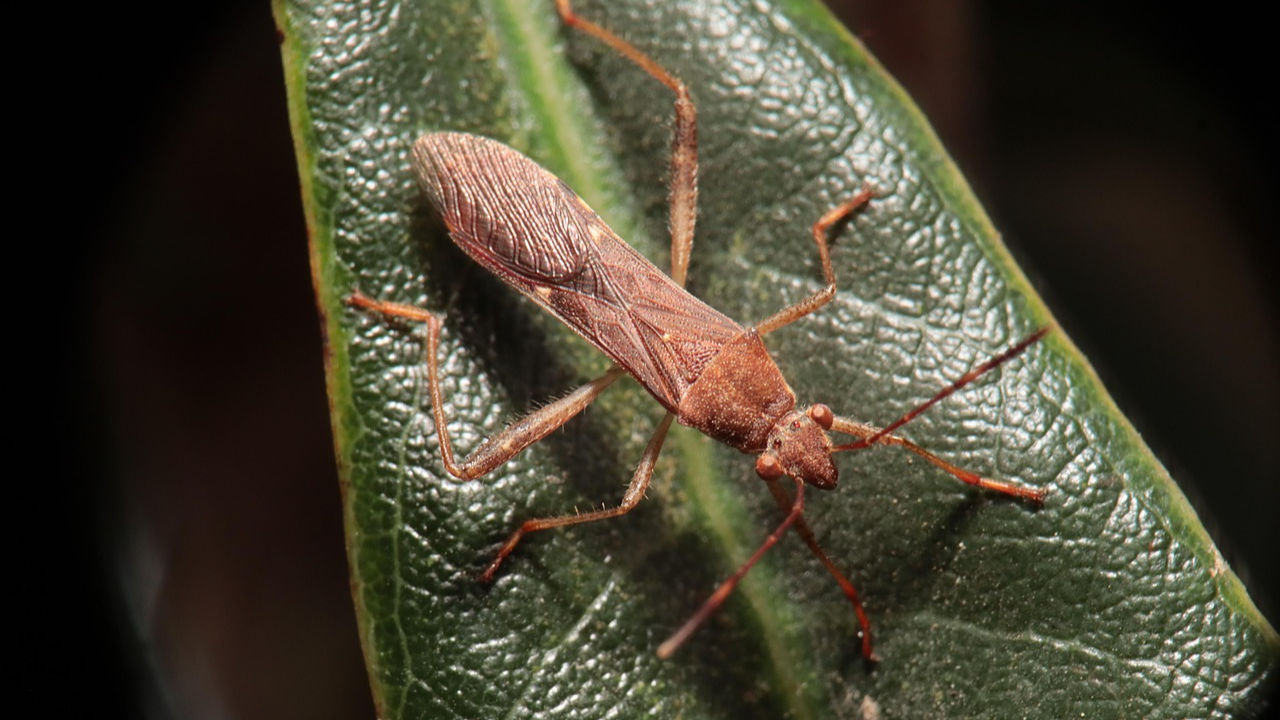
Gonoporomiris mirificus is a species of plant bug in the family Miridae. It has been recorded from the Caribbean region, Mexico, and the southeastern United States. The species was described by Distant in 1893. Like other mirids, it belongs to the true bug suborder Heteroptera and possesses the characteristic piercing-sucking mouthparts of this group.
Gracilimiris is a genus of plant bugs in the family Miridae, established by Stonedahl & Henry in 1991. The genus contains at least three described species: G. litoralis, G. strigosus, and G. wheeleri. Members of this genus are little-known and poorly studied, with limited published information on their biology and ecology.
Gracilimiris litoralis is a plant bug species in the family Miridae, described by Stonedahl and Henry in 1991. It is a little-known species with limited published information. Records indicate a distribution in the southeastern United States.
Gracilimiris rubrolineatus is a species of plant bug in the family Miridae. The genus Gracilimiris was established to accommodate slender, elongate mirids with distinctive antennal proportions. This species is characterized by the reddish longitudinal line referenced in its specific epithet. Like other members of Miridae, it possesses piercing-sucking mouthparts. Published records for this species are limited.
Gracilimiris strigosus is a species of plant bug in the family Miridae, described by Stonedahl and Henry in 1991. It belongs to the genus Gracilimiris, a group of mirid bugs characterized by their slender body form. The species is known from the southwestern United States, with confirmed records from Texas and Arizona. As a member of the large and diverse family Miridae, it is part of one of the most species-rich families of true bugs.
Graminella is a genus of leafhoppers in the family Cicadellidae, comprising at least 30 described species. The genus is best known through extensive research on Graminella nigrifrons (black-faced leafhopper), a significant agricultural pest and plant virus vector in North American maize systems. Members of this genus feed on grasses and grass-family crops, with documented vectoring capacity for multiple economically important plant pathogens including corn stunt spiroplasma, maize chlorotic dwarf virus, and maize fine streak virus.
Graminella nigripennis is a species of leafhopper in the family Cicadellidae, described by DeLong in 1923. The genus Graminella belongs to the subfamily Deltocephalinae, a large and diverse group of leafhoppers commonly associated with grasses and herbaceous plants. The specific epithet nigripennis refers to the black wing coloration characteristic of this species. Leafhoppers in this genus are typically small, active insects that feed on plant sap using piercing-sucking mouthparts.
Graminella plana is a species of leafhopper in the family Cicadellidae, first described by DeLong in 1924. It belongs to the subfamily Deltocephalinae, a large group of grass-feeding leafhoppers. The species has been recorded in the southeastern United States. As a member of the genus Graminella, it is associated with grassy habitats, though specific ecological details remain limited in published literature.
Graphocephala aurora is a leafhopper species in the family Cicadellidae, first described by Baker in 1898 under the name Tettigonia aurora. As a member of the genus Graphocephala, it shares the distinctive characteristics of this group, including colorful patterning and association with the subfamily Cicadellinae (sharpshooters). The species is known from limited distributional records in the southwestern United States and Mexico.
Red-banded Leafhopper, Candystriped Leafhopper, Scarlet-and-Green Leafhopper
Graphocephala coccinea coccinea is a subspecies of leafhopper in the family Cicadellidae, commonly known as the Red-banded Leafhopper or Candystriped Leafhopper. This subspecies is restricted to coastal areas along the Atlantic seaboard of North America, where it feeds on plant sap using piercing-sucking mouthparts. Adults measure 5.7–8.4 mm in length, with females slightly larger than males. The species produces brochosomes, unique nanoparticles that render its exoskeleton superhydrophobic and anti-reflective.
Willow Leafhopper
A sharpshooter leafhopper in the family Cicadellidae, Graphocephala confluens is a western North American species closely related to the more widely known candy-striped leafhopper (G. coccinea). Like other members of its genus, it possesses the characteristic brochosome coating that makes leafhoppers superhydrophobic and anti-reflective. The species is associated with willow and other woody plants in riparian and wetland habitats.
Graphocephala constricta is a leafhopper species in the family Cicadellidae, described by Hamilton in 1985. As a member of the genus Graphocephala, it shares the distinctive colorful patterning characteristic of sharpshooters in this group. The species is documented from a limited number of observations in the south-central United States. Like other leafhoppers in this genus, it possesses brochosomes—specialized nanoparticles that provide water-repellent and anti-reflective properties to the cuticle.
Graphocephala lugubris is a species of leafhopper in the family Cicadellidae, first described by Signoret in 1854. It belongs to a genus known for colorful, patterned species commonly called sharpshooters. Like other leafhoppers in this genus, it likely possesses brochosomes—nanoparticle coatings that provide water-repellent and anti-reflective properties. The species has been recorded in the south-central United States.
Graphocephala subrufa is a leafhopper species in the family Cicadellidae, first described by DeLong & Currie in 1960. It belongs to a genus known for colorful, patterned species often called sharpshooters. Like other Graphocephala, it likely exhibits the characteristic features of the genus including vibrant coloration and association with plant-feeding habits. The species has been documented in the southwestern United States and Mexico.
Graphocephala uhleri is a species of sharpshooter leafhopper in the family Cicadellidae. As a member of the genus Graphocephala, it belongs to a group known for vivid coloration and distinctive patterning. The species was described by Ball in 1901 and occurs in western North America. Like other leafhoppers, it possesses specialized hind legs adapted for jumping and produces brochosomes—nanoparticles that confer water-repellent and anti-reflective properties to its cuticle.
Versute Sharpshooter
Graphocephala versuta is a species of sharpshooter leafhopper in the family Cicadellidae. It is a member of the genus Graphocephala, which includes several colorful and economically significant leafhopper species. Like other sharpshooters, it possesses piercing-sucking mouthparts adapted for feeding on plant xylem fluids. The species has been documented in various North American habitats and is part of the diverse leafhopper fauna that includes vectors of plant pathogens.
Graphocraerus ventralis is a species of leafhopper in the family Cicadellidae, first described by Fallén in 1806. It belongs to the subfamily Deltocephalinae and tribe Athysanini. The species has been recorded across parts of Europe and Asia, with distribution records from regions including Abruzzo (Italy), Almaty and Altay (Kazakhstan), Bashkortostan and Belgorod (Russia). As a leafhopper, it is a member of the diverse Hemiptera order characterized by piercing-sucking mouthparts.
Graptocorixa californica is a species of water boatman in the family Corixidae, first described by Hungerford in 1925. It belongs to the tribe Graptocorixini within the subfamily Corixinae. The species is known to occur in North America, with its specific epithet suggesting a California distribution. Water boatmen in this family are aquatic insects found in freshwater habitats.
Graptocorixa serrulata is a species of water boatman (family Corixidae) in the order Hemiptera. It is a small aquatic true bug distributed across parts of North America and Middle America. As a member of the Graptocorixini tribe, it inhabits freshwater environments where it likely occupies the benthic zone typical of corixid beetles. The species was described by Philip Reese Uhler in 1897.
Gypona melanota is a leafhopper species in the family Cicadellidae, first described by Spångberg in 1878. As a member of the genus Gypona, it produces brochosomes—complex protein-lipid nanoparticles that coat its exoskeleton and wings, conferring superhydrophobic and anti-reflective properties. The species has been documented in several North American regions including Alberta, Arizona, Colorado, Connecticut, and Georgia. Brochosomes of Gypona species feature distinctive angular, geometric pit structures compared to the smoother brochosomes of some related genera.
Gypona verticalis is a leafhopper species in the family Cicadellidae, first described by Carl Stål in 1864. As a member of the Gyponini tribe, it belongs to a group of leafhoppers characterized by their broad, somewhat flattened body form. The genus Gypona is notable for producing brochosomes—nanoparticles that coat the body and provide superhydrophobic and anti-reflective properties. This species has been recorded from the southwestern United States and Mexico.
Gyponana avara is a leafhopper species in the family Cicadellidae, described by DeLong in 1942. Like other members of its genus, it produces brochosomes—complex protein-lipid nanoparticles that form a highly water-repellent and anti-reflective coating on its exoskeleton and wings. The species has been documented in the eastern United States.
Gyponana cacumina is a species of leafhopper in the family Cicadellidae, described by DeLong in 1942. Like other members of its genus, it produces brochosomes—complex protein-lipid nanoparticles that form a superhydrophobic, anti-reflective coating on its body and wings. The species has been recorded from multiple states in the northeastern United States and Arizona.
Gyponana flavilineata is a leafhopper species in the family Cicadellidae. As a member of the genus Gyponana, it produces brochosomes—complex protein-lipid nanoparticles that form a superhydrophobic, anti-reflective coating on its exoskeleton and wings. The species has been documented across multiple U.S. states and Canadian provinces.
Gyponana geminata is a leafhopper species in the family Cicadellidae, first described by Osborn in 1905. Like other leafhoppers in the genus Gyponana, this species produces brochosomes—hollow, soccer ball-shaped nanoparticles that coat the exoskeleton and wings, rendering them superhydrophobic and anti-reflective. The brochosomes of Gyponana species feature distinctively angled, geometric pits that differ morphologically from those of other leafhopper genera. This species has been documented in northeastern North America.
Gyponana gibbera is a leafhopper species in the family Cicadellidae, first described by DeLong in 1942. Like other members of the genus Gyponana, it produces distinctive brochosomes—nanoparticles that form a superhydrophobic, anti-reflective coating on its cuticle. The species has been recorded in Florida.
Gyponana gladia is a species of leafhopper in the family Cicadellidae, first described by DeLong in 1942. Like other members of its genus, it possesses distinctive brochosomes—nanoparticles produced in the Malpighian tubules that create a superhydrophobic, anti-reflective coating on the body and wings. The species has been documented at blacklight traps in autumn, suggesting nocturnal activity patterns. It is one of many small, often overlooked leafhopper species that contribute to the high diversity of Hemiptera in North American temperate regions.
Gyponana mali is a leafhopper species in the family Cicadellidae, first described by DeLong in 1942. Like other members of its genus, it produces brochosomes—nanoparticles that coat its body for water repellency and anti-reflective camouflage. The species has been recorded in parts of eastern North America including Georgia, Illinois, New Hampshire, Ohio, and Ontario. As a member of the Gyponini tribe, it belongs to a group of leafhoppers characterized by particular morphological and ecological traits, though specific details about its biology remain limited in published literature.
Gyponana ortha is a species of leafhopper in the family Cicadellidae, first described by DeLong in 1942. As a member of the genus Gyponana, it is known to produce brochosomes—complex protein-lipid nanoparticles that form a superhydrophobic, anti-reflective coating on the exoskeleton. The species has been documented in the eastern and midwestern United States, including records from Florida, Illinois, Indiana, Iowa, and the District of Columbia. Like other leafhoppers, it is a plant-feeding insect with piercing-sucking mouthparts.
Gyponana procera is a species of leafhopper in the family Cicadellidae, first described by DeLong in 1942. Leafhoppers in this genus are characterized by producing brochosomes—complex protein-lipid nanoparticles that create a superhydrophobic, anti-reflective coating on their exoskeletons. G. procera is one of many small leafhopper species that contribute to the remarkable diversity of this group in North America.
Gyponana pruinosa is a leafhopper species in the family Cicadellidae, currently considered a synonym of Gyponana flavilineata. Leafhoppers in this genus are small, often colorful insects that feed on plant sap. The species has been documented in blacklight surveys in autumn, suggesting nocturnal activity or attraction to light sources. Members of Gyponana are among the diverse leafhopper fauna found in North American yards and natural areas, with most species measuring under five millimeters in body length.
Gyponana quebecensis is a leafhopper species in the family Cicadellidae, first described from Quebec in 1872. As a member of genus Gyponana, it produces brochosomes—complex protein-lipid nanoparticles that create a superhydrophobic, anti-reflective coating on its body and wings. The species has been documented across multiple U.S. states including Florida, Illinois, Maine, Montana, and New Hampshire.
Gyponana scrupulosa is a leafhopper species in the family Cicadellidae. Like other members of its genus, it produces brochosomes—complex protein-lipid nanoparticles that form a water-repellent, anti-reflective coating on its body. The species has been documented in several U.S. states including Illinois, Kansas, Florida, Georgia, and the District of Columbia. It is attracted to blacklight traps and has been collected in autumn.
Gyponana sonora is a species of leafhopper in the family Cicadellidae, described by Hamilton in 1982. Like other members of the genus Gyponana, it produces brochosomes—complex protein-lipid nanoparticles that create a superhydrophobic, anti-reflective coating on its exoskeleton. Brochosomes from Gyponana species have been documented to feature more angled, geometric surface pits compared to those of other leafhopper genera. The species is associated with the Sonoran Desert region, as indicated by its specific epithet.
Gyponana tenella is a species of leafhopper in the family Cicadellidae. Leafhoppers in the genus Gyponana have been documented producing distinctive brochosomes—nanoparticles that create a water-repellent, anti-reflective coating on the exoskeleton. The species has been recorded in multiple U.S. states including California, Colorado, Florida, Georgia, and Illinois. As a member of the subfamily Iassinae, it belongs to a diverse group of plant-feeding insects typically associated with woody vegetation.
Western Annual Cicadas
Hadoa is a genus of large-bodied cicadas (family Cicadidae) native to Western North America. The genus was erected in 2015 by Moulds to accommodate species previously placed in Tibicen, which was redefined to include only European species. Hadoa species are annual cicadas, with adults typically emerging during summer months. The genus contains approximately 20 species distributed across western North American habitats including deserts, woodlands, and montane regions.
Tablelands Sun-Singer
Hadoa bifida is a North American cicada species in the family Cicadidae, originally described as Cicada bifida by Davis in 1916 and later transferred to the genus Hadoa. The species is commonly known as the Tablelands Sun-Singer. It occurs in the southwestern and south-central United States, including Arizona, Colorado, Kansas, New Mexico, and Oklahoma. As a member of the cicada family, it is presumed to be a subterranean root-feeder as a nymph and an aerial, plant-sap feeding adult, though specific life history details have not been documented.
Chiricahua Sun-Singer
Hadoa chiricahua is an annual cicada species in the genus Hadoa, endemic to the southwestern United States. The species was originally described as Tibicen chiricahua by Davis in 1923 and later transferred to Hadoa. It is known from the Chiricahua Mountains of southeastern Arizona and adjacent areas of New Mexico, inhabiting mid- to high-elevation forests within the Madrean Sky Island ecosystem. As an annual cicada, it completes its life cycle within a single year, unlike periodical cicadas that emerge on multi-year cycles.
Southern Piñon Sun-Singer
Hadoa chisosensis is a species of annual cicada in the genus Hadoa, native to Texas and adjacent areas of northern Mexico. The species is commonly known as the Southern Piñon Sun-Singer. As a member of the Cicadidae family, it produces acoustic signals typical of cicadas. The specific epithet 'chisosensis' refers to the Chisos Mountains region of Texas, indicating its association with this geographic area.
Orange-and-black Cicada
Hadoa duryi is a species of cicada in the family Cicadidae, commonly known as the Orange-and-black Cicada. The species was originally described as Tibicen duryi by Davis in 1917 and later transferred to the genus Hadoa. It occurs in the southwestern United States, where adults have been observed on trunks and branches of recently dead pinyon pine (Pinus edulis). The species appears to be associated with pinyon-juniper woodland habitats.
Dappled Sun-Singer
Hadoa inaudita, commonly known as the Dappled Sun-Singer, is a cicada species in the family Cicadidae. It is native to the southwestern and south-central United States, with documented occurrences in Arizona, Colorado, New Mexico, Oklahoma, and Texas. The species was first described by Davis in 1917 and has been observed in arid and semi-arid habitats including sand dunes, juniper woodlands, and desert grasslands. Adults are active during the summer months and are associated with yucca and other desert vegetation.
Aztec Sun-Singer
Hadoa montezuma is a cicada species in the family Cicadidae, commonly known as the Aztec Sun-Singer. It was originally described by Distant in 1881. The species belongs to the genus Hadoa, which was established to accommodate several North American cicada species previously placed in other genera. Distribution records indicate presence in Arizona, California, and Morelos, Mexico.
Corrupted Sun-Singer
Hadoa parallela is a cicada species in the family Cicadidae, distributed across the southwestern United States and northern Mexico. The species was originally described by Davis in 1923 under the genus Tibicen before being reclassified to Hadoa. Like other cicadas, it produces acoustic signals for communication. The common name 'Corrupted Sun-Singer' reflects its calling behavior.
Madrean Grassland Sun-Singer
Hadoa simplex is a cicada species in the family Cicadidae, originally described by Davis in 1941 as a subspecies of Tibicen bifidus before being elevated to species status and transferred to the genus Hadoa. It is known from Arizona and is associated with Madrean grassland habitats. The species is one of relatively few confirmed observations, with limited documented occurrence data.
Texas Dog-day Cicada
Hadoa texana is a species of cicada in the family Cicadidae, commonly known as the Texas Dog-day Cicada. It is native to the south-central United States, with records from Texas, Oklahoma, and New Mexico. Like other cicadas, it produces loud acoustic signals using specialized tymbal organs. The species was originally described by Metcalf in 1963 and was later transferred to the genus Hadoa following taxonomic revision that split the broadly defined genus Tibicen.
Hadronemidea echinata is a species of plant bug in the family Miridae, first described by Gruetzmacher and Schaffner in 1977. The species is known from the southwestern United States and northern Mexico, with records from Texas, New Mexico, and several Mexican states including Durango, Nuevo León, San Luis Potosí, and Tamaulipas. As a member of the Miridae, it belongs to one of the largest families of true bugs, though specific ecological details for this particular species remain poorly documented.
Hadrosomus teapensis is a seed bug in the family Lygaeidae, first described by Distant in 1893. The species is known from both Mexico and the United States, with records extending from the type locality at Teapa, Tabasco, Mexico to southern Florida. As a member of the Lygaeinae subfamily, it belongs to a group of true bugs adapted for seed feeding. The species remains poorly documented in the primary literature, with most records derived from specimen databases and limited field observations.