
Graminella
DeLong, 1936
Species Guides
10- Graminella aureovittata
- Graminella cognita
- Graminella fitchii
- Graminella nigrifrons(black-faced leafhopper)
- Graminella nigripennis
- Graminella oquaka
- Graminella pallidula
- Graminella plana
- Graminella sonora(Lesser Lawn Leafhopper)
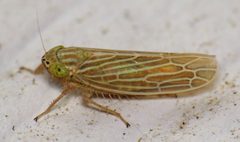
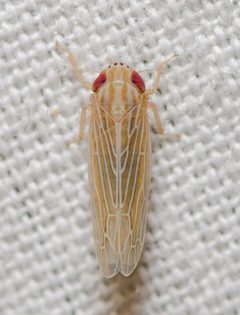
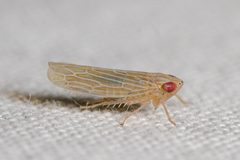
Graminella is a of leafhoppers in the Cicadellidae, comprising at least 30 described . The genus is best known through extensive research on Graminella nigrifrons (black-faced leafhopper), a significant agricultural pest and plant virus in North American maize systems. Members of this genus feed on grasses and grass-family crops, with documented vectoring capacity for multiple economically important plant including corn stunt spiroplasma, maize chlorotic dwarf virus, and maize fine streak virus.
Pronunciation
How to pronounce Graminella: /ɡra.mɪˈnɛl.lə/
These audio files are automatically generated. While they are not always 100% accurate, they are a good starting point.
Images
Habitat
Agricultural fields, particularly maize and corn fields; grassy areas with grasses including Vaseygrass (Paspalum urvillei), jungle rice (Echinochloa colona), Johnsongrass (Sorghum halepense), crabgrass (Digitaria sanguinalis), foxtail (Setaria spp.), panicgrass (Panicum spp.), and goosegrass (Eleusine indica). Laboratory colonies maintained on young maize or oats under controlled conditions.
Distribution
United States, with documented in Mississippi, Ohio, and wide distribution across the country. Collections confirmed from maize fields around the Ohio Agricultural Research and Development Center campus (40.773 N–81.909 W).
Seasonality
overwinter; peak in late July to early August in Mississippi. Strong observed from April through November. Two per year in Mississippi.
Diet
Feeds on maize and oats; has a wide range on many grass including grain crops such as maize and sorghum.
Host Associations
- Zea mays - maize, corn
- Avena sativa - oats; laboratory
- Sorghum bicolor - sorghum
- Sorghum halepense - Johnsongrass
- Paspalum urvillei - Vaseygrass
- Echinochloa colona - jungle rice
- Digitaria sanguinalis - crabgrass
- Setaria spp. - foxtail
- Panicum spp. - panicgrass
- Eleusine indica - goosegrass
Life Cycle
Overwinters as . Two per year in Mississippi. Oviposition occurs in corn leaf and stems; hatch in 6–7 days. Undergoes .
Behavior
Strong from April to November. Attracted to UV light traps. Exhibits migratory . Uses and in mate-location behavior. Feeding involves piercing plant ; secretes non-soluble gel saliva and soluble watery saliva to promote plant feeding.
Ecological Role
Agricultural pest with significant economic impact on corn production through transmission of debilitating plant . corn stunt spiroplasma, maize chlorotic dwarf virus, maize fine streak virus, and phytoplasmas.
Human Relevance
Major pest of maize and sorghum production in the United States. Economic losses result from direct feeding damage and particularly from virus transmission. Subject of extensive research for pest control and management strategies. Salivary gland transcriptome studies identify potential targets for functional studies to improve pest control.
More Details
Research Significance
Graminella nigrifrons has become a model organism for studying leafhopper salivary gland function and plant virus . The first salivary gland transcriptome identified 14,297 salivary gland-enriched and 195 predicted secretory , with functions including 'oxidoreduction', ' transport', and '-binding'. Two transcripts (GnP19 and GnE63, a putative calcium binding protein) were significantly upregulated in maize-fed , indicating feeding-related importance.
Vector Competence
Documented of Corn Stunt Spiroplasma (CSS), Maize Chlorotic Dwarf Virus (MCDV), maize fine streak virus, and phytoplasmas. Vectoring capacity makes this economically significant in North American agriculture.
Sources and further reading
- BugGuide
- Wikipedia
- iNaturalist taxon
- NCBI Taxonomy
- Catalogue of Life
- Feeding Behavior of Graminella nigrifrons (Forbes)
- Transcriptome Analysis Reveals Functional Diversity in Salivary Glands of Plant Virus Vector, Graminella nigrifrons
- Studies on the Field Biology of Graminella nigrifrons,1 a Vector of Corn Stunt Virus in Mississippi2
- Influence of Life History of Grasses and Maize Chlorotic Dwarf Virus on the Biotic Potential of the Leafhopper Graminella nigrifrons (Homoptera: Cicadellidae)
- Greenhouse Studies of Host Plant Suitability to Graminella nigrifrons, a Vector of Corn Stunt Virus12
- Biology of Graminella nigrifrons (Homoptera: Cicadellidae), a Vector of Corn (Maize) Stunt Virus1
- Roles of interplant movement, acoustic communication, and phototaxis in mate-location behavior of the leafhopper Graminella nigrifrons