
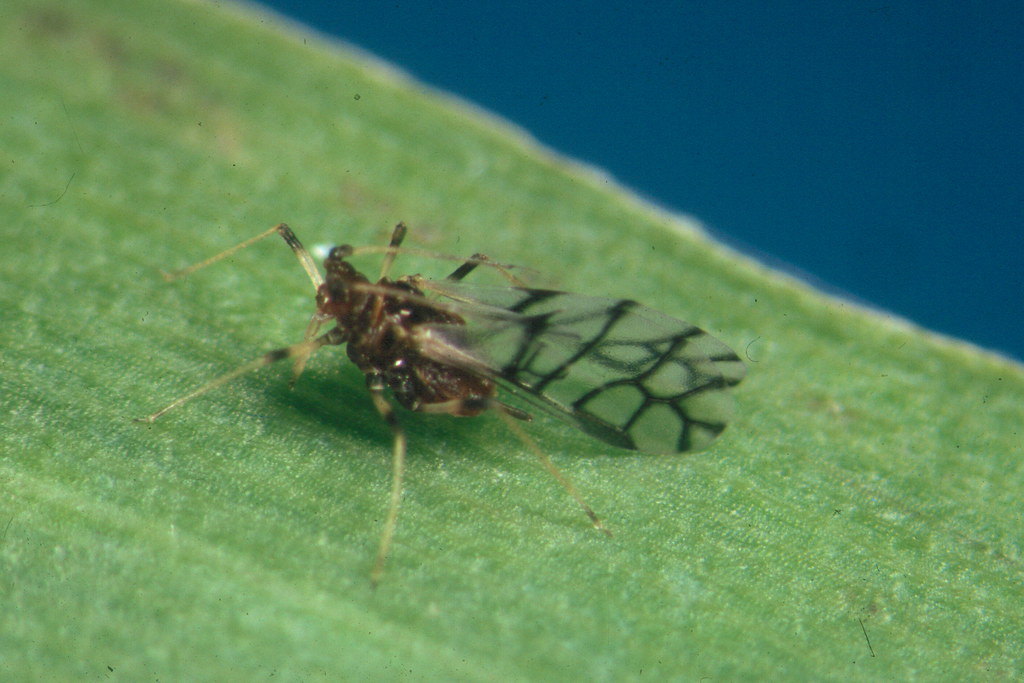
People usually talk about aphids like they are already explained. Tiny green bugs. Bad for the roses. Spray them, squish them, move on. That is not wrong. It is just a very small version of the story.
Ashmeadea is a genus of treehoppers in the family Membracidae, tribe Smiliini. The genus was established by Goding in 1892. As a member of the Smiliinae subfamily, species in this genus possess the enlarged pronotum characteristic of treehoppers, which often extends into distinctive projections. The genus contains relatively few described species and is poorly documented in published literature.
Aspidiotus is a genus of armored scale insects (family Diaspididae) comprising over 100 described species. Several species are significant agricultural pests, notably Aspidiotus destructor (coconut scale) and Aspidiotus nerii (oleander scale), which infest palms, fruit crops, and ornamental plants across tropical and subtropical regions worldwide. The genus is characterized by the hard, protective scale covering secreted by females. Species within Aspidiotus serve as hosts for specialized bacterial endosymbionts, particularly Candidatus Uzinura diaspidicola, which play roles in host nutrition and potentially influence invasive success.
coconut scale, transparent scale, Bourbon scale
Aspidiotus destructor is an armored scale insect (Hemiptera: Diaspididae) known as the coconut scale. It is a globally distributed pest of tropical and subtropical agriculture, causing significant damage to coconut, banana, and numerous other fruit and ornamental plants. The species is notable for its rapid reproduction and the protective waxy test that covers most life stages. It has been the target of extensive biological control efforts, most famously the successful introduction of the lady beetle Cryptognatha nodiceps to Guam in the early 1900s. The species harbors a primary bacterial endosymbiont, Candidatus Uzinura diaspidicola, which may play a role in its biology and potential management.
Athysanella occidentalis is a species of leafhopper in the family Cicadellidae, first described by Baker in 1898. It belongs to the order Hemiptera, a group of true bugs characterized by piercing-sucking mouthparts. The species has been recorded in western North America including Alberta, Arizona, British Columbia, California, Colorado, and Idaho. As a member of the genus Athysanella, it is part of a diverse group of leafhoppers, though specific biological details for this particular species remain poorly documented in available literature.
Athysanella secunda is a species of leafhopper in the family Cicadellidae, first described by Blocker and Wesley in 1985. It belongs to the genus Athysanella, which comprises leafhoppers primarily associated with grassland habitats in North America. The species is documented from Saskatchewan, Canada, though detailed ecological and biological information remains limited in published literature.
Atomoscelis onustus is a species of plant bug in the family Miridae. It exhibits a broad Holarctic distribution spanning the Palearctic and Nearctic regions. The species has been documented across diverse environments from the western Mediterranean and Middle East to western North America. Like other members of the genus, it is presumed to be phytophagous, though specific host plant associations remain poorly documented.
Atrachelus is a genus of assassin bugs in the family Reduviidae, comprising at least two described species: A. cinereus and A. mucosus. The genus is found in the Americas and belongs to the subfamily Harpactorinae, a diverse group of predatory true bugs. Species in this genus share the general characteristics of harpactorine assassin bugs but specific diagnostic features remain poorly documented in available literature.
Atrachelus cinereus is a species of assassin bug in the family Reduviidae. It has a broad distribution spanning Central America, North America, and South America. The species was described by Fabricius in 1798, with the nominate subspecies Atrachelus cinereus cinereus. A second subspecies, Atrachelus cinereus wygodzinskyi (also spelled wygoszinskyi), was described by Elkins in 1954. Like other assassin bugs, it is presumed to be a predatory insect, though specific details of its biology remain poorly documented in the available literature.
Atrachelus cinereus cinereus is a subspecies of assassin bug in the family Reduviidae, first described by Fabricius in 1798. It belongs to the subfamily Harpactorinae, a diverse group of predatory true bugs. The genus Atrachelus is part of the Harpactorini tribe, which contains numerous species distributed across the Americas. This subspecies has a broad geographic range spanning North, Central, and South America as well as the Caribbean.
Atractotomus balli is a species of plant bug in the family Miridae, first described by Knight in 1931. It belongs to the genus Atractotomus, a group of small predatory or plant-feeding true bugs. Records indicate presence in western North America, including the southwestern United States. As with many mirid species, detailed biological information remains limited in published literature.
Atractotomus miniatus is a species of plant bug in the family Miridae, first described by Knight in 1926. It belongs to a genus of small predatory or omnivorous mirids. The species is documented from multiple states in the southeastern and south-central United States.
Attenuipyga minor is a species of leafhopper in the family Cicadellidae, described by Osborn in 1920. It belongs to a genus whose name reflects the slender, tapering pygofer structure characteristic of these insects. The species has been recorded from the Dakotas region of the north-central United States. Like other leafhoppers, it is a xylem-feeding insect that uses piercing-sucking mouthparts to extract fluids from plant vascular tissue.
Atymna inornata is a treehopper species in the family Membracidae, subfamily Smiliinae. First described by Thomas Say in 1831, this species is characterized by its relatively unadorned pronotum compared to other members of the genus. Treehoppers in this group are known for their highly modified pronota that often extend into elaborate structures, though A. inornata exhibits a more subdued morphology consistent with its specific epithet.
Atymna simplex is a treehopper species in the family Membracidae, first described by Van Duzee in 1908. It belongs to the subfamily Smiliinae and tribe Smiliini. The species has been recorded in Arizona and Texas, with limited observational data available.
scentless plant bugs
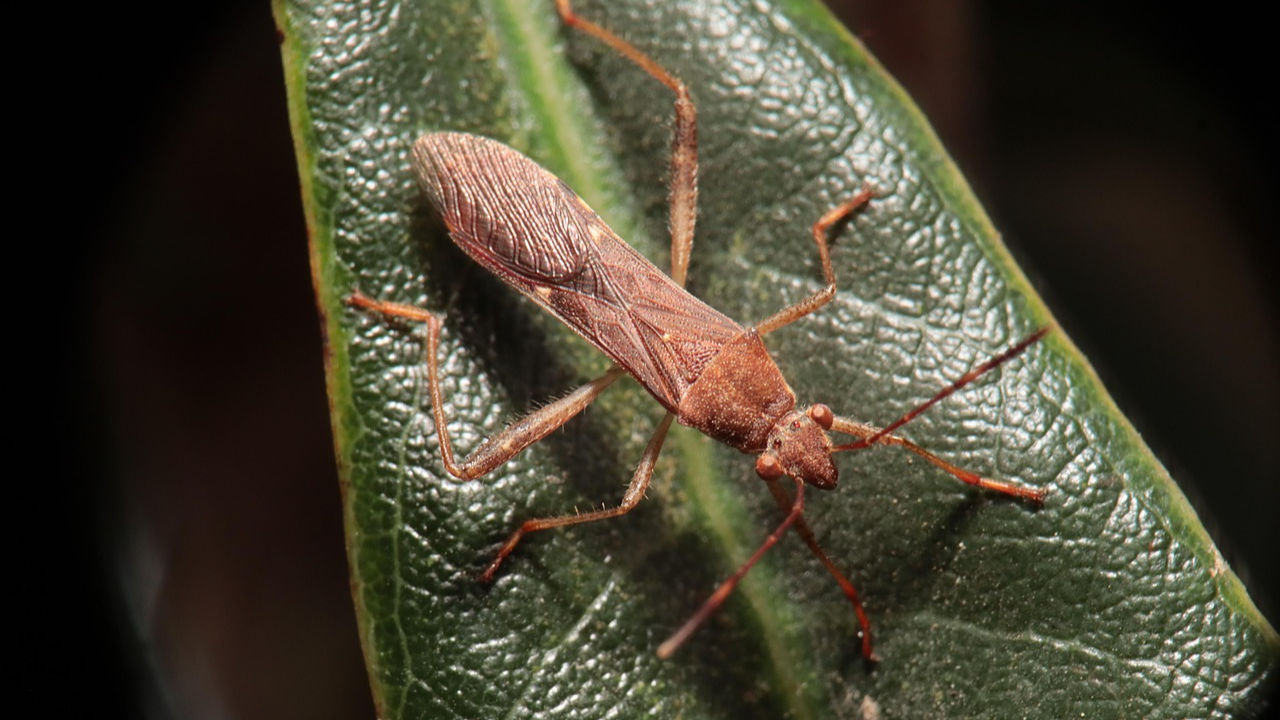
Aufeius is a genus of scentless plant bugs in the family Rhopalidae, established by Stål in 1870. The genus contains a single described species, Aufeius impressicollis. Members of this genus lack the scent glands typical of many true bugs. The genus is part of the tribe Harmostini within the subfamily Rhopalinae.
Aufeius impressicollis is a species of scentless plant bug in the family Rhopalidae. It belongs to the tribe Harmostini within the subfamily Rhopalinae. The species was described by Stål in 1870 and occurs from southern Canada through Mexico to Central America. It is one of relatively few documented species in the genus Aufeius.
Augocoris gomesii is a shield-backed bug in the family Scutelleridae, characterized by its enlarged scutellum that covers most of the abdomen and wings. The species is native to Middle America and is one of the more frequently observed members of its genus, with nearly 800 records on iNaturalist. Like other scutellerids, it possesses a distinctive rounded, shield-like body form. The species was described by Burmeister in 1835.
Autumnimiris albescens is a species of plant bug in the family Miridae, described by Van Duzee in 1925. The species is known from the southwestern United States and Mexico. Like other members of the genus Autumnimiris, it is associated with autumn activity periods, though specific biological details remain poorly documented.
California psyllid
Bactericera californica is a species of psyllid in the family Triozidae, first described by Crawford in 1910. It is native to western North America and has been documented in California, Arizona, Colorado, and Arkansas. As a member of the genus Bactericera, it belongs to a group of psyllids that includes several economically significant agricultural pests. The species is poorly studied compared to its congener B. cockerelli, the potato psyllid, and little is known about its specific biology or host associations.
Baeoalitriozus is a genus of psyllids (true bugs in the family Triozidae) comprising at least 16 described species. The genus was established by Li in 2011 and has a notably broad geographic distribution spanning three continents: North America, Africa, and Southeastern Asia. Species in this genus are associated with diverse host plants, including Diospyros (persimmon) and Sersalisia. The genus demonstrates considerable taxonomic diversity with species described across multiple decades by various psyllid specialists including Crawford, Tuthill, Hollis, and Buckton.
Bahitini is a tribe of leafhoppers in the subfamily Deltocephalinae, established by Zahniser & Dietrich in 2013. It comprises 25 genera and over 165 described species. The tribe belongs to the family Cicadellidae, a diverse group of sap-feeding insects commonly known as leafhoppers.
Bakerella angulata is a species of planthopper in the family Delphacidae, described by Beamer in 1950. It belongs to the genus Bakerella within the tribe Delphacini. The species has been recorded from Florida in North America. Like other delphacid planthoppers, it is likely associated with grass or sedge hosts, though specific host plant relationships remain undocumented in the available literature.
Bakerella cornigera is a planthopper species in the family Delphacidae, described by Beamer in 1950. It is native to eastern North America, with records from Delaware, Pennsylvania, Virginia, and West Virginia. As a delphacid planthopper, it likely feeds on plant phloem sap using its piercing-sucking mouthparts. The specific epithet "cornigera" (horn-bearing) may refer to morphological features, though this is not confirmed in available sources.
Bakerella fusca is a species of planthopper in the family Delphacidae, described by Beamer in 1945. It belongs to the superfamily Delphacoidea within the order Hemiptera. The species has been recorded from the southwestern United States, specifically Arizona, New Mexico, and Texas. As a delphacid planthopper, it likely shares general ecological traits with related species in the family, though specific biological details remain poorly documented in available literature.
Bakerella maculata is a species of planthopper in the family Delphacidae, first described by Crawford in 1914. It belongs to a family commonly known as delphacid planthoppers, which are small, sap-feeding insects associated with grasses and other monocots. The specific epithet 'maculata' refers to spotted or mottled coloration. Distribution records indicate presence in parts of North America including Mississippi and Ohio, as well as southern Mexico in Chiapas and Guerrero.
Bakerella minuta is a small delphacid planthopper species described by Beamer in 1950. It belongs to the family Delphacidae, a group of true bugs in the order Hemiptera commonly known as planthoppers. The species is recorded from the southeastern and midwestern United States, specifically Florida, Georgia, and Illinois. As with other members of Delphacidae, it is likely associated with grassland or wetland habitats where host grasses occur.
Bakerella muscotana is a species of planthopper in the family Delphacidae, described by Beamer in 1946. It belongs to a genus of small, delicate delphacids found in North America. Like other delphacids, it possesses a characteristic movable spur on the hind tibia, a key family trait. The species has been recorded from scattered localities across central and eastern North America.
dirt-colored seed bugs
Balboa is a genus of dirt-colored seed bugs in the family Rhyparochromidae, described by Distant in 1893. These true bugs are characterized by their dull, earth-toned coloration and association with plant seeds. The genus includes species such as Balboa ampliata, which has been documented in prairie and foothill habitats in Colorado.
dirt-colored seed bug
Balboa ampliata is a species of dirt-colored seed bug in the family Rhyparochromidae. It is a relatively large member of this family, with adults reaching conspicuous size. The species has been documented feeding on plant seeds and is attracted to lights at night. It occurs in prairie and foothill habitats in western North America, with records from Colorado and surrounding regions.
Balclutha abdominalis is a leafhopper species in the family Cicadellidae, first described by Van Duzee in 1892. It is a member of the genus Balclutha, which comprises small, often colorful leafhoppers commonly referred to as sharpshooters or microleafhoppers. The species has been recorded across western and central North America, with distribution records from Alabama, Alberta, British Columbia, California, Colorado, and other regions. Like other members of its genus, it likely inhabits grassy or herbaceous vegetation where it feeds on plant sap.
Balclutha confluens is a species of leafhopper in the family Cicadellidae, first described by Rey in 1894. The genus Balclutha is a large and widespread group of leafhoppers, with many species occurring in grassland and agricultural habitats. This particular species is documented from the northeastern United States, with records from Vermont. Leafhoppers in this genus are typically small, active insects that feed on plant sap and are often abundant in late summer and fall.
Balclutha impunctata is a species of leafhopper in the family Cicadellidae, characterized by its small size and distinctive wing patterning. The species is part of the genus Balclutha, which includes numerous microleafhopper species found across various habitats. Like other members of its genus, it is typically associated with grassy and herbaceous vegetation where it feeds on plant sap. The species is known from North America, though specific ecological details remain limited in published literature.
Balclutha knulli is a species of leafhopper in the family Cicadellidae, described by Davidson & DeLong in 1935. It belongs to the genus Balclutha, a group of small, often colorful leafhoppers commonly known as sharpshooters or leafhoppers. The species name honors Joseph Knull, a prominent American coleopterist who described many Buprestidae and other beetle species. As a member of the subfamily Deltocephalinae and tribe Macrostelini, it is part of a large and diverse radiation of leafhoppers that feed on plant vascular tissues.
Balclutha manitou is a species of leafhopper in the family Cicadellidae, described by Gillette and Baker in 1895. It belongs to the genus Balclutha, a group of small leafhoppers commonly referred to as microleafhoppers. The species has been recorded from western Canada, specifically Alberta and British Columbia. As a member of the Auchenorrhyncha, it possesses piercing-sucking mouthparts adapted for feeding on plant sap.
Balclutha nevadensis is a species of leafhopper in the family Cicadellidae, described by Baker in 1903. It belongs to the tribe Macrostelini within the subfamily Deltocephalinae. The species epithet 'nevadensis' indicates its association with Nevada. Like other members of the genus Balclutha, it is a small, slender leafhopper typically found in association with grasses.
Balclutha rosacea is a species of leafhopper in the family Cicadellidae, described by Osborn in 1929. The genus Balclutha belongs to the tribe Macrostelini within the subfamily Deltocephalinae, a diverse group of small, plant-feeding insects commonly known as leafhoppers. Species in this genus are typically associated with grasses and sedges, though specific ecological details for B. rosacea remain poorly documented in available literature. The species has been recorded from Puerto Rico based on distribution data in the Global Biodiversity Information Facility.
Red-streaked Leafhopper
Balclutha rubrostriata is a small leafhopper species in the family Cicadellidae, commonly known as the Red-streaked Leafhopper. It has been documented undergoing rapid range expansion in Texas and southwestern Louisiana, USA. The species has also been recorded from Florida, Hawaii, Australia (New South Wales), and Iran (Hormozgan), indicating a potentially wide or expanding distribution. As a member of the genus Balclutha, it belongs to a group of microleafhoppers often characterized by colorful wing patterns.
Beardsley Leafhopper
Balclutha saltuella is a small leafhopper species in the family Cicadellidae, commonly known as the Beardsley Leafhopper. It belongs to the genus Balclutha, a group of microleafhoppers known for their diminutive size and often colorful patterning. The species was described by Kirschbaum in 1868 and has a documented distribution across parts of Europe and North Africa. Like other members of its tribe Macrostelini, it is associated with grassy and herbaceous vegetation.
Balduza bufo is a species of planthopper in the family Issidae, first described by Van Duzee in 1923. It belongs to the order Hemiptera, which includes true bugs with piercing-sucking mouthparts. The species is part of the genus Balduza within the tribe Thioniini. Very little specific information is available about this particular species beyond its taxonomic classification and geographic distribution.
Banasa stink bugs
Banasa is a genus of phytophagous stink bugs in the family Pentatomidae, tribe Pentatomini. These plant-feeding true bugs are primarily associated with woody plants, particularly conifers and broadleaf trees. The genus contains at least eleven species in North America, with additional species described from South America including the recently described B. maculata from the Brazilian Atlantic Forest. Species identification typically requires microscopic examination of morphological characters.
juniper stink bug, jade stinkbug
Banasa euchlora, commonly known as the juniper stink bug or jade stinkbug, is a species of stink bug in the family Pentatomidae. The species is native to North America and is distinguished by its green coloration, which has earned it the common name 'jade stinkbug.' It belongs to a genus of eleven North American species, several of which are difficult to distinguish without microscopic examination.
Banasa grisea is a species of stink bug in the family Pentatomidae. It was described by Ruckes in 1957. The species is found in North America, though specific details about its biology, ecology, and appearance remain poorly documented in the available literature.
Banasa packardii is a species of stink bug in the family Pentatomidae. It is found in North America. The genus Banasa comprises green stink bugs that are commonly associated with vegetation.
Bandara johnsoni is a species of leafhopper in the family Cicadellidae, order Hemiptera. The species was originally described as Eutettix johnsoni by Van Duzee in 1894. It belongs to the genus Bandara, a group of true bugs commonly known as leafhoppers.
Bandara parallela is a species of leafhopper in the family Cicadellidae, described by Knull in 1946. It belongs to the subfamily Deltocephalinae and tribe Platymetopiini. The species is part of the diverse Hemiptera order, which includes true bugs with piercing-sucking mouthparts. Very little specific biological information is documented for this particular species.
Barce is a genus of thread-legged bugs in the family Reduviidae, subfamily Emesinae, tribe Metapterini. The genus was established by Stål in 1866 and contains approximately 10 described species. These predatory true bugs are characterized by their elongated, slender legs adapted for capturing prey on vegetation.
Barce aberrans is a species of thread-legged assassin bug in the family Reduviidae, subfamily Emesinae. It was described by McAtee and Malloch in 1925 and is native to North America. As a member of the Metapterini tribe, it belongs to a group of reduviids characterized by slender, elongated bodies and raptorial forelegs adapted for capturing prey. The species is part of the diverse emesine fauna of North America, though detailed biological information remains limited in published literature.
Barce fraterna fraterna is a subspecies of thread-legged bug (Hemiptera: Reduviidae: Emesinae) first described by Thomas Say in 1832. It belongs to the tribe Metapterini, a group of predatory true bugs characterized by slender, elongate bodies and raptorial forelegs adapted for capturing prey. The subspecies occurs across a broad geographic range spanning North, Central, and South America, including the Galápagos Islands.
Barce werneri is a species of thread-legged bug (Hemiptera: Reduviidae: Emesinae) described by Wygodzinsky in 1966. It belongs to the tribe Metapterini within the subfamily Emesinae, a group characterized by their slender, elongate bodies and raptorial forelegs adapted for predation. The species has been recorded from North America, though specific details regarding its biology and ecology remain limited.
Sycamore Seed Bug, American Sycamore Seed Bug
Belonochilus numenius is a monotypic seed bug in the family Lygaeidae, native to North America and invasive in Europe since 2008. The species completes its entire life cycle on seed balls of Platanus species. It has spread rapidly across Europe through plant trade and wind dispersal, reaching 17 countries including a widespread distribution in North Macedonia by 2019. High population densities can cause nuisance aggregations in urban areas, though it is not considered harmful to host trees.