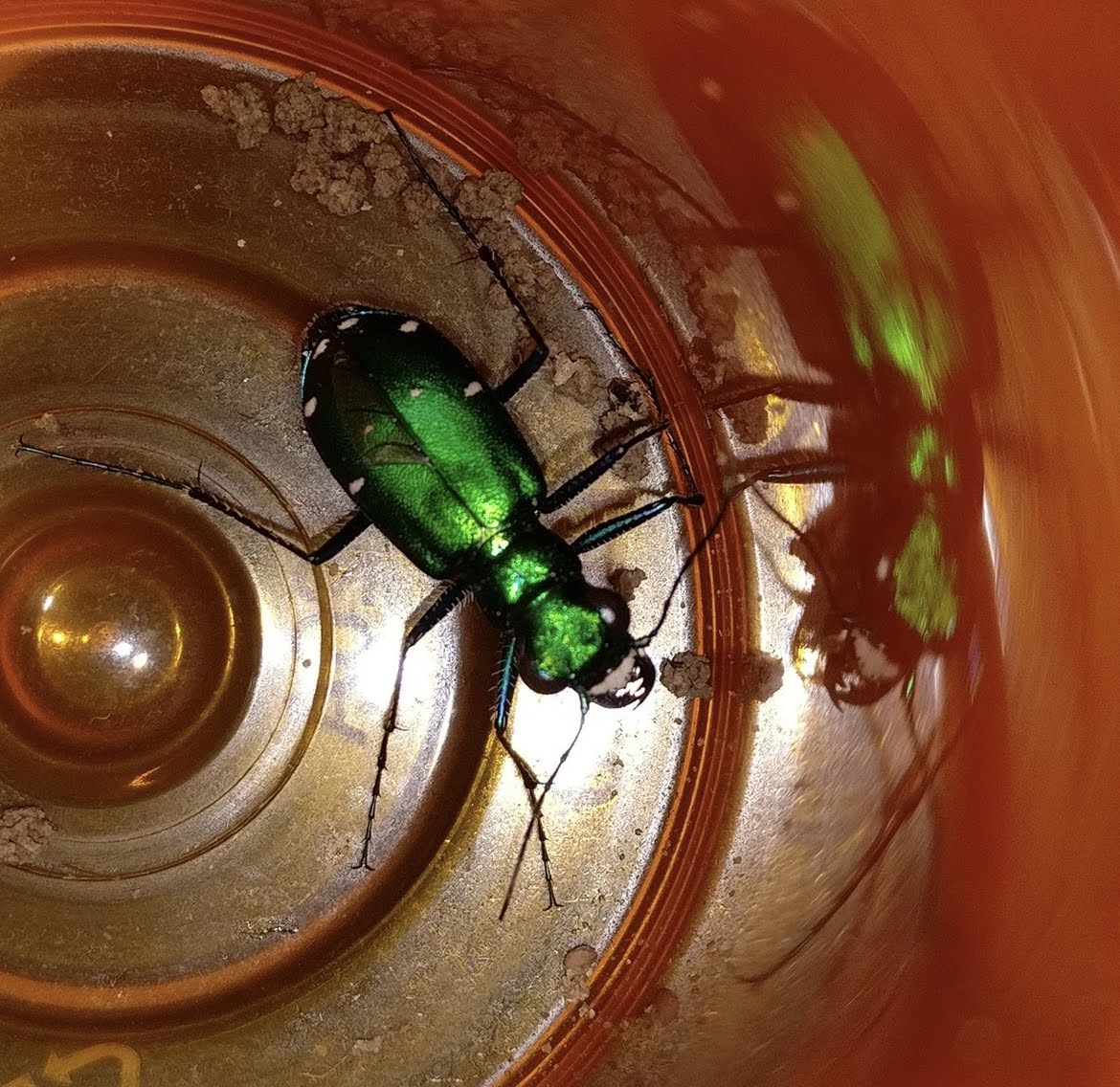
Copelatus distinctus is a species of diving beetle described by Aubé in 1838. It belongs to the genus Copelatus within the subfamily Copelatinae of the family Dytiscidae. The species is recorded from Middle America based on available distribution data. Like other members of Copelatus, it is an aquatic predator inhabiting freshwater environments.
hidden snout weevil
Cophes obtentus is a species of hidden snout weevil in the beetle family Curculionidae. It is found in North America, with confirmed records from Canada and the United States. The species was described by J.F.W. Herbst in 1797. Like other members of Curculionidae, it possesses the characteristic elongated snout (rostrum) typical of weevils.
hidden snout weevil
Cophes texanus is a species of hidden snout weevil in the beetle family Curculionidae. It belongs to a group of weevils characterized by their concealed rostrum (snout) structure. Very little specific information is documented about this species beyond its taxonomic classification.
Coproporus pulchellus is a species of rove beetle in the family Staphylinidae, originally described by Erichson in 1839 under the basionym Tachinus pulchellus. It belongs to the subfamily Tachyporinae and tribe Vatesini. The species has been recorded from several islands in the Azores archipelago (Faial, Flores, Graciosa, Pico, São Jorge).
Coptocycla is a genus of tortoise beetles in the family Chrysomelidae, subfamily Cassidinae. The genus contains approximately 58 described species. Members of this genus are leaf beetles characterized by their distinctive body form, with the elytra and pronotum expanded to cover the body margins. These beetles are primarily found in the Americas.
Copturomorpha rileyi is a species of weevil in the family Curculionidae, described by Henry Hespenheide in 2011. The specific epithet honors Edward Riley, a prolific coleopterist and collector. The genus Copturomorpha is part of the diverse weevil fauna, with this species representing one of the taxa named after Riley in recognition of his contributions to beetle systematics.
Copturus is a genus of true weevils (Curculionidae) comprising more than 190 described species. The genus was established by Schoenherr in 1825. At least one species, Copturus aguacatae, is a documented agricultural pest of avocado (Persea americana) in Mexico, where it is known as the avocado stem weevil or barrenador de ramas del aguacate. This species has been studied for its spatial distribution patterns in commercial plantations and is associated with multiple parasitoid species.
Mahogany Bark Weevil
Copturus floridanus is a species of true weevil in the family Curculionidae. Originally described as Pizazurus floridanus by Fall in 1906, it was recombined into the genus Copturus by Sleeper in 1963. The species is known from North America and has been recorded under the common name "Mahogany Bark Weevil" in some sources, though this name may apply to a broader species complex or related taxa now placed in Macrocopturus.
ambrosia beetles, timber beetles
Corthylus is a genus of ambrosia beetles in the family Curculionidae containing more than 190 described species. Species in this genus are characterized by their symbiotic relationships with fungi, which they cultivate in galleries bored into wood. Several species are significant forest pests, attacking hardwood trees and causing structural damage through gallery construction and associated fungal infections that lead to wood rot and tree mortality. The genus includes economically important species such as the Columbian timber beetle (C. columbianus) and C. zulmae, which impact timber production and reforestation efforts.
Pitted Ambrosia Beetle, Maple Corthyle
Corthylus punctatissimus, commonly known as the pitted ambrosia beetle or maple corthyle, is an ambrosia beetle in the family Curculionidae. It is a documented pest of sugar maple (Acer saccharum) in northeastern North America, with established populations in southern Ontario, southern Quebec, and the Lower Peninsula of Michigan. The beetle targets small-diameter woody saplings and shrubs, boring into stems at soil level and creating spiral gallery tunnels that cause girdling damage and wilting of host trees.
Corticaria dentiventris is a minute beetle in the family Latridiidae (plaster beetles), described by Poppius in 1903. The species is known from high-latitude regions of the Holarctic, with confirmed records from Yukon Territory, Canada and Alaska, USA. Like other members of Latridiidae, it likely inhabits moist, decaying organic matter. Very few observations exist in public databases.
Rusty Spider Beetle
Corticaria ferruginea is a minute beetle in the family Latridiidae, commonly known as spider beetles. The species was described by Marsham in 1802 and is characterized by its small size and ferruginous (rust-colored) appearance. It belongs to a family of beetles typically associated with moist, decaying organic matter and fungal environments. The species has a Holarctic distribution, with records from multiple Canadian provinces.
Corticariinae is a subfamily of minute beetles in the family Latridiidae, comprising small (1-3 mm), cryptically colored species with elongated oval bodies and 3-3-3 tarsal formula. The subfamily includes at least 11 genera, with species distributed across the Andean region and other global localities, ranging from lowland tropical forests to high-elevation páramos (up to 4300 m). Members are mycetophagous, feeding on fungal spores and conidia, and occupy diverse microhabitats including decaying vegetation, stored food products, and very humid cloud forest environments.
Corticeus tenuis is a species of darkling beetle in the family Tenebrionidae, described by LeConte in 1878. It is a small, slender beetle distributed across southern Canada from Alberta to Nova Scotia. Like other members of the genus Corticeus, it is associated with bark habitats. Specific biological details regarding its ecology and behavior remain poorly documented in published literature.
Corticotomus is a genus of beetles in the family Trogossitidae, established by Sharp in 1891. Members of this genus are part of a family commonly known as bark-gnawing beetles, though specific ecological details for Corticotomus remain limited in published literature. The genus is represented by observations on iNaturalist, indicating ongoing documentation by naturalists.
Corticotomus cylindricus is a species of beetle in the family Trogossitidae. The genus Corticotomus contains few described species, and C. cylindricus appears to be a rarely encountered species with limited documentation. Members of Trogossitidae are commonly known as bark-gnawing beetles.
Corticotomus depressus is a species of ground beetle in the family Carabidae. The genus Corticotomus is a small group within the tribe Harpalini, characterized by species adapted to particular microhabitats. Very little specific information is available about this particular species in the accessible literature. The species epithet "depressus" suggests a flattened body form, which is common among ground beetles that inhabit tight spaces under bark or in leaf litter.
minute brown scavenger beetle
Cortinicara gibbosa is a species of minute brown scavenger beetle in the family Latridiidae. It is a small beetle with a humped or gibbous body shape. The species has been recorded across multiple Canadian provinces including Alberta, British Columbia, Manitoba, New Brunswick, and Newfoundland and Labrador. As a member of the Latridiidae, it belongs to a family commonly known as minute brown scavenger beetles or plaster beetles.
Cortodera impunctata is a species of flower longhorn beetle in the family Cerambycidae, described by Hopping & Hopping in 1947. It belongs to the subfamily Lepturinae, a group commonly known as flower longhorns for their frequent association with flowers. The species is known from North America, though specific details about its biology remain poorly documented.
flower longhorn
Cortodera longicornis is a species of flower longhorn beetle in the family Cerambycidae, first described by Kirby in 1837. It is native to North America and has been recorded in western Canadian provinces including Alberta, British Columbia, and Saskatchewan. As a member of the subfamily Lepturinae, it is associated with flowers and pollen-feeding behavior typical of this group.
Coscinocephalus is a genus of rhinoceros beetles in the family Scarabaeidae, established by Prell in 1936. The genus comprises at least two described species: Coscinocephalus cribrifrons, described by Schaeffer in 1906, and Coscinocephalus tepehuanus, described by Morón & Ratcliffe in 1996. Members of this genus belong to the subfamily Dynastinae and tribe Pentodontini, placing them among the smaller rhinoceros beetles.
Coscinocephalus cribrifrons is a rhinoceros beetle in the subfamily Dynastinae. The species was described by Schaeffer in 1906. It occurs in the southwestern United States and northern Mexico. Like other dynastine beetles, it possesses enlarged cephalic or thoracic horns, though specific horn morphology for this species is not well documented.
Bronze-winged Cryptocephaline
Coscinoptera aeneipennis is a case-bearing leaf beetle in the family Chrysomelidae. The species is distributed across Central America and North America. The specific epithet 'aeneipennis' refers to the bronze-colored wings. As a member of the Cryptocephalinae, larvae construct protective cases from fecal material and shed skins.
beet petiole borer
Cosmobaris scolopacea is a species of weevil in the family Curculionidae. It is commonly known as the beet petiole borer due to its association with beet plants. The species was first described by E.F. Germar in 1819, originally placed in the genus Baris. It has been recorded from Belgium and British Columbia, Canada.
Cossonini is a tribe of weevils within the subfamily Cossoninae, family Curculionidae. The tribe contains approximately 60 described genera distributed across multiple continents. Members of this tribe are generally small to medium-sized weevils associated with wood-boring or bark-inhabiting habits. The group was established by Schönherr in 1825 and remains taxonomically active with ongoing revisions of constituent genera.
Cossonus impressifrons is a species of true weevil in the beetle family Curculionidae, first described by Lea in 1896. The specific epithet "impressifrons" refers to a characteristic impressed or concave frontal region of the head. As a member of the genus Cossonus, this species belongs to a group of weevils commonly associated with dead and decaying wood. The species is provisionally accepted in taxonomic databases with limited published ecological or biological information available.
Cossonus pacificus is a species of true weevil in the beetle family Curculionidae, described by Van Dyke in 1916. It belongs to the genus Cossonus, a group of small weevils associated with decaying wood and fungal habitats. The species is documented from western North America, with records from the Canadian provinces of Alberta, British Columbia, and Saskatchewan. Like other members of its genus, it likely inhabits moist, decaying woody substrates where fungal growth occurs.
Cossonus ponderosae is a species of true weevil in the beetle family Curculionidae. It was described by Van Dyke in 1915. The species is found in North America. As a member of the genus Cossonus, it belongs to a group of weevils that are generally associated with wood-boring or bark-associated habits, though specific ecological details for this species remain poorly documented.
green June beetle, June bug, June beetle, Common Green June Beetle
Cotinis nitida is a native North American scarab beetle in the flower chafer subfamily Cetoniinae. Adults are large, metallic green beetles active during daylight hours, often seen flying loudly in search of ripe or fermenting fruit. The species completes a one-year life cycle, with larvae feeding underground on decaying organic matter and occasionally damaging turfgrass roots through tunneling behavior. Though sometimes mistaken for the invasive Japanese beetle, this species is significantly larger and behaviorally distinct, and is generally considered a minor agricultural pest.
Coxelus longus is a species of beetle in the family Zopheridae. The species name "longus" (Latin for "long") suggests an elongated body form. Members of the genus Coxelus are typically found in association with decaying wood and are part of the diverse beetle fauna of the order Coleoptera.
Grape Curculio
Craponius inaequalis, commonly known as the grape curculio, is a minute seed weevil in the family Curculionidae. The species is native to North America, with records from Ontario, Canada, and the eastern United States. As a member of the seed weevils, it is associated with feeding on plant seeds, though specific host plant relationships remain poorly documented in the available literature.
Cratacanthus is a monotypic genus of ground beetles (Carabidae) established by Dejean in 1829. The genus contains a single species, Cratacanthus dubius. It belongs to the tribe Harpalini within the subfamily Harpalinae. The genus is classified within the diverse adephagan beetle radiation.
checkered beetles
Cregya is a genus of checkered beetles in the family Cleridae, subfamily Peloniinae. The genus was established by LeConte in 1861 and contains over 100 described species, though only a small number are commonly referenced. Species occur in North America, including the eastern United States and Mexico. The genus includes notable species such as Cregya oculata and Cregya mixta.
Cregya america is a species of checkered beetle in the family Cleridae, described by Opitz in 2019. It belongs to the subfamily Peloniinae and is part of the genus Cregya, which was established by LeConte. The species is known from limited observations, with records documented through iNaturalist. As a member of Cleridae, it likely functions as a predator or scavenger in forest and woodland habitats, though specific ecological details remain poorly documented.
checkered beetle
Cregya mixta is a species of checkered beetle in the family Cleridae, described by LeConte in 1866. The species belongs to the subfamily Peloniinae and is distributed across North America. As a clerid beetle, it is likely predatory, though specific ecological details remain poorly documented in published sources.
Cregya quadrinotata is a species of checkered beetle in the family Cleridae, subfamily Peloniinae. The species was described from specimens collected in Florida, U.S.A. and Puebla, México. It belongs to a genus of clerid beetles that are primarily predatory, though specific ecological details for this species remain limited.
Cremastocheilus knochii is a species of myrmecophilous scarab beetle in the family Scarabaeidae. As a member of the genus Cremastocheilus, commonly known as anteater scarabs, it is expected to exhibit the specialized adaptations characteristic of this group: obligate association with ant colonies, predatory feeding on ant brood, and morphological modifications for survival within hostile ant nests. The species is one of approximately 35 recognized Cremastocheilus species in North America north of Mexico.
anteater scarab beetle
Cremastocheilus nitens is a myrmecophilous scarab beetle in the genus Cremastocheilus, commonly known as anteater scarab beetles. Like other members of this genus, it lives within ant colonies as a predator of ant brood. The species is native to the central United States and exhibits specialized morphological adaptations for survival inside hostile ant nests, including dense armored exoskeletons and modified mouthparts for feeding on ant larvae and pupae.
Metallic Brown Flea Beetle
Crepidodera browni is a flea beetle species in the family Chrysomelidae, first described by Parry in 1986. It is native to North America, with confirmed records from Alberta and Ontario in Canada. As a member of the genus Crepidodera, it shares the characteristic jumping ability of flea beetles, enabled by enlarged hind femora. Information regarding its biology, ecology, and specific host associations remains limited.
Crepidodera heikertingeri is a flea beetle in the family Chrysomelidae, described by Lazorko in 1974. It is found in North America, with records from western Canadian provinces including Alberta, British Columbia, and Manitoba. As a member of the tribe Alticini, it possesses enlarged hind femora that enable jumping when disturbed. Information on its biology and host associations remains limited.
Crepidodera luminosa is a flea beetle in the subfamily Galerucinae (tribe Alticini), described by Parry in 1986. The species is recorded from eastern Canada and is part of a genus containing some of the smallest flea beetles in North America. Like other members of Alticini, it possesses enlarged hind femora adapted for jumping.
tiny aspen flea beetle
Crepidodera nana is a flea beetle in the family Chrysomelidae, commonly known as the tiny aspen flea beetle. It is native to North America and has been recorded from multiple Canadian provinces including Alberta, British Columbia, and Manitoba. As a member of the subfamily Galerucinae and tribe Alticini, it possesses the enlarged hind femora characteristic of flea beetles that enable jumping. The species epithet 'nana' refers to its small size.
Crepidodera opulenta is a flea beetle (subfamily Galerucinae, tribe Alticini) first described by John Lawrence LeConte in 1858. As a member of the genus Crepidodera, it belongs to a group of small leaf beetles characterized by their jumping ability. Very little specific information is available about this particular species, though the genus is known to contain species associated with various host plants. The species name 'opulenta' suggests a reference to richness or abundance, possibly alluding to coloration or some other distinctive feature noted by LeConte.
Poplar Flea Beetle
A flea beetle in the family Chrysomelidae, described by Parry in 1986. The specific epithet suggests an association with Populus (poplar), though detailed ecological studies remain limited. It belongs to a genus of small flea beetles known for their jumping ability.
Crepidodera solita is a flea beetle in the family Chrysomelidae, described by Parry in 1986. The species was originally reported as endemic to Ontario, Canada, though subsequent records indicate a broader distribution across Canadian provinces. As a member of the tribe Alticini, it possesses the enlarged hind femora characteristic of flea beetles, enabling jumping locomotion. Very little is known about its biology, host associations, or ecology.
broad-nosed weevil
Crocidema arizonica is a species of broad-nosed weevil in the beetle family Curculionidae, described by Van Dyke in 1951. It belongs to the subfamily Entiminae, a diverse group of weevils characterized by their broad rostrum and typically root-feeding larvae. The species is known from the southwestern United States.
Cryptarcha sp-one-ariz is an undescribed or provisionally designated species within the genus Cryptarcha, a group of sap beetles (family Nitidulidae) found in Arizona. Species in this genus are associated with fermenting plant exudates and fungal substrates. The specific epithet 'sp-one-ariz' indicates this represents a distinct morphospecies recognized from Arizona collections, pending formal taxonomic description.
case-bearer leaf beetles
Cryptocephalina is a subtribe of leaf beetles within the subfamily Cryptocephalinae, commonly known as case-bearer leaf beetles. These beetles are characterized by their distinctive life history: adults possess the ability to retract their head, legs, and antennae into grooves on the body, while larvae construct protective cases from fecal material. The subtribe includes species with highly specialized ecological associations, including myrmecophilous (ant-associated) forms that live within ant nests.
case-bearing leaf beetles
Cryptocephalini is a tribe of leaf beetles within the subfamily Cryptocephalinae, characterized by case-bearing larvae that construct and carry protective cases. The tribe comprises approximately 987–988 species in the Palaearctic region alone, with substantial diversity in arid and Mediterranean zones. Some species exhibit myrmecophilous associations with ants.
Cryptocephalus atrofasciatus is a case-bearing leaf beetle in the family Chrysomelidae, first described by Jacoby in 1880. It belongs to a large genus of leaf beetles known for their rounded, compact bodies and enlarged hind femora. The species has been recorded from both Central America and North America, though specific details about its biology and ecology remain poorly documented. Like other members of Cryptocephalus, adults likely feed on foliage of various plants, with larvae developing in protective cases constructed from fecal material and plant debris.