
Corticariinae
Curtis, 1829
Genus Guides
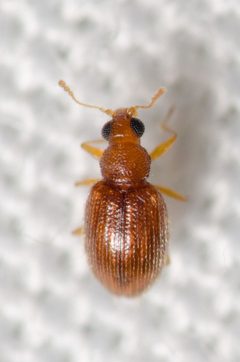
6Corticariinae is a of minute beetles in the Latridiidae, comprising small (1-3 mm), cryptically colored with elongated oval bodies and 3-3-3 tarsal formula. The subfamily includes at least 11 , with species distributed across the Andean region and other global localities, ranging from lowland tropical forests to high-elevation páramos (up to 4300 m). Members are mycetophagous, feeding on fungal spores and conidia, and occupy diverse microhabitats including decaying vegetation, stored food products, and very humid cloud forest environments.


Pronunciation
How to pronounce Corticariinae: //kɔːrˈtɪkəˌriːɪni//
These audio files are automatically generated. While they are not always 100% accurate, they are a good starting point.
Identification
Distinguished from other Latridiidae by the 3-3-3 tarsal formula and elongated oval body shape. The minute size (1-3 mm) and cryptic coloration are consistent features across the subfamily. -level identification requires examination of additional morphological characters not specified in available sources.
Images
Appearance
Small beetles, 1-3 mm in length, with elongated oval body shape. Cryptically colored. Tarsal formula 3-3-3 (three tarsomeres on each leg pair).
Habitat
Diverse microhabitats spanning 200-4300 m elevation: very humid high cloud forest zones, páramos, lowland tropical forests, forest margins, lake shores with Typha/Scirpus, meadows with mosses and dry herbaceous plants. Also found in decaying vegetation, plant detritus, dead leaves (including Espeletia spp.), rotten wood, accumulations of dry straw, birds' nests, caves, and human-modified environments including cellars, barns, warehouses, mills, herbariums, and mouldy areas of houses. Some associated with stored food products (cocoa, corn) and fruits (Mangifera indica, Chrysophyllum lucentisolium, Talisa sp.).
Distribution
Andean hotspots (Venezuela, Colombia, Ecuador, Peru, Bolivia) with documented elevations from 200 m (Tambopata, Peru) to 4300 m (Piedras Blancas, Colombia). Some are , occurring in Europe, North Africa, Asia, Nearctic, and Neotropical regions; others are to single countries within the Neotropical kingdom. Corticarina cavicollis recorded for the first time in the southern hemisphere; Melanophthalma rispini recorded for the first time in the Neotropical kingdom.
Diet
Mycetophagous: feeds on spores and conidia of Ascomycetes, Deuteromycetes, and Zygomycetes.
Host Associations
- Espeletia pychophylla angelensis - (dead leaves)documented in Andean páramos
- Espeletia grandiflora - (dead leaves)documented in Andean páramos
- Gypsophila sp.documented association
- Typha/Scirpus - lake shore vegetation
- Chrysophyllum lucentisolium - fruit associationSapotaceae
- Mangifera indica - fruit association
- Talisa sp. - fruit association
- Laboulbenialesfungal association
Behavior
Some associated with stored food products, indicating . Importance in saproxylic chains noted.
Ecological Role
Contributes to saproxylic and decomposition of decaying vegetation through mycetophagy.
Human Relevance
Economic impact on stored food products (cocoa, corn). Presence in cellars, barns, warehouses, mills, herbariums, and mouldy areas of houses indicates potential as stored product pest or indicator of damp conditions.
Similar Taxa
- Other Latridiidae subfamiliesCorticariinae distinguished by 3-3-3 tarsal formula and elongated oval body shape versus other tarsal formulas and body forms in related
More Details
Andean biodiversity
34 documented from Andean hotspots across five countries, representing significant diversity in this region.
First records
Corticarina cavicollis (Mannerheim, 1844) and Melanophthalma rispini Rücker and Johnson, 2007 represent first records for the southern hemisphere and Neotropical kingdom, respectively.
Elevation range
Exceptionally broad elevational distribution from 200 m lowland tropical forests to 4300 m high-elevation páramos.