
Cryptocephalini
Gyllenhal, 1813
case-bearing leaf beetles
Tribe Guides
3- Cryptocephalina(case-bearer leaf beetles)
- Lexiphanes
- Pachybrachina
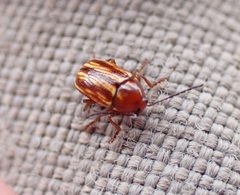
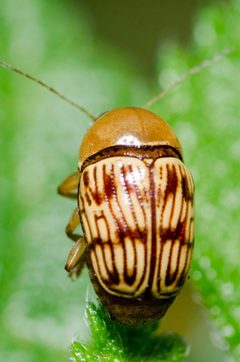
Cryptocephalini is a tribe of leaf beetles within the Cryptocephalinae, characterized by case-bearing larvae that construct and carry protective cases. The tribe comprises approximately 987–988 in the Palaearctic region alone, with substantial diversity in arid and Mediterranean zones. Some species exhibit myrmecophilous associations with ants.

Pronunciation
How to pronounce Cryptocephalini: /ˌkrɪptoʊˈsɛfələnaɪ/
These audio files are automatically generated. While they are not always 100% accurate, they are a good starting point.
Identification
Larvae distinguished by self-constructed portable cases; generally small to medium leaf beetles with compact bodies. Distinguished from related tribes by combination of adult and larval case-bearing characteristic of Camptosomata.
Images
Habitat
Arctic tundra, taiga, European nemoral forests, Mediterranean evergreen forests, steppe, and desert regions including the Irano-Turanian zone. Larvae develop in leaf litter.
Distribution
Primarily Palaearctic: North Africa (79 ), Asia (666 species), Europe (214 species). Western Palaearctic holds 723 species; Eastern Palaearctic holds 479 species. Highest diversity in Sethian desert region and Mediterranean subregion of Hesperian zone. Most species-rich countries: China (289), Russia (166), France (143), Italy (142). Nepal shows highest (34%); Kazakhstan has most species (27).
Diet
feed on herbs, trees, or flowers. Larvae consume leaf litter.
Life Cycle
Larvae construct and carry self-made protective cases (case-bearing , Camptosomata).
Behavior
Some are myrmecophilous, living in association with ants. Larval case-bearing provides protection during development.
Similar Taxa
- PachybrachiniAlso in Cryptocephalinae with case-bearing larvae; distinguished by different morphological characters and often less arid-adapted distributions
- ClytriniAnother Camptosomata tribe with case-bearing larvae; differ in body form and antennal structure