
Cryptocephalina
Gyllenhal, 1813
case-bearer leaf beetles
Genus Guides
4- Bassareus(case-bearing leaf beetles)
- Cryptocephalus
- Diachus(case-bearing leaf beetles)
- Triachus(case-bearing leaf beetles)
Cryptocephalina is a subtribe of leaf beetles within the Cryptocephalinae, commonly known as case-bearer leaf beetles. These beetles are characterized by their distinctive : possess the ability to retract their , legs, and into grooves on the body, while larvae construct protective cases from fecal material. The subtribe includes with highly specialized ecological associations, including myrmecophilous (-associated) forms that live within ant nests.
Pronunciation
How to pronounce Cryptocephalina: /ˌkrɪptəʊˌsɛfəˈlaɪnə/
These audio files are automatically generated. While they are not always 100% accurate, they are a good starting point.
Identification
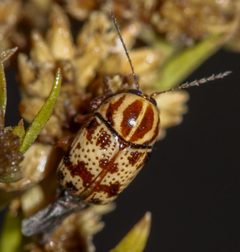
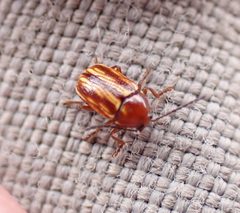
Members of Cryptocephalina can be distinguished from other cryptocephaline beetles by their compact, often globular body form with well-developed grooves for retracting appendages. The is typically concealed beneath the pronotum when retracted. Larvae are immediately recognizable by their portable cases constructed from fecal pellets, which they carry throughout development.
Images
Habitat
Cryptocephalina occupy diverse including forest leaf litter, vegetation surfaces, and nests. Myrmecophilous species are found within colonies of Formicinae and Myrmecinae ants, where they exploit the protected environment and food resources.
Distribution
The subtribe has a worldwide distribution, with highest diversity in the Neotropics. Individual often exhibit highly restricted ranges, with some known from single localities.
Diet
and larvae feed on plant material including leaves, fruits, flowers, roots, and stems. Myrmecophilous may additionally exploit food resources within nests.
Life Cycle
Females deposit equipped with a fecal cap that serves as the foundation for the larval case. Larvae remain within and expand this case throughout development, eventually pupating inside it. The case provides protection from and environmental hazards.
Behavior
exhibit -like , retracting all appendages into body grooves when disturbed, rendering them nearly indistinguishable from inert debris. Larvae are case-bearers, carrying their fecal cases and retreating into them when threatened. Some exhibit —circular defensive formations with larvae facing inward and debris masses directed outward.
Ecological Role
Cryptocephalina function as herbivores in terrestrial . Their case-bearing larvae contribute to nutrient cycling through fecal material processing. Myrmecophilous species represent a specialized component of nest , though their precise ecological impacts remain under investigation.
Human Relevance
Similar Taxa
- ChlamisiniAlso within Cryptocephalinae and shares case-bearing larval , but lack the same degree of appendage retraction capability and typically exhibit more pronounced warty or tuberculate body sculpturing.
- ClytriniAnother cryptocephaline tribe with case-bearing larvae, but distinguished by different body form and larval case construction details.
More Details
Myrmecophily
Some Cryptocephalina have evolved specialized associations with ants, living within nests of Formicinae and Myrmecinae. These beetles are hypothesized to gain entry through chemical and behavioral mimicry of ants, though this requires further experimental verification. The strength of host associations and benefits to ants remain unknown.
Parasitoid pressure
Specialized Hymenoptera exploit cryptocephaline beetles even within nests, suggesting that the protective ant association does not provide complete from natural enemies. Some parasitoids appear to circumvent larval defenses by depositing where they can be ingested.