Northern White-Skipper
Heliopetes ericetorum is a skipper butterfly in the family Hesperiidae, commonly known as the Northern White-Skipper. It occurs in arid regions of western North America, from eastern Washington south through the southwestern United States to Baja California, Mexico. The species produces two broods annually and adults are active from spring through fall. Larvae feed on mallow plants (Malvaceae), while adults are characterized by white wings with dark marginal markings that differ between sexes.
East-Mexican white-skipper
Heliopyrgus sublinea, commonly known as the East-Mexican white-skipper, is a species of spread-wing skipper in the butterfly family Hesperiidae. The species was described by Schaus in 1902. It is currently recognized as a synonym of Heliopetes sublinea, reflecting ongoing taxonomic revisions within the genus. The species has been assigned MONA/Hodges number 3970.1 for North American lepidopteran identification systems.
Ceraunus blue
A small Neotropical lycaenid butterfly found across the southern United States, the Caribbean, and through Central America to South America. Adults are active year-round in southern Florida and Texas, with peak activity in late summer elsewhere. The species occupies open, disturbed habitats and is frequently observed feeding at flower nectar. Larvae develop on flowers and seedpods of woody legumes.
Florida Blue
Hemiargus ceraunus antibubastus, commonly known as the Florida Blue, is a butterfly subspecies in the family Lycaenidae. It is one of several subspecies of the Ceraunus blue, found primarily in Florida and the Florida Keys. The subspecies occurs in open habitats including coastal areas, scrub, and disturbed sites. Adults are active during warmer months and are associated with various legume host plants.
Broad-banded Swallowtail
Heraclides pallas, commonly known as the Broad-banded Swallowtail, is a species of butterfly in the family Papilionidae. It belongs to the genus Heraclides, which includes several swallowtail species found in the Americas. The species is recognized by GBIF and iNaturalist, with 201 observations recorded on iNaturalist.
Hermeuptychia is a genus of small brown satyrine butterflies in the family Nymphalidae, distributed across the Neotropical realm and eastern North America. The genus is notable for its cryptic species diversity, with multiple species that are virtually indistinguishable by wing patterns alone but readily separable by genital morphology and DNA sequences. Recent genetic studies have revealed substantially greater species diversity than previously recognized, including the discovery of two new North American species in 2014 that had been hiding in plain sight due to their near-identical wing patterns to the common Carolina Satyr.
Intricate Satyr
Hermeuptychia intricata is a small brown butterfly in the family Nymphalidae, described in 2014 from specimens collected in the southeastern United States. It is morphologically cryptic, nearly identical in wing pattern to the sympatric Carolina Satyr (H. sosybius), but distinguished by smaller and darker genitalia in both sexes and more intricate ventral wing patterns. The species is widely distributed across the coastal plains of the eastern United States, from Texas to South Carolina. Its discovery highlights ongoing hidden diversity in well-studied North American butterfly faunas.
Carolina Satyr
Hermeuptychia sosybius, the Carolina Satyr, is a small brown butterfly in the family Nymphalidae described by Fabricius in 1793. It is one of the most common butterflies in the eastern United States and is frequently found in shaded, wooded habitats. The species has a wingspan of 32–38 mm and is characterized by eyespots along the wing edges. It was historically considered conspecific with H. hermes but is now recognized as a distinct species based on morphological and genetic evidence.
Dotted Skipper
Hesperia attalus, commonly known as the dotted skipper, is a butterfly species in the family Hesperiidae. It was first described by William Henry Edwards in 1871 and occurs in North America. The species includes three recognized subspecies: H. a. attalus, H. a. nigrescens (dark dotted skipper), and H. a. slossonae (Slosson's dotted skipper). Like other skippers, it is characterized by rapid, darting flight and a stocky body form.
Hesperia balcones is a species of skipper butterfly in the family Hesperiidae, described by Grishin in 2023. The species epithet "balcones" refers to the Balcones Escarpment in Texas, indicating the geographic region where this species occurs. As a recently described taxon, detailed information about its biology and ecology remains limited.
American Branded Skipper, Western Branded Skipper
Hesperia colorado is a skipper butterfly in the family Hesperiidae, commonly known as the American Branded Skipper or Western Branded Skipper. The species was described by Scudder in 1874, originally placed in the genus Pamphila. As a member of the genus Hesperia, it belongs to a group of grass skippers characterized by rapid, darting flight patterns and relatively small, robust bodies compared to other butterflies.
Columbian skipper
Hesperia columbia, the Columbian skipper, is a grass skipper butterfly in the family Hesperiidae. It occurs in North America and Central America. The species was originally described as Pamphila columbia by Scudder in 1872. It is assigned MONA/Hodges number 4026.
Hesperia comma hulbirti is a subspecies of skipper butterfly in the family Hesperiidae, described by Lindsey in 1939. It belongs to the widespread Hesperia comma species complex, commonly known as the silver-spotted skipper or common branded skipper. As a subspecies, it represents a geographically defined population with distinct characteristics from the nominate form. The species complex has a broad distribution across multiple continents.
Hesperia comma manitoba is a subspecies of the common branded skipper, a butterfly in the family Hesperiidae. Originally described as Pamphila manitoba by Scudder in 1874, this taxon represents a North American population of the widespread Holarctic species Hesperia comma. The species complex shows notable geographic variation across its range.
Juba skipper, Yuba skipper, jagged-border skipper
Hesperia juba, commonly known as the Juba skipper, Yuba skipper, or jagged-border skipper, is a butterfly in the family Hesperiidae. It occurs in western North America from British Columbia through California and eastward to the Rocky Mountain states. The species has two generations per year, with adults active in late spring and again in late summer. Larvae develop on specific grass species, while adults feed on flower nectar.
Pawnee Skipper
Hesperia leonardus pawnee, the Pawnee Skipper, is a subspecies of skipper butterfly in the family Hesperiidae. It is found in the Great Plains region of North America, with distribution records from the Canadian provinces of Alberta, Manitoba, and Saskatchewan, as well as the U.S. state of Vermont. As a member of the genus Hesperia, it belongs to a group commonly known as the "branded skippers." The subspecies was described by Dodge in 1874, originally as Hesperia pawnee before being reclassified as a subspecies of H. leonardus. iNaturalist records indicate this taxon has been observed 177 times, suggesting it is encountered with moderate frequency by naturalists.
Eastern Meske's skipper
Eastern Meske's skipper is a subspecies of Hesperia meskei, a skipper butterfly in the family Hesperiidae. It occurs in North America and is distinguished from related subspecies by geographic distribution and subtle morphological differences. The subspecies was described by W.H. Edwards in 1881.
Nevada Skipper
Hesperia nevada, commonly known as the Nevada Skipper, is a butterfly species in the family Hesperiidae. It occurs in western North America from southern Canada through the western United States. The species belongs to a genus of skippers known for their rapid, darting flight patterns. Like other Hesperia species, adults likely have a characteristic stocky build with relatively large eyes.
Green Skipper
Hesperia viridis, commonly known as the green skipper, is a species of grass skipper butterfly in the family Hesperiidae. It is found in Central America and North America. The species is assigned MONA/Hodges number 4028.
Mojave sootywing, Mohave sootywing, Great Basin sootywing, Lena sooty wing
A small skipper butterfly of the family Hesperiidae, found in arid regions of western North America. Adults have a wingspan of 22–32 mm and exhibit variable flight periods depending on latitude, with multiple generations in southern California and single generations in northern parts of the range. The species is tightly associated with saltbush (Atriplex) host plants in alkaline desert environments.
Tailed Cecropian
Historis acheronta, commonly known as the tailed cecropian, is a butterfly species in the family Nymphalidae. It is found in North America, with distribution extending into Central and South America. The species has been recorded in at least 962 observations on iNaturalist, indicating it is relatively well-documented.
Hylephila is a genus of skippers in the family Hesperiidae, first described by Billberg in 1820. The genus contains approximately 20 recognized species distributed primarily in the Americas, with notable species including Hylephila phyleus (the fiery skipper), which has been extensively studied for its response to climate change. Species within Hylephila are grouped into several species complexes based on morphological and genetic relationships, including the ignorans, venusta, boulleti, and phyleus groups.
Orange Mapwing, Orange Admiral
Hypanartia lethe is a medium-sized nymphalid butterfly commonly known as the orange mapwing or orange admiral. It is recognized by its distinctive wing pattern featuring orange-brown and black markings, with the underside resembling topographic contour lines. The species is widespread across the Americas, from the southern United States through Central and South America.
Silver-studded Leafwing, Jazzy Leafwing, Marbled Leafwing
Hypna clytemnestra is the sole species in the monotypic genus Hypna, a leafwing butterfly in the family Nymphalidae. The species is known by multiple common names reflecting its distinctive wing patterning. It is classified within the subfamily Charaxinae, tribe Anaeini, a group characterized by robust bodies and often cryptic, leaf-mimicking wing shapes.
Cross-barred White, Crossbarred White, Black-banded White
Itaballia demophile is a small pierid butterfly distributed from the southern United States through Central America to Paraguay. It occupies disturbed habitats and has a wingspan of 30–35 mm. The species exhibits considerable geographic variation, with ten recognized subspecies. Larvae are specialized feeders on Capparis species.
Common Buckeye, Buckeye
Junonia coenia, commonly known as the common buckeye, is a distinctive butterfly in the family Nymphalidae. It is widely distributed across North America, Central America, and parts of northern South America. The species is known for its prominent eyespots on the wings and its migratory behavior, moving south in autumn to escape cold temperatures. Adults feed preferentially on yellow flowers, while larvae specialize on plants containing iridoid glycosides.
West Indian Mangrove Buckeye
Junonia neildi, the West Indian Mangrove Buckeye, is a butterfly species in the family Nymphalidae. It was elevated from subspecies status under Junonia genoveva to full species rank in 2004. The species occurs in coastal regions of the southeastern United States, Mexico, and the Caribbean. It is one of three Junonia species currently documented in Florida, alongside J. coenia and J. zonalis.
Northern Tropical Buckeye
Junonia zonalis, the northern tropical buckeye, is a butterfly species in the family Nymphalidae. It was formerly treated as a subspecies of Junonia evarete but was elevated to full species status based on phylogenetic and DNA research. The species occurs in Florida, the Caribbean, Mexico, Central America, and tropical South America.
Kisutam is a genus of butterflies in the family Lycaenidae, established by Johnson & Kroenlein in 1993. The genus is part of the diverse hairstreak butterfly lineage. Species in this genus are found in the Neotropical region.
blue metalmark, Blue Lasaia
Lasaia sula, commonly known as the blue metalmark or Blue Lasaia, is a small butterfly species in the family Riodinidae. It is native to North America and Central America, with a range extending from southern Texas to Honduras. The species is notable for its metallic blue dorsal wing surfaces and inhabits subtropical forest environments as well as disturbed habitats.
Lasaia sula peninsularis is a subspecies of metalmark butterfly in the family Riodinidae. The species Lasaia sula is distributed across parts of Central America and the Caribbean, with the subspecies peninsularis occurring in specific peninsular regions. Members of the genus Lasaia are small butterflies often noted for their dark coloration with metallic blue or green markings.
Kite Swallowtails, Swordtails, and Jays
Leptocircini is a tribe of swallowtail butterflies (family Papilionidae) comprising approximately 162 species across nine genera. The group includes the kite swallowtails (Eurytides), swordtails (Graphium), and dragontails (Lamproptera). This tribe represents roughly 25% of global swallowtail diversity and is distributed throughout the tropics of Africa, Southeast Asia, and the Americas. Recent phylogenomic studies have clarified previously unresolved relationships within the tribe, leading to significant taxonomic revisions including the synonymization of several genera and subgenera.
Marine Blue, Striped Blue
Leptotes marina is a small butterfly in the family Lycaenidae, commonly known as the Marine Blue or Striped Blue. Adults have a wingspan of 22–29 mm with blue uppersides and brown-banded undersides marked with two blue spots on the hindwings. The species occurs from South America through Mexico to the southern United States, with adults active year-round in the south and from April to September in northern populations. Larvae feed on a diverse range of leguminous plants including Astragalus, Prosopis, and Wisteria.
Liris Skipper
Lerema liris is a species of skipper butterfly in the family Hesperiidae, described by Evans in 1955. It is currently recognized as a synonym of Lerema ancillaris. The species is known by the common name "Liris Skipper." As a hesperiine skipper, it belongs to a diverse group of butterflies characterized by rapid, darting flight patterns.
Pearly-eyes and Allies
Lethe is a genus of butterflies in the family Nymphalidae, subfamily Satyrinae, established by Jacob Hübner in 1819. The genus includes treebrowns, woodbrowns, foresters, and related species commonly known as the Pearly-eyes and Allies. Species occur across temperate-tropical southern and eastern Asia, extending to Indonesia, with some representatives in North America. The genus name derives from Greek mythology, referencing the river of forgetfulness in the underworld of Hades.
Northern Pearly-eye
Lethe anthedon, the northern pearly-eye, is a butterfly in the family Nymphalidae, subfamily Satyrinae. It is found in eastern North America from central Saskatchewan and Nebraska east to Nova Scotia, south to central Alabama and Mississippi. The species inhabits riparian forests and moist woodland edges where larvae feed on grasses and adults forage for nutrients at sap flows and animal dung.
Appalachian Brown, Appalachian Eyed Brown
Lethe appalachia is a brush-footed butterfly in the family Nymphalidae, commonly known as the Appalachian Brown or Appalachian Eyed Brown. The species was described by Chermock in 1947 and was formerly placed in the genus Satyrodes. It is native to North America. Two subspecies are recognized: L. a. appalachia and L. a. leeuwi.
Eyed Brown, Marsh Eyed Brown
Lethe eurydice, commonly known as the Eyed Brown or Marsh Eyed Brown, is a North American satyrine butterfly in the family Nymphalidae. The species inhabits marshy and wetland environments across northern North America, with records from Canadian provinces including Alberta, Manitoba, and Saskatchewan, as well as the northeastern United States. Adults display the characteristic brown coloration and eyespot patterns typical of the Satyrinae subfamily.
New World Snouts
Libytheana is a genus of nymphalid butterflies in the snout butterfly subfamily Libytheinae, established by Michener in 1943. The genus comprises four species, with Libytheana carinenta (American snout) being the most widespread and migratory, occurring across North and South America. The remaining three species—L. terena, L. motya, and L. fulvescens—are restricted to the Caribbean. These butterflies are characterized by their distinctive elongated labial palps that form a prominent "snout," a defining feature of the subfamily.
Admirals and Allies, Admirals and relatives
Limenitidinae is a subfamily of brush-footed butterflies (Nymphalidae) containing approximately 1,000 species across four tribes: Parthenini, Adoliadini, Limenitidini, and Neptini. The group includes well-known butterflies such as admirals (Limenitis), sisters (Adelpha), sailers (Neptis), and clippers (Parthenos). Many species exhibit bold wing patterns with light longitudinal stripes, and their common names often reference military ranks or noble titles reflecting their large size and striking appearance. The subfamily has a cosmopolitan distribution with major centers of diversity in tropical Africa and Asia.
Viceroy
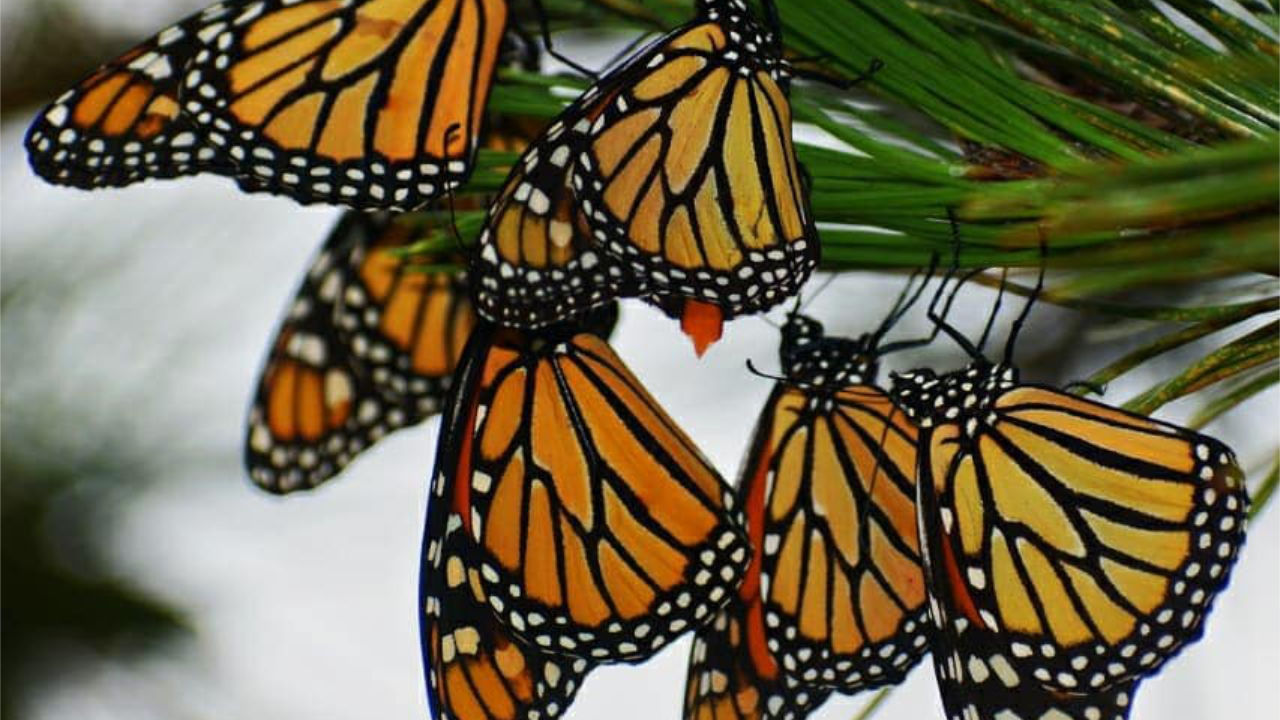
The Viceroy (Limenitis archippus) is a North American butterfly famous for its striking resemblance to the Monarch butterfly (Danaus plexippus), a relationship long interpreted as Batesian mimicry but now considered Müllerian mimicry since both species are distasteful to predators. This medium-sized brushfoot butterfly ranges across most of the contiguous United States, southern Canada, and parts of Mexico. Adults are orange with black veining and white spots, but display significant regional variation in size and coloration—eastern populations are bright orange while western and Florida populations are darker, sometimes mimicking the Queen butterfly (Danaus gilippus) instead. The species is territorial, with males actively patrolling and perching to defend areas.
Florida Viceroy
Limenitis archippus floridensis, commonly known as the Florida Viceroy, is a subspecies of the Viceroy butterfly found in the southeastern United States. This butterfly is renowned for its mimicry of the Monarch butterfly (Danaus plexippus), though recent research indicates it is also unpalatable to predators, making this Müllerian rather than Batesian mimicry. The Florida subspecies is notably larger and darker than typical Viceroys, adaptations that allow it to mimic the Queen butterfly (Danaus gilippus) which replaces the Monarch as the model species in Florida. Males are highly territorial, patrolling areas and perching frequently—a behavior not observed in Monarchs.
Nevada Viceroy
Limenitis archippus lahontani is a subspecies of the Viceroy butterfly, commonly known as the Nevada Viceroy. It is part of a well-known mimicry complex with the Monarch butterfly (Danaus plexippus), though recent research suggests the Viceroy itself may also be chemically protected rather than a pure Batesian mimic. This subspecies is found in western North America, particularly in the Great Basin region.
Watson's Gulf Coast Viceroy
Limenitis archippus watsoni is a subspecies of the viceroy butterfly found in central North America. It is part of the well-known mimicry complex with the monarch butterfly, though recent research suggests viceroys may also be unpalatable to predators. This subspecies is distinguished from other viceroy populations by geographic range and subtle morphological differences.
red-spotted purple, white admiral, red-spotted admiral
Limenitis arthemis is a North American butterfly exhibiting dramatic wing pattern polymorphism through two primary forms: the white-banded 'white admiral' in northern populations and the iridescent blue 'red-spotted purple' in southern populations. The latter represents a Batesian mimic of the unpalatable pipevine swallowtail (Battus philenor). These forms hybridize extensively in a 'suture region' across New England, southern Ontario, and the Great Lakes, producing intermediate phenotypes. The species has been extensively studied as a model for the evolution and genetics of mimicry.
Arizona Red-spotted Purple
Limenitis arthemis arizonensis is a subspecies of the red-spotted purple butterfly complex found in western North America. It represents one of several stable hybrid wing patterns within the nominal species L. arthemis, which has been extensively studied for its evolution of mimicry. The subspecies occurs from Arizona to southern California and Mexico, overlapping with the range of the white admiral and red-spotted purple forms. Like other members of the complex, males are known to defend territories along riparian corridors.
Red-spotted Purple
Limenitis arthemis astyanax, the Red-spotted Purple, is a North American butterfly subspecies belonging to the admiral group. It represents one of the most striking examples of Batesian mimicry among North American butterflies, with wing patterns converging on those of the toxic Pipevine Swallowtail (Battus philenor). The subspecies occurs in forested and wooded suburban habitats across eastern North America, where adults are frequently observed perching on the ground or foliage along stream corridors and forest edges.
Weidemeyer's Admiral
Weidemeyer's Admiral is a medium-sized butterfly in the brush-footed family Nymphalidae, found across western North America from the Rocky Mountains to the Sierra Nevada and California. Adults display distinctive black and white dorsal wing patterns with rows of white spots, while the ventral surface shows brown with gray marginal markings. The species is named after 19th-century entomologist John William Weidemeyer, whose Rocky Mountain specimen was used for the original description. Larvae develop on woody plants in the genera Populus, Salix, Holodiscus, and Amelanchier, while adults feed on tree sap, carrion, and flower nectar.
grey copper, great copper
Lycaena dione, commonly known as the grey copper or great copper, is a butterfly species in the family Lycaenidae. First described by Samuel Hubbard Scudder in 1868, this species is distributed across central North America from southern Canada to Texas. Adults are active from mid-June through July or August, with a wingspan ranging from 24 to 38 mm. The species is sometimes treated as a subspecies of Lycaena xanthoides, reflecting ongoing taxonomic debate.
Lycaena dorcas florus is a subspecies of copper butterfly described by W.H. Edwards in 1884. It belongs to a genus of butterflies commonly known as coppers, characterized by their orange-copper wing coloration. The subspecies is currently classified under the genus Epidemia, though historically placed in Lycaena. Like many grassland-associated butterflies, it faces pressures from habitat loss and climate change.