
Lethe
Hübner, 1819
Pearly-eyes and Allies
Species Guides
5- Lethe anthedon(Northern Pearly-eye)
- Lethe appalachia(Appalachian Brown)
- Lethe creola(Creole Pearly-eye)
- Lethe eurydice(Eyed Brown)
- Lethe portlandia(Southern Pearly-eye)
Lethe is a of butterflies in the Nymphalidae, Satyrinae, established by Jacob Hübner in 1819. The genus includes treebrowns, woodbrowns, foresters, and related commonly known as the Pearly- and Allies. Species occur across temperate-tropical southern and eastern Asia, extending to Indonesia, with some representatives in North America. The genus name derives from Greek mythology, referencing the river of forgetfulness in the underworld of Hades.
Pronunciation
How to pronounce Lethe: //ˈlɛ.θi//
These audio files are automatically generated. While they are not always 100% accurate, they are a good starting point.
Identification
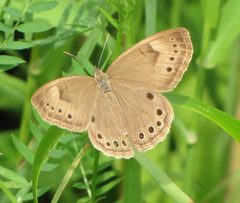
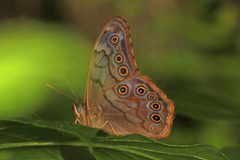
Members of Lethe can be distinguished from related satyrine by characteristics typical of the tribe Elymniini, though specific diagnostic features require examination of wing pattern elements, , and genitalic structures. The 'Pearly-eyes' refers to eye spots on the wings that often have a pearly or silvery appearance. -level identification within the genus requires detailed examination of wing markings, size, and geographic origin.
Images
Habitat
in this inhabit forested environments across their range, including temperate and tropical woodland . Specific microhabitat preferences vary by species, with many associated with shaded forest understories and edges where larval plants occur.
Distribution
Temperate-tropical southern and eastern Asia, extending through Indonesia, with some occurring in North America. Distribution records include Vermont and other parts of the United States.
Life Cycle
Complete typical of Lepidoptera, with , larval, pupal, and stages. Larvae feed on monocotyledonous plants, primarily grasses and related (Poaceae and allies), consistent with feeding habits of the Satyrinae.
Ecological Role
and larvae participate in forest as herbivores (larvae) and nectar/pollen feeders or decomposers (adults). Larval feeding on grasses and sedges contributes to nutrient cycling in forest understory .
Human Relevance
Subject of lepidopterological study and observation. Some may be encountered in forested recreational areas within their range. Not known to be of significant economic importance.
Similar Taxa
- ElymniasAlso in tribe Elymniini; shares similar wing and preferences, but differs in specific wing pattern elements and geographic distribution patterns.
- MycalesisAnother satyrine with similar 'browns' and -spotted wings; distinguished by genitalic and detailed wing pattern characteristics.
- OrsotriaenaRelated satyrine with overlapping distribution in Asia; requires examination of wing venation and pattern details for separation.
More Details
Etymology
The name Lethe references the mythological river of forgetfulness in Greek underworld mythology, one of the five rivers of Hades. The river's waters induced complete forgetfulness in those who drank from it. The name was applied to this genus by Jacob Hübner in 1819, though the specific reasoning for this choice is not documented in the available sources.
Taxonomic History
Established by Jacob Hübner in 1819, the has undergone various revisions in circumscription. The tribe Elymniini, to which Lethe belongs, has been subject to ongoing phylogenetic study, with some former subgeneric groupings or related genera occasionally treated differently by various authors.