
Lethe eurydice
(Linnaeus, 1763)
Eyed Brown, Marsh Eyed Brown
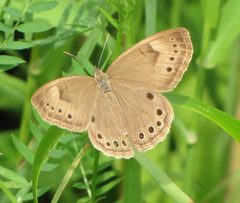
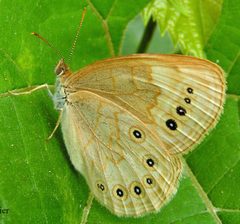
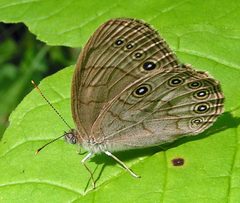
Lethe eurydice, commonly known as the Eyed Brown or Marsh Eyed Brown, is a North American satyrine in the Nymphalidae. The inhabits marshy and wetland environments across northern North America, with records from Canadian provinces including Alberta, Manitoba, and Saskatchewan, as well as the northeastern United States. display the characteristic brown coloration and eyespot patterns typical of the Satyrinae .
Pronunciation
How to pronounce Lethe eurydice: /ˈlɛθi juˈrɪdɪsi/
These audio files are automatically generated. While they are not always 100% accurate, they are a good starting point.
Identification
Distinguished from similar brown satyrine butterflies by its specific wing pattern and distribution. The is known to occur in marshy , which may help separate it from related upland species. Precise identification features require examination of wing pattern details not provided in available sources.
Images
Appearance
are brown butterflies with eyespot patterns on the wings, characteristic of the Satyrinae . The specific wing pattern details for this are not documented in the provided sources.
Habitat
Marshy and wetland environments. The "Marsh Eyed Brown" indicates association with marsh .
Distribution
North America. Documented records include Canadian provinces: Alberta, Manitoba, Saskatchewan; and United States: Vermont. The is native to northern North America.
Similar Taxa
- Other Lethe speciesShare similar brown coloration, eyespot patterns, and marshy preferences
- Other Satyrinae butterfliesShare general and eyespot wing patterns
More Details
Taxonomic Note
The iNaturalist source lists this as Satyrodes eurydice, but GBIF and Catalogue of Life accept Lethe eurydice as the current valid name. This appears to be a case of taxonomic revision, with Lethe eurydice (Linnaeus, 1763) now the accepted combination.
Sources and further reading
- BugGuide
- GBIF taxonomy match
- iNaturalist taxon
- Catalogue of Life
- The Land of Z (Zerene) and The Land of B (Bohart) | Bug Squad
- Bohart Open House: Celebrating the California Dogface Butterfly | Bug Squad
- Take a Virtual Tour of the California Dogface Butterfly Habitat | Bug Squad
- Can You Name California's State Insect? | Bug Squad
- In Pursuit of the California Dogface Butterfly | Bug Squad
- California Dogface Butterfly: What the Fire Did | Bug Squad