
Satyrinae
browns, satyrines, satyrids, Satyrs, Morphos, and Allies
Tribe Guides
2Satyrinae is a of brush-footed butterflies (Nymphalidae) containing approximately 2,400 , representing nearly half of all known Nymphalidae diversity. Members are commonly called 'browns' due to their typical wing coloration. The subfamily was formerly treated as a distinct () but is now classified within Nymphalidae. The and of Satyrinae remain under active revision, with most species now assigned to recognized tribes.
Pronunciation
How to pronounce Satyrinae: //səˈtaɪrəˌnaɪ//
These audio files are automatically generated. While they are not always 100% accurate, they are a good starting point.
Identification
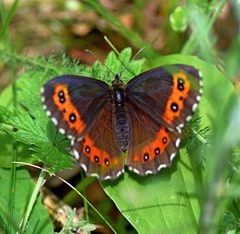
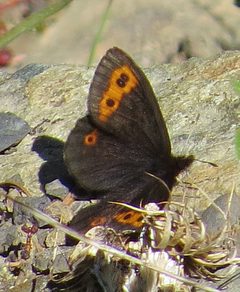
Satyrinae butterflies are characterized by reduced forelegs (brush-footed condition), typically brown or dull-colored wings with eyespots, and generally weak . They can be distinguished from other Nymphalidae by their preference for shaded and their larval association with monocotyledonous plants. The subfamily includes diverse forms such as the morphos, which were historically grouped with satyrines.
Images
Habitat
Satyrinae prefer moist and semishaded , often shunning bright sunlight. They occupy diverse environments including tropical montane cloud forests, grasslands, suburban lawns, and forest understories. In the Neotropics, they show strong altitudinal zonation, with different species occupying specific elevation bands from lowland tropical forests to high Andean paramo.
Distribution
Global distribution with highest diversity in the Neotropics. Documented from North America, Central America, South America, Europe, Asia, and Africa. Specific records include: upper Amazon basin (Venezuela, Colombia, Brazil), Central Chile (Coquimbo to Ñuble Regions), Munchique National Natural Park (Colombia), Caribbean islands (notably Calisto with 34 ), Republic of Macedonia, and northwestern Himalaya (India).
Diet
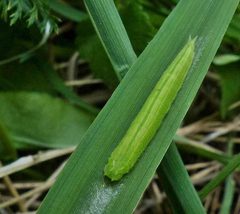
feed on nectar and other liquid sources. Larvae feed chiefly on monocotyledonous plants including palms (Arecaceae), grasses (Poaceae), and bamboos (Poaceae). Specific plant records include: Sheep's Fescue (Festuca ovina) and Red Fescue (Festuca rubra) for numerous European ; Purple Moor-grass (Molinia caerulea) for Chequered Skipper. Larval foodplants remain unknown for approximately 25 European Satyrinae species.
Life Cycle
Complete with , larva, pupa, and stages. Larvae are feeders in at least some lineages (documented in Chilean Pronophilina). Development includes specific plant associations, with larvae feeding on monocots. Some switch host plants during development: Scarce Fritillary (Euphydryas maturna) switches from Ash (Fraxinus excelsior) to Guelder-rose (Viburnum opulus); Northern Grizzled Skipper (Pyrgus centaureae) switches from Dwarf birch (Betula nana) to Cloudberry (Rubus chamaemorus).
Behavior
Generally weak fliers that avoid bright sunlight. often remain in shaded or semishaded areas. Larvae of some groups exhibit feeding . show male-biased sex ratios in some (e.g., Hermeuptychia atalanta, Cissia eous) but not others (Malaveria affinis shows 1:1 ratio). Adult lifespans range from approximately 5 days to two weeks depending on species and sex.
Ecological Role
Important components of in shaded and forested . Serve as of nectar sources in their . Larvae function as herbivores on monocotyledonous vegetation, particularly grasses. studies indicate they contribute significantly to local biodiversity in suburban and natural habitats, with management implications for conservation of grassland and forest edge ecosystems.
Human Relevance
Subject of taxonomic research due to high diversity and complex . Some are of conservation concern: Arethusana arethusa shows declining distribution in Europe despite not being formally threatened. New species continue to be discovered, including species named for notable figures (Euptychia attenboroughi for David Attenborough, Caeruleuptychia harrisi for museum Brian Harris). Serve as indicators for quality and health in conservation assessments.
Similar Taxa
- MorphinaeHistorically united with Satyrinae; both share reduced forelegs and some morphological similarities, though now generally treated as separate within Nymphalidae
- NymphalinaeAnother of Nymphalidae; Satyrinae distinguished by weaker , preference for shaded , and monocot-feeding larvae versus the generally brighter colors and dicot-feeding habits of Nymphalinae
- Heliconiinae of Nymphalidae with bright warning coloration and strong ; Satyrinae are duller, weaker fliers with different larval associations
Sources and further reading
- BugGuide
- Wikipedia
- iNaturalist taxon
- NCBI Taxonomy
- Catalogue of Life
- Two New Species of Butterfly Accidentally Discovered in Eastern USA
- New butterfly species named after retired museum specialist
- Provisional checklist of European butterfly larval foodplants
- entomology | Blog - Part 17
- Pensoft Editorial Team | Blog - Part 159
- Satyrinae (Lepidoptera: Nymphalidae, Satyrinae) of the Munchique National Natural Park. Species Diversity and Altitudinal Distribution
- Pioneering travels in Chile to study the life histories of Satyrinae butterflies (Lepidoptera: Nymphalidae: Satyrinae: Pronophilina)
- Diversification patterns of Haeterini butterflies (Nymphalidae: Satyrinae)
- Wing pattern diversity in Brassolini butterflies (Nymphalidae, Satyrinae)
- De Prunner’s Ringlet Erebia triaria (de Prunner, 1798) (Lepidoptera: Nymphalidae: Satyrinae) – a new species for the Republic of Macedonia De-Prunnerjev rjavček Erebia triaria (de Prunner, 1798) (Lepidoptera: Nymphalidae: Satyrinae) – nova vrsta v Republiki Makedoniji
- Population biology of three satyrine species (Nymphalidae: Satyrinae) in a suburban habitat
- Systematics of Neotropical Satyrine Butterflies (Nymphalidae: Satyrinae: Euptychiina) Based on Larval Morphology and DNA Sequence Data and the Evolution of Life History Traits.
- A new species of Satyrinae butterfly from Peru (Nymphalidae: Satyrini: Euptychiina)
- Écologie et conservation du Mercure Arethusana arethusa (Denis & Schiffermüller, 1775) (Lépidoptère : Satyrinae) en Hauts-de-France
- Notes on three species of Palaearctic satyrinae (Lepidoptera: Nymphalidae) from northwestern Himalaya, India