
Libytheana
Michener, 1943
New World Snouts
Species Guides
1- Libytheana carinenta(American snout)
Libytheana is a of nymphalid butterflies in the Libytheinae, established by Michener in 1943. The genus comprises four , with Libytheana carinenta (American snout) being the most widespread and migratory, occurring across North and South America. The remaining three species—L. terena, L. motya, and L. fulvescens—are restricted to the Caribbean. These butterflies are characterized by their distinctive elongated labial palps that form a prominent "snout," a defining feature of the subfamily.
Pronunciation
How to pronounce Libytheana: /ˌlaɪbɪˈθiːənə/
These audio files are automatically generated. While they are not always 100% accurate, they are a good starting point.
Identification
The elongated snout formed by labial palps immediately distinguishes Libytheana from all other except the Old World genus Libythea. Within Libytheana, identification relies on geographic range and subtle wing pattern differences: L. carinenta is the only species found in continental North and South America, while the three Caribbean species (L. terena, L. motya, L. fulvescens) are restricted to specific islands. L. carinenta can be separated from Caribbean by its larger size and more extensive orange forewing markings.
Images
Appearance
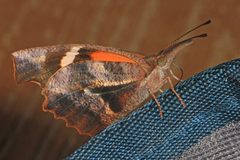
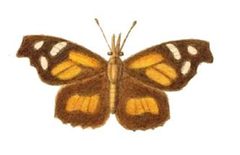
Small to medium-sized butterflies with dull, cryptic coloration in shades of brown, gray, and orange. The most distinctive feature is the greatly elongated labial palps that project forward from the , forming a conspicuous "snout" that is as long as or longer than the body. Wings are typically angular with irregular margins; forewings often have a notched or hooked apex. The American snout (L. carinenta) has forewings with orange patches on a dark brown background and hindwings with a cryptic gray-brown pattern resembling dead leaves. Wing undersides are mottled gray-brown, enhancing camouflage when the rests with wings closed.
Habitat
Diverse including dry woodlands, forest edges, riparian corridors, and glade-woodland interfaces. L. carinenta is particularly associated with areas supporting its larval plants in the Celtis (hackberries). The shows adaptability to disturbed and edge habitats, often found where hackberry trees occur in proximity to open areas for nectaring.
Distribution
L. carinenta: widespread across North America from the northeastern United States through Mexico to South America; migratory extend range seasonally. L. terena, L. motya, and L. fulvescens: restricted to Caribbean islands (exact island distributions require specific locality records).
Seasonality
are active primarily during warmer months; in temperate regions, L. carinenta is most commonly observed from spring through fall. Periodic mass of L. carinenta have been documented, particularly in Texas and Mexico, where explosions can result in millions of individuals moving northward following heavy rains that promote hackberry growth.
Host Associations
- Celtis - larval plant of hackberry trees; specific associations documented for L. carinenta
Life Cycle
Complete with four stages: , larva, pupa, and . Larvae feed on Celtis (hackberry) leaves. Detailed descriptions of egg placement, larval instars, and sites are not available in provided sources.
Behavior
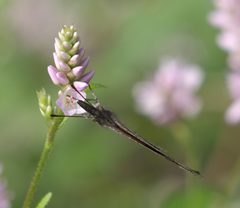
are known to feed at sap flows on tree trunks, as documented in field observations of L. carinenta at hickory sap flows. Mass migratory has been observed in L. carinenta, with movements apparently triggered by plant availability and . Adults may be attracted to flowers including asters and other late-season composites.
Ecological Role
Larvae function as folivores on Celtis trees, though levels are generally not damaging to plants. serve as when nectaring and may transfer nutrients between plants and during migratory movements. Their cryptic coloration and dead-leaf mimicry contribute to dynamics as prey for visually-hunting .
Human Relevance
Subject of ecological and entomological study due to dramatic mass events. The American snout is not considered an agricultural pest. Occasionally encountered by naturalists and enthusiasts; approachable (as noted in field observations of individuals perching on human hands) facilitates observation and photography. No significant economic importance documented.
Similar Taxa
- LibytheaOld World in the same Libytheinae; shares the distinctive elongated snout formed by labial palps. Distinguished by geographic distribution (Africa, Eurasia, Australasia) and subtle wing pattern differences.
- Nymphalinae (brush-footed butterflies)Superficially similar in size and wing shape, but lack the elongated snout; reduced forelegs in Nymphalidae are shared but the snout is unique to Libytheinae.
More Details
Taxonomic history
Libytheana was established by Charles D. Michener in 1943 to separate New World snout butterflies from the Old World Libythea. The type is Libytheana carinenta (originally described as Papilio carinenta by Cramer in 1777). The genus includes four recognized species: L. carinenta with four (carinenta, mexicana, bachmanii, larvata), and three Caribbean species: L. terena, L. motya, and L. fulvescens.
Migration biology
L. carinenta exhibits remarkable mass , with documented events involving millions of individuals. These migrations appear to be irruptive rather than regular, triggered by favorable conditions for hackberry growth following rainfall, leading to explosions that exceed local and drive movements.
Sources and further reading
- BugGuide
- Wikipedia
- GBIF taxonomy match
- iNaturalist taxon
- NCBI Taxonomy
- Catalogue of Life
- A new population of the federally-endangered decurrent false aster | Beetles In The Bush
- Plantae | Beetles In The Bush | Page 7
- Insecta | Beetles In The Bush | Page 8
- American snout, Libytheana carinenta (Cramer) (Insecta: Lepidoptera: Nymphalidae: Libytheinae)