
Idia americalis
Guenée, 1854
American Idia, American Idia Moth, American Snout
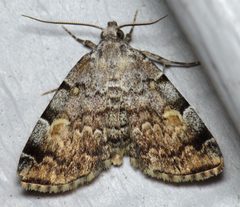
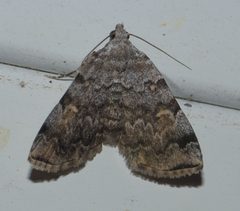
Idia americalis is a litter moth in the Herminiinae of Erebidae. It occurs across eastern North America from southern Canada to Florida and Texas. The is and readily attracted to light and sugar baits. are active from May through October, with multiple per year.
Pronunciation
How to pronounce Idia americalis: /ˈɪdiə əˌmɛrɪˈkeɪlɪs/
These audio files are automatically generated. While they are not always 100% accurate, they are a good starting point.
Identification
Distinguished from similar , particularly Idia aemula (common idia), by a row of dark marks on the forewing. May be mistaken for small geometrid moths due to size and wing pattern.
Images
Habitat
Commonly found in moist forests. Larvae occur in leaf litter, on lichens, and in nests.
Distribution
North America: southern Canada (Alberta, Manitoba, Saskatchewan, Quebec, Ontario, New Brunswick) through the eastern United States to Florida and Texas.
Seasonality
on wing May to October. Two or more per year.
Diet
Larvae feed on lichen and detritus, including dead leaves. feed on lichens attached to tree trunks.
Host Associations
- Lichens - larval foodprimary food source
- Detritus - larval fooddead leaves
- Pseudotsuga menziesii - associatedDouglas fir; records from Robinson et al.
- Picea - associatedspruce; records from Robinson et al.
- Angelica - associated records from Robinson et al.
- Fabaceae - associatedlegume ; records from Robinson et al.
Life Cycle
Two or more per year. stage not specified in sources.
Behavior
. Readily attracted to light traps and sugar baits. Larvae have been observed functioning as in nests.
Ecological Role
as larvae, contributing to decomposition of leaf litter and organic matter. Functions as detritivore in nests.
Human Relevance
Occasionally encountered by entomologists and naturalists at light traps. No significant economic or agricultural impact documented.
Similar Taxa
- Idia aemulaCommon idia; distinguished by lacking the row of dark marks on forewing present in I. americalis
- Geometridae (small species)Similar size and wing pattern; geometrids typically rest with wings spread flat and have different wing venation