
Idia aemula
Hübner, 1813
Common Idia, Powdered Snout, Waved Tabby
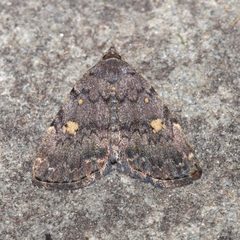
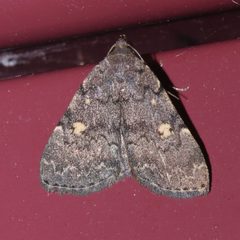
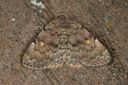
A small litter moth in the Erebidae, recognized by its gray forewings with intricate dark lines and a distinctive pale to orange-brown spot. are and active from spring through fall, with multiple per year. The larvae feed on dead leaves, contributing to nutrient cycling in forest . The is widespread across eastern North America and has been reported in the Palearctic region.
Pronunciation
How to pronounce Idia aemula: /ˈɪdiə ˈiːmjʊlə/
These audio files are automatically generated. While they are not always 100% accurate, they are a good starting point.
Identification
Distinguished from similar Idia by the combination of medium gray ground color and the large, conspicuous spot that is pale to orange-brown (not dark). The wavy pattern on the hindwings and the specific arrangement of forewing lines—particularly the pale subterminal line preceded by a dark shade—help separate it from confamilial litter moths. The 'powdered' appearance of the snout region is also a useful field mark.
Images
Appearance
A small with wingspan 20–30 mm. Forewings medium gray with thin dark basal, antemedial, and postmedial lines; diffuse line and occasional median shade present. Pale subterminal line preceded by dark shade. spot large, ranging from pale to warm ochre or orange-brown. Hindwings display several wavy alternating light and dark lines with a dark discal spot.
Habitat
Forest and woodland where leaf litter accumulates. Found in deciduous and mixed forests, often in areas with abundant dead leaves on the ground. frequently attracted to artificial light sources in wooded or suburban settings with tree cover.
Distribution
North America from Canada (Alberta, Manitoba, Saskatchewan, and eastern provinces) south to Florida and Texas. Reported in the Palearctic region including most of Eurasia, though North American records are more extensively documented.
Seasonality
active May to October in northern parts of range; April to November in southern regions. Two to three per year in most of range, with peak activity varying by latitude.
Diet
Larvae feed on dead leaves (detritivory). feeding habits not specifically documented.
Life Cycle
Two to three per year. Larval stage feeds on dead leaf litter. and specific developmental details not well documented in available sources.
Behavior
; readily attracted to light. Larvae inhabit leaf litter layer. Specific mating or defensive not documented.
Ecological Role
Larvae function as , processing dead leaves and contributing to decomposition and nutrient cycling in forest . likely serve as prey for including bats and birds.
Human Relevance
Occasionally encountered by naturalists and enthusiasts at light traps. No economic significance; neither a pest nor a beneficial in agricultural contexts. Used as an for healthy forest floor in ecological monitoring.
Similar Taxa
- Other Idia speciesShare gray coloration and litter moth habits; distinguished by spot color and specific wing line patterns
- Herminiinae litter moths (general)Similar and appearance; I. aemula separated by the distinctive pale/orange spot and specific forewing line arrangement
More Details
Taxonomic history
First described by Jacob Hübner in 1813 (some sources cite 1814). Multiple reflect different descriptive emphases: 'Common Idia' for abundance, 'Powdered Snout' for facial scaling, and 'Waved Tabby' for hindwing pattern.
Hodges number
8323 in the North American numbering system.