
Geometridae
Leach, 1815
geometer moths, geometrid moths, inchworms, spanworms, loopers, cankerworms, measuring worms
Subfamily Guides
5- Archiearinae
- Ennominae(geometer moths)
- Geometrinae(Emerald Moths)
- Larentiinae(Carpet Moths)
- Sterrhinae(Waves and Mochas)
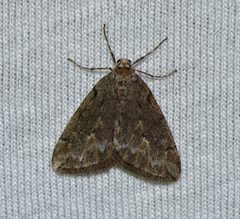
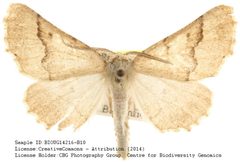
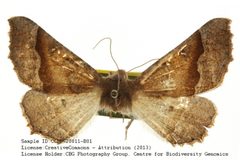
is one of the largest of , with approximately 23,000 described worldwide. The family name derives from Greek "geo" (earth) and "metron" (measure), referring to the distinctive looping locomotion of their larvae, commonly called inchworms or loopers. These caterpillars possess only two or three pairs of at the end, compared to five or more pairs in most other Lepidoptera, forcing them to arch their bodies in a characteristic "measuring" gait. are typically with slender bodies and broad wings, often exhibiting cryptic coloration that provides camouflage against bark and vegetation.
Pronunciation
How to pronounce Geometridae: /dʒiː.əˈmɛtrɪˌdeɪ/
These audio files are automatically generated. While they are not always 100% accurate, they are a good starting point.
Identification
can be distinguished from other by the combination of slender bodies, broad wings with typically wavy or lined patterns, and . The family is most reliably identified by larval characters: the presence of only two or three pairs of abdominal (versus five or more in Noctuidae, Saturniidae, and most other families) is diagnostic. Geometrid larvae may be confused with those of some Noctuidae (such as Plusiinae, which also loop), but these retain more prolegs. Adults superficially resembling certain or Noctuidae can be distinguished by wing venation and genitalic structures, though these require microscopic examination. The looping larval immediately separates geometrids from larvae (Hymenoptera), which have six or more pairs of prolegs.
Images
Habitat
occupy diverse terrestrial across all continents except Antarctica. is highest in tropical and subtropical regions, particularly in montane forests. In temperate zones, they are abundant in deciduous and coniferous forests, woodlands, scrublands, grasslands, and agricultural areas. Many are associated with specific plant : some specialize on trees and shrubs (including major forestry pests), while others inhabit herbaceous vegetation. The shows notable habitat partitioning, with different species occupying distinct vegetation formations such as deciduous forests, coniferous-oak forests, humid coniferous forests, maquis, and farmlands.
Distribution
distribution with present on all continents except Antarctica. Highest diversity occurs in tropical regions, particularly in the Neotropics, Indo-Malayan region, and Afrotropics. The is well-represented in temperate North America, Europe, and Asia, extending into subarctic and alpine zones. Regional studies document 129 species in the Northern Tien Shan, 188 species in the Western Black Sea region of Turkey, and 116 species on Haleakala volcano (Maui, Hawaii) alone. The Hawaiian geometrid fauna represents a spectacular radiation from a single colonizing ancestor.
Seasonality
Activity patterns vary widely by and latitude. In temperate regions, typically fly from spring through autumn, with peak diversity in summer months. Many species are (one per year), though some exhibit or multivoltine patterns depending on climate. Larvae may be present throughout the growing season, with occurring as , larvae, or pupae depending on species. Tropical species often show less pronounced seasonality, with overlapping generations year-round. Blacklighting surveys indicate substantial activity, with species composition varying through the season.
Diet
Larvae are almost exclusively herbivorous, feeding on vascular plant foliage. plant associations range from extreme (restricted to single plant or ) to utilizing multiple plant . Many species feed on trees and shrubs, including oaks, conifers, and various hardwoods; some are significant forestry and agricultural pests. Others specialize on herbaceous plants. A few species have been documented feeding on soybean and other crops. of most species have non-functional mouthparts and do not feed; those with functional mouthparts may nectar at flowers or take moisture from damp substrates.
Life Cycle
Complete with four stages: , larva, pupa, and . Eggs are typically laid singly or in small clusters on plant foliage. Larval development involves four to six instars, with the characteristic looping locomotion present throughout. usually occurs in a silk cocoon on the host plant or in leaf litter, with many in this stage. Adult is often synchronized with host plant . Some species exhibit (thelytoky), with females producing viable eggs without mating.
Behavior
Larvae exhibit the 's signature looping locomotion due to reduced number, moving with a distinctive "measuring" gait that gives the group its . Many larvae are cryptic, remaining motionless on substrates where their twig-like appearance provides camouflage; some attach silk tethers for stabilization. When disturbed, larvae may drop from vegetation on silk threads (ballooning or rappelling). are primarily and strongly attracted to light sources, making them common components of blacklight surveys. Some are or . Adults typically rest with wings spread flat or slightly folded, enhancing their cryptic profile against substrates.
Ecological Role
Larvae function as primary consumers in terrestrial , converting plant into animal tissue available to and . Their herbivory influences plant composition and structure, with capable of significant defoliation. Many serve as important food sources for insectivorous birds, , and predatory insects. The exhibits substantial differentiation, with coexisting species partitioning resources through differences in , use, and dietary specialization, thereby reducing .
Human Relevance
Several are economically significant pests of forestry and agriculture. The winter moth (Operophtera brumata), fall cankerworm (Alsophila pometaria), and various "looper" species cause defoliation of deciduous and coniferous trees. Some species damage fruit crops and ornamental plantings. Conversely, many geometrids are valued components of biodiversity and serve as indicators of quality in ecological monitoring. The 's larvae are familiar to many people as "inchworms," featuring in children's literature and education. are frequently encountered by citizen scientists during moth-watching events.
Similar Taxa
- Noctuidae Noctuidae (owlet moths) often resemble geometrids in size and coloration, but typically have stouter bodies and different wing venation. Noctuid larvae possess five or more pairs of and crawl with a smooth gliding motion rather than looping.
- ArctiidaeSome brightly colored geometrids (e.g., Melanchroia chephise) have been misidentified as tiger moths due to aposematic coloration. larvae are usually densely hairy with numerous , unlike the smoother, reduced-proleg geometrid larvae.
- Sphingidae sphinx moths have robust, streamlined bodies and long for nectar feeding, contrasting with the slender, often non-feeding geometrid adults. Sphingid larvae (hornworms) possess five pairs of plus a terminal horn, with smooth crawling locomotion.
- Sawfly larvae (Hymenoptera) larvae superficially resemble caterpillars but possess six or more pairs of (without ) and lack the looping gait; they have more uniform body segmentation and often feed gregariously.
More Details
Taxonomic diversity
comprises numerous , with Ennominae, Geometrinae, Larentiinae, and Sterrhinae among the most -rich. The 's enormous diversity has led to ongoing taxonomic revision, with many cryptic species being described based on integrated morphological and molecular data.
Hawaiian radiation
The Hawaiian Islands harbor an exceptional radiation of geometrid in the Mecyclothorax, with 239 descended from a single colonizing ancestor. On Haleakala volcano alone, 116 species occur, representing one of the fastest speciation rates documented in animals.
Mimicry and defense
Some geometrids exhibit striking mimicry complexes. The neotropical Melanchroia includes that mimic or toxic butterflies, with larvae sequestering toxins from euphorbiaceous plants. Many other species rely on rather than aposematism.
Sources and further reading
- BugGuide
- GBIF taxonomy match
- iNaturalist taxon
- NCBI Taxonomy
- Catalogue of Life
- Oh, What a (Moth) Night! | Bug Squad
- biodiversity | Blog - Part 56
- geometrid moths | Beetles In The Bush
- Twig tethered to a twig | Beetles In The Bush
- Catch a Glimpse of Caterpillars During National Moth Week
- Monday Moth: White-tipped Black Moth | Beetles In The Bush
- Two new Geometridae for the Maltese islands - Microloxia herbaria (Hübner, [1813]) and Scopula luridata (Zeller, 1847) (Lepidoptera: Geometridae)
- Habitat preference of Geometridae species in Western Black Sea region of Turkey (Lepidoptera: Geometridae)
- THE FEATURES OF ECOLOGICAL NICHE DIFFERENTIATION OF DOMINANT SPECIES OF GEOMETRIDAE (LEPIDOPTERA: GEOMETRIDAE) IN THE NORTHERN TIEN SHAN, ONE OF THE MAJOR PESTS OF TREES AND SHRUBS
- An annotated checklist of Ennominae (Lepidoptera, Geometridae) from Chiapas, Mexico.