
Libytheinae
Boisduval, 1833
snout butterflies, beak butterflies
Genus Guides
1- Libytheana(New World Snouts)
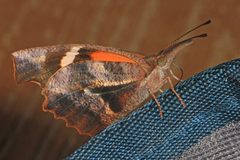
Libytheinae is a of brush-footed butterflies (Nymphalidae) commonly known as . The group contains two extant : Libythea (six , Old World) and Libytheana (four species, New World). A third genus, †Libytheides, is known from fossils. The subfamily is distinguished by elongated, thick labial palps that project forward like a snout. Historically treated as the separate , molecular studies have confirmed its placement within Nymphalidae.
Pronunciation
How to pronounce Libytheinae: //ˌlaɪbɪˈθaɪniː//
These audio files are automatically generated. While they are not always 100% accurate, they are a good starting point.
Identification
The elongated snout formed by labial palps is unique within Nymphalidae and immediately diagnostic. Distinguished from other Nymphalidae by this feature combined with reduced forelegs and cryptic brown coloration. Within the subfamily, Libythea (Old World) and Libytheana (New World) are geographically separated. The American snout (Libytheana carinenta) is the only in North America.
Images
Appearance
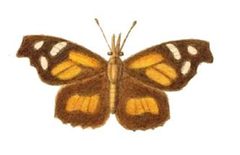
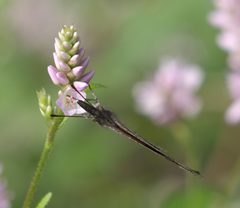
Medium-sized butterflies with drab brown coloration. The most distinctive feature is the pair of thick, elongated labial palps () projecting forward from the , creating a pronounced "snout" appearance. Front legs are reduced in length. hindwings are cryptically colored with irregular patterns resembling dead leaves. Wings are typically held tightly closed when at rest, enhancing the dead leaf mimicry.
Habitat
Associated with hackberry (Celtis) plants. found in woodland edges, riparian areas, and where host plants occur. Specific habitat preferences vary by and region.
Distribution
Widespread but disjunct: Libythea occur in the Old World (Africa, Asia, Europe, Australia), while Libytheana species are restricted to the New World (North, Central, and South America). The American snout (Libytheana carinenta) ranges from southern United States through Mexico to South America.
Diet
have been observed feeding on nectar, sap flows, rotting fruit, and animal droppings. Larvae feed exclusively on of Celtis (hackberry).
Host Associations
- Celtis - larval plant of hackberry trees; sole recorded for Libytheinae larvae
Life Cycle
Complete with , larva, pupa, and stages. Larvae develop on Celtis plants. occurs in leaf litter or sheltered locations. Adults may live several months. Some exhibit periodic or mass movements.
Behavior
At rest, hold wings tightly closed to resemble dead leaves, a primary defense mechanism. Known for occasional mass , particularly in Libytheana carinenta, where millions of individuals may move in response to pressures or plant availability.
Ecological Role
Larvae function as herbivores on Celtis. serve as and contribute to nutrient cycling through their feeding on decaying matter. Periodic mass emergences provide substantial food pulses for .
Human Relevance
Generally harmless; occasional mass of Libytheana carinenta may attract public attention. Not of economic importance. Subject of scientific interest due to unique and historical taxonomic uncertainty.
Similar Taxa
- CharaxinaeSome Charaxinae have elongated palps but lack the extreme snout projection; also differ in wing shape and coloration
- SatyrinaeSome brown, cryptic Satyrinae may resemble Libytheinae in coloration, but lack the distinctive snout and have different wing venation
More Details
Taxonomic history
Libytheinae was long treated as the separate due to its distinctive . Molecular phylogenetic studies have confirmed its placement as a within Nymphalidae, though it represents one of the earliest diverging lineages in the family.
Fossil record
The extinct †Libytheides is known from Oligocene and Miocene deposits, indicating the was once more widespread and diverse.
Sources and further reading
- BugGuide
- Wikipedia
- iNaturalist taxon
- NCBI Taxonomy
- Catalogue of Life
- A mast year brings a bountiful harvest to acorn weevils, Curculio glandium — Bug of the Week
- Learning more about vampire fish: first report of candiru attached to an Amazonian thorny catfish | Blog
- Year of the Snake: a serpent selection to celebrate Lunar New Year!
- Brazil Bugs #13 – Gorgulho do fungo | Beetles In The Bush
- Undercover investigation: Socio-economic survey of pangolin hunting in Assam, India | Blog
- Different Jaws for Different Jobs | Beetles In The Bush
- American snout, Libytheana carinenta (Cramer) (Insecta: Lepidoptera: Nymphalidae: Libytheinae)
- Systematic revision and review of the extant and fossil snout butterflies (Lepidoptera: Nymphalidae: Libytheinae)
- Papilionoidea: Nymphalidae: Biblidinae, Charaxinae, Danainae, Heliconiinae, Libytheinae, Limenitidinae, Nymphalinae, Satyrinae; Papilionidae: Papilioninae; Pieridae: Coliadinae, Pierinae