
Hylephila
Billberg, 1820
Species Guides
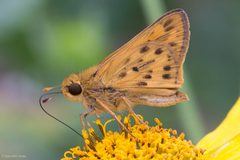
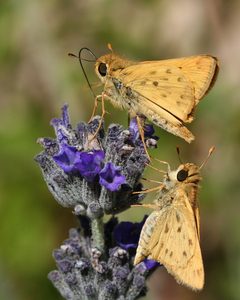
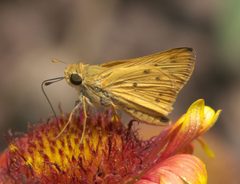
1- Hylephila phyleus(Fiery Skipper)
Hylephila is a of skippers in the Hesperiidae, first described by Billberg in 1820. The genus contains approximately 20 recognized distributed primarily in the Americas, with notable species including Hylephila phyleus (the fiery skipper), which has been extensively studied for its response to climate change. Species within Hylephila are grouped into several based on morphological and genetic relationships, including the ignorans, venusta, boulleti, and phyleus groups.
Pronunciation
How to pronounce Hylephila: //haɪˈlɛfɪlə//
These audio files are automatically generated. While they are not always 100% accurate, they are a good starting point.
Images
Distribution
The Hylephila has a broad distribution across the Americas. Records indicate presence from the United States (including Vermont) through Central and South America. The type Hylephila phyleus occurs in North America, while other species such as H. ignorans, H. venustus, and members of the boulleti group are found in South America, particularly in Peru and surrounding regions.
More Details
Species Groups
The is organized into several informal groups: the ignorans group (H. adriennae, H. ignorans), the venusta group (H. kenhaywardi, H. lamasi, H. venustus), the boulleti group (H. blancasi, H. boulleti, H. galera, H. herrerai, H. pallisteri, H. peruana, H. pseudoherrerai, H. rossi, H. shapiroi, H. tentativa), and the phyleus group (H. phyleus). Several species remain unassigned to these groups.
Research Significance
Hylephila phyleus (fiery skipper) has been used as an in long-term climate change studies. Research by Art Shapiro at UC Davis has tracked this since 1972, documenting dramatically earlier dates in response to warming temperatures. In 2015, an individual was recorded on January 26 in West Sacramento, California—the earliest observation in a 43-year database and significantly earlier than the typical March-April emergence.