
Hesperiidae
Skippers
Subfamily Guides
5- Eudaminae(Dicot Skippers)
- Hesperiinae(Grass Skippers)
- Heteropterinae(Skipperlings)
- Megathyminae(giant skippers)
- Pyrginae(Spread-wing Skippers)
, commonly known as skippers, is a large of butterflies in the order Lepidoptera. The family contains over 3,500 recognized distributed worldwide, with greatest diversity in tropical regions. Skippers are named for their rapid, darting patterns. A distinctive morphological feature is the tip, which is modified into a narrow hook-like projection rather than the rounded club found in most other families. The family was formerly placed in its own superfamily Hesperioidea but is now classified within Papilionoidea based on recent molecular studies.
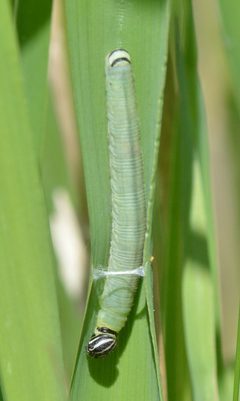
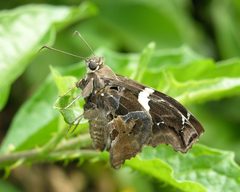
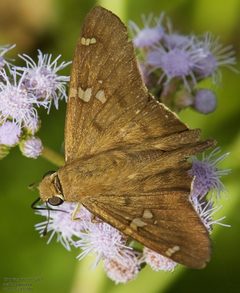
Pronunciation
How to pronounce Hesperiidae: /hɛˌspɛriˈaɪdiː/
These audio files are automatically generated. While they are not always 100% accurate, they are a good starting point.
Identification
Skippers can be distinguished from other by their hooked or curved clubs, in contrast to the rounded clubs of other Papilionoidea. They are generally small to medium-sized butterflies with robust, stocky bodies and relatively large . The are often prominent. Wing shapes vary but many have somewhat angular or triangular forewings. is characteristically rapid and erratic, with quick darting movements that give the group its . Many species perch with hindwings held flat and forewings partially open at an angle.
Images
Habitat
Skippers occupy diverse including grasslands, prairies, woodlands, forest edges, riparian corridors, and tropical rainforests. Many are associated with open, sunny habitats. Specific habitat preferences vary considerably among species: some require undisturbed native grasslands, others thrive in disturbed or agricultural areas, and some are restricted to specialized environments such as limestone glades, calcareous fens, or oak woodlands. plant availability is a key habitat determinant for larval development.
Distribution
Worldwide distribution with over 3,500 recognized. Greatest occurs in tropical regions, particularly the Neotropics. Well-represented in North America, with numerous species documented from Arizona, California, Missouri, Illinois, Colorado, Florida, and New Jersey. Present in Central America (Belize documented), South America (Peru documented), Europe (Slovenia, Spain, France documented), and Asia (India, including Jammu and Kashmir and peninsular regions; Andaman Islands documented).
Seasonality
activity varies by and latitude. In temperate regions, most species are active from spring through fall, with peak diversity in summer months. Some species produce multiple per year where climate permits. In tropical regions, activity may occur year-round. Specific seasonal patterns documented: Epargyreus clarus observed in September in Illinois; spring records from Arizona in March; May records for Amblyscirtes nysa in Colorado.
Diet
feed on nectar from diverse flowering plants. Larvae are herbivorous, feeding on a wide variety of plants including grasses (Poaceae), sedges (Cyperaceae), and various dicotyledonous plants. Specific host plant associations include: bamboo (Taquara micrantha, Olyra latifolia) for Artines angelica; Bermuda grass and barnyard grass for Lerodea arabus; oak (Quercus) for Erynnis brizo; willow for Nymphalis antiopa; legumes (Fabaceae) including soybean for Epargyreus clarus; Hedychium coronarium for Udaspes folus; Hiptage benghalensis for Bibasis jaina.
Host Associations
- Taquara micrantha - larval herbaceous bamboo, for Artines angelica
- Olyra latifolia - larval herbaceous bamboo, for Artines angelica
- Cynodon dactylon - larval Bermuda grass, for Lerodea arabus
- Echinochloa - larval barnyard grass, for Lerodea arabus
- Quercus - larval oak, for Erynnis brizo
- Salix - larval willow, for Nymphalis antiopa
- Glycine max - larval soybean, for Epargyreus clarus
- Hedychium coronarium - nectar and larval plant for Udaspes folus
- Hiptage benghalensis - nectar and larval plant for Bibasis jaina
- Apocynum cannabinum - nectardogbane, nectar source for various skippers including Peck's Skipper
- Solidago - nectargoldenrod, visited by Epargyreus clarus and other
- Baccharis salicifolia - nectar for Apyrrothrix araxes larvae and nectar source
Life Cycle
Complete with , larva, pupa, and stages. Larval development includes multiple instars: Artines angelica documented with six larval instars over 55 days from egg to adult. Larvae typically construct shelters by folding or tying leaves together with silk, emerging to feed at night. Some overwinter as pupae or larvae. duration varies by species and environmental conditions, with some temperate species producing one annually and others producing two to three generations.
Behavior
is characteristically rapid, erratic, and darting—distinctive enough to give the its . Many perch with a characteristic posture: hindwings flat, forewings partially open at an angle. Some species establish and defend territories, with males perching in open areas and darting out at intruders. Males of some species perch in specific locations such as wash bottoms, road depressions, or trails early in the morning. Larvae hide in silk-constructed shelters during daylight hours and emerge to feed at night.
Ecological Role
serve as , visiting flowers for nectar. Larvae function as herbivores, consuming plant and serving as food sources for and . Documented parasitoids include: Dolichogenidea cinnarae (Braconidae) on Borbo cinnara; Cotesia erionotae (Braconidae) on Udaspes folus; Charops plautus (Ichneumonidae) on Udaspes folus; Ooencyrtus papilionis (Encyrtidae) on Bibasis jaina ; Leptobatopsis indica (Ichneumonidae) associated with Parnara guttatus. Some are considered rare or conservation priorities in certain regions.
Human Relevance
Some serve as minor agricultural pests: Epargyreus clarus larvae occasionally feed on soybean, though rarely reaching economically damaging levels. Ecological indicators: used in biodiversity surveys and climate change studies due to sensitivity to disturbance and temperature. Educational and aesthetic value: popular subjects for watching and photography. Some species are rare or declining, triggering conservation interest: Pyrgus serratulae identified as top conservation priority in Slovenia; Carcharodus lavatherae and Pyrgus carthami of conservation concern. Research subjects for studies on mimicry, convergence, and evolution.
Similar Taxa
- PapilionidaeSwallowtail butterflies share habits and similar size range, but have rounded clubs without hooks and typically display more gliding patterns
- NymphalidaeBrush-footed butterflies are with similar use, but have rounded clubs and reduced front legs that are not used for
- PieridaeWhites and sulphurs are butterflies with similar size, but have rounded clubs and typically lighter coloration; larvae feed on different plants
- LycaenidaeGossamer-winged butterflies include small that may resemble skippers in size, but have rounded or slightly clubbed without hooks and often exhibit iridescent wing colors
- Erebidae (tiger moths)Some day-flying may be mistaken for skippers, but moths have feathery or thread-like without clubs, and typically rest with wings folded roof-like over body
More Details
Taxonomic placement
Formerly placed in superfamily Hesperioidea separate from other butterflies, but molecular studies have placed within Papilionoidea, making skippers true butterflies rather than a separate lineage.
Genomic resources
sequences available for multiple including Pyrgus centaureae (Northern Grizzled Skipper), Pyrgus carlinae (Carline Skipper), Muschampia proto (Sage Skipper), and Gegenes nostrodamus (Mediterranean Skipper).
Identification challenges
Skippers are notoriously difficult to identify to in the field due to similar appearance among species, rapid , and subtle morphological differences. Many require examination of genitalia or molecular analysis for definitive identification.
Conservation status
Some are of significant conservation concern due to loss and limited distribution. Pyrgus serratulae in Slovenia represents a newly confirmed record and immediate conservation priority. Pyrgus carthami distribution in Slovenia is more limited than previously believed, with concentrated in southwest Slovenia.
Sources and further reading
- BugGuide
- GBIF taxonomy match
- iNaturalist taxon
- NCBI Taxonomy
- Catalogue of Life
- Cataloging Insect and Bat Diversity in Belize | Bug Squad
- Hesperiidae | Beetles In The Bush | Page 2
- skippers | Beetles In The Bush
- Bug Eric: Spring (Butterfly) Beauties
- Bug Eric: Wasp Wednesday: Polistes exclamans
- Bug Eric: Another Rarity: Nysa Roadside-Skipper in Colorado
- Parasitoids of Hesperiidae from peninsular India with description of a new species of Dolichogenidea (Hymenoptera: Braconidae) parasitic on caterpillar of Borbo cinnara (Wallace) (Lepidoptera: Hesperiidae)
- On the distribution and status of Carcharodus lavatherae, Pyrgus carthami, and P. serratulae (Lepidoptera: Hesperiidae) in Slovenia O pojavljanju Pyrgus serratulae z dodatnimi informacijami o redkih debeloglavčkih (Lepidoptera: Hesperiidae) v Sloveniji
- Phenotypic and Behavioral Convergence of "Silver-Spotted Skippers" (Lepidoptera: Hesperiidae)
- Immature stages and biology of the Neotropical skipper Artines angelica Medeiros, 2019 (Hesperiidae: Hesperiinae: Hesperiini: Moncina)
- On the rediscovery and new additions of Skippers (Lepidoptera: Papilionoidea: Hesperiidae) from Jammu and Kashmir, India
- The genome sequence of the Northern Grizzled Skipper, Pyrgus centaureae (Rambur, 1839) (Lepidoptera: Hesperiidae).
- The genome sequence of the Sage Skipper, Muschampia proto (Ochsenheimer, 1808) (Lepidoptera: Hesperiidae).
- The genome sequence of the Mediterranean Skipper, Gegenes nostrodamus (Fabricius, 1793) (Lepidoptera: Hesperiidae).
- The genome sequence of the Carline Skipper, Pyrgus carlinae (Rambur, 1839) (Lepidoptera: Hesperiidae).