
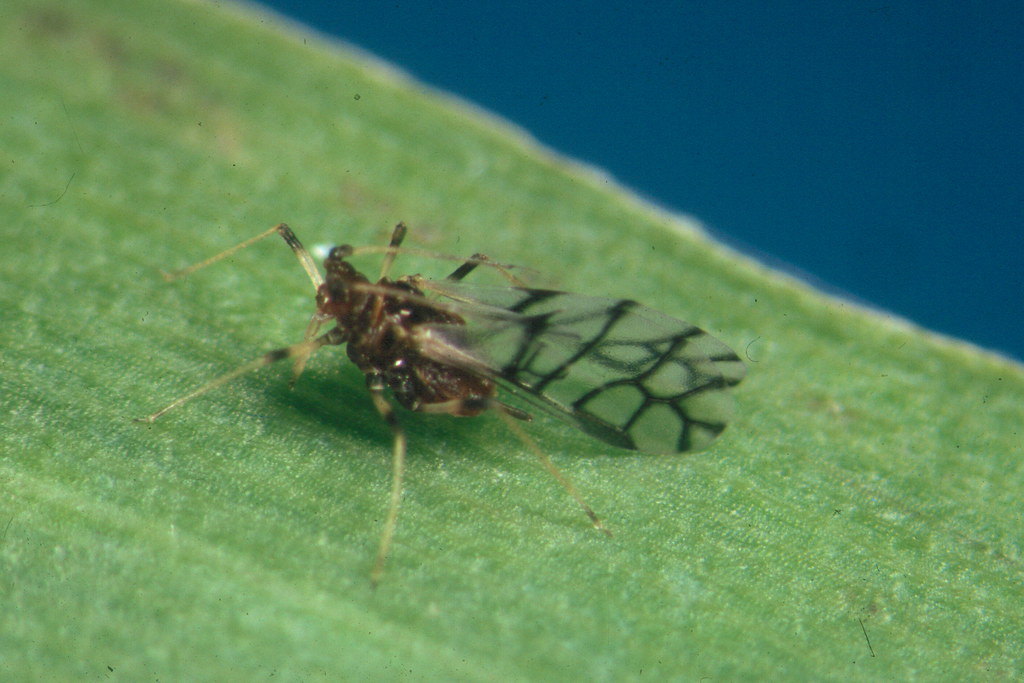
People usually talk about aphids like they are already explained. Tiny green bugs. Bad for the roses. Spray them, squish them, move on. That is not wrong. It is just a very small version of the story.
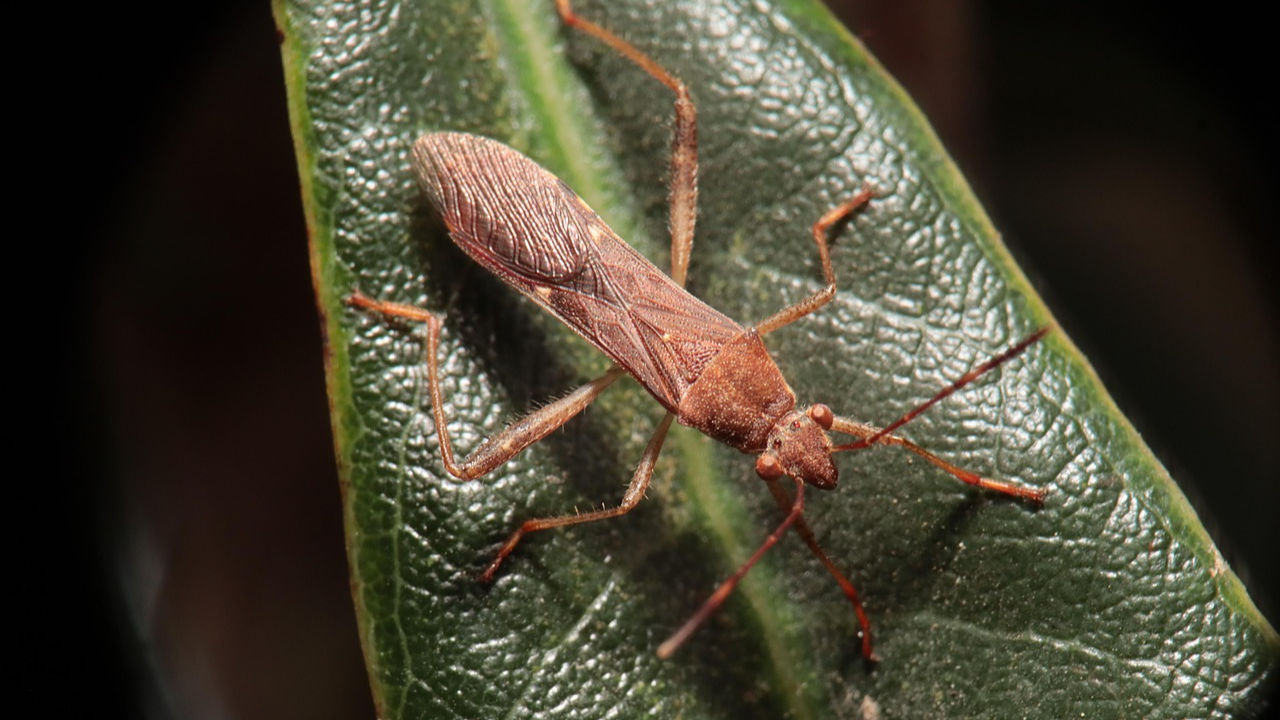
Chisos Cicada
Neocicada chisos is a species of cicada in the family Cicadidae, one of three species originally described in the genus Neocicada before its taxonomic expansion. The species was first described as Cicada chisos by Davis in 1916 and later transferred to the genus Neocicada. It is endemic to the Chisos Mountains region of Texas and adjacent northern Mexico, with records from Coahuila, Nuevo León, and Tamaulipas. As with other cicadas, males produce sound using tymbals—specialized membranes on the ventral base of the abdomen.
Hieroglyphic Cicada
Neocicada hieroglyphica, commonly known as the hieroglyphic cicada, is a medium-sized cicada species in the family Cicadidae. It is found across eastern and central North America, with records from the southeastern United States west to Kansas. The species is named for the distinctive black markings on its head and thorax that resemble hieroglyphic writing. Adults are active during summer and are attracted to ultraviolet and mercury-vapor lights at night. Two subspecies are recognized: N. h. hieroglyphica and N. h. johannis.
Neocoelidia lineata is a leafhopper species in the family Cicadellidae, first described by Baker in 1898. It belongs to the subfamily Neocoelidiinae, a group characterized by distinctive morphological features within the leafhopper family. The species has been recorded from several western North American jurisdictions including British Columbia, California, Idaho, Oregon, and Washington.
Neocoelidia ramona is a species of leafhopper in the family Cicadellidae, first described by Ball in 1916. It is currently recognized as a synonym of Neocoelidia lactipennis. The species belongs to the subfamily Neocoelidiinae and tribe Neocoelidiini. Distribution records indicate occurrence in California, Nevada, and Utah in the western United States.
Neocoelidia tuberculata is a species of leafhopper in the family Cicadellidae, described by Baker in 1898. It belongs to the subfamily Neocoelidiinae, a group characterized by morphological adaptations for their ecological niches. The species is part of a genus distributed primarily in the Nearctic region.
Neocyrtopeltocoris triangularis is a species of plant bug in the family Miridae, order Hemiptera. As a member of the largest family of true bugs, it shares the characteristic piercing-sucking mouthparts typical of the order. The species is documented from very few observations, indicating it is either rare, cryptic, or undercollected.
Neogerris is a genus of water striders in the family Gerridae, established by Matsumura in 1913. The genus comprises approximately 13 described species distributed primarily in the Americas. These insects are adapted to life on the water surface, using their elongated middle and hind legs to skate across ponds, streams, and other freshwater habitats.
Neogerris hesione is a water strider species in the family Gerridae. It inhabits freshwater surfaces across tropical and subtropical regions of the Americas. The species is well-documented with over 1,300 observations on iNaturalist.
Neohecalus lineatus is a leafhopper species in the family Cicadellidae, first described by Uhler in 1877. It belongs to the tribe Hecalini within the subfamily Deltocephalinae. Distribution records indicate presence in several eastern and midwestern U.S. states including Colorado, Connecticut, Georgia, Illinois, and Indiana. As a member of the Hemiptera, it possesses piercing-sucking mouthparts typical of true bugs.
Neolitochrus crucigerus is a species of leafhopper in the family Cicadellidae, subfamily Typhlocybinae. Species in this genus are small, delicate insects associated with woody vegetation. N. crucigerus has been recorded from specific localities in the Neotropical region. Like other typhlocybines, it likely feeds on plant phloem sap.
Neolygus is a large genus of plant bugs in the family Miridae, containing at least 110 described species. The genus was first reported from the Himalayas in 2012, with records from Nepal and North India. Species identification relies heavily on male genitalia structure. Several species have been transferred to this genus from related genera such as Lygocoris.
Neolygus inconspicuus is a species of plant bug in the family Miridae, first described by Knight in 1917. The species is native to northeastern North America, with documented occurrences in Ontario, Canada, and the eastern United States. As a member of the genus Neolygus, it belongs to a diverse group of mirid bugs associated with various host plants.
A plant bug in the family Miridae, described from the northeastern United States. The species epithet suggests an association with oak (Quercus) and white (alba), though specific host relationships have not been formally documented. Like other members of Neolygus, it is presumed to be phytophagous.
Neolygus vitticollis is a species of plant bug in the family Miridae, first described by Reuter in 1876. It belongs to the large and diverse genus Neolygus, which contains numerous species of mirid bugs primarily associated with vegetation. The species has been documented in the eastern United States with scattered records across multiple states.
broad-headed bug
Neomegalotomus rufipes is a species of broad-headed bug in the family Alydidae. It was described by Westwood in 1842. The species occurs in the Caribbean region and parts of North America. Like other members of Alydidae, it possesses the characteristic broad, flattened head that gives the family its common name. Information on its biology and ecology remains limited.
Neomegamelanus elongatus is a species of delphacid planthopper in the family Delphacidae. It was originally described as Megamelanus elongatus by Ball in 1905. The species is found in the Caribbean and North America, with distribution records from Connecticut, Delaware, Florida, Georgia, and Louisiana. Two subspecies are recognized: N. e. elongatus and N. e. reductus.
Neoneides muticus is a species of stilt bug in the family Berytidae. It is found across North America, with records from Canada, the United States, and Mexico. The species was originally described by Say in 1832 under the basionym Berytus muticus. Stilt bugs in this family are characterized by their elongated, slender legs and typically inhabit vegetation in various terrestrial habitats.
dirt-colored seed bug
Neopamera bilobata is a seed bug in the family Rhyparochromidae with a broad distribution across the Americas. It has emerged as a significant pest of strawberry cultivation in high tunnel systems, where it causes catfacing damage to fruits. The species exhibits distinctive reproductive behaviors including male courtship displays and female resistance during copulation. Laboratory studies indicate a lifespan of approximately 45-52 days and egg-laying rates of 2.2 eggs per day.
Neopetissius slaterorum is a seed bug in the family Rhyparochromidae, described by O'Donnell in 2001. The species is distributed across Central and South America, with records from Mexico to Brazil. Like other members of Rhyparochromidae, it belongs to a family of true bugs commonly known as dirt-colored seed bugs. The specific epithet honors the Slater family, prominent figures in heteropteran systematics.
Pacific Madrone Psyllid
Neophyllura arbuti is a psyllid species in the family Liviidae, commonly known as the Pacific Madrone Psyllid. It is associated with Pacific madrone (Arbutus menziesii), a broadleaf evergreen tree native to western North America. The species was originally described as Euphyllura arbuti by Schwarz in 1904 and later transferred to the genus Neophyllura. Records indicate occurrence in California, Oregon, and British Columbia.
Neophyllura bicolor is a species of psyllid (family Liviidae) described by Martin in 1931. It belongs to the superfamily Psylloidea, a group of small plant-feeding insects commonly known as jumping plant lice. The species epithet 'bicolor' suggests a two-toned color pattern. Records indicate it has been observed in California (CALOO).
Neophyllura pruinosa is a species of jumping plant louse (psyllid) in the family Liviidae, first described by Martin in 1931. As a member of the Hemiptera order, it is a sap-feeding insect that likely specializes on particular host plants. The genus Neophyllura is part of a group of psyllids associated with various plant families, though specific ecological details for this species remain poorly documented in available literature. The species has been recorded in California, USA based on distribution data.
pygmy backswimmers
Neoplea is a genus of minute aquatic predatory true bugs in the family Pleidae, commonly known as pygmy backswimmers. The genus contains at least 25 described species distributed across North and South America, with numerous undescribed species. Members are small-bodied (approximately 1.5 mm), active predators in lentic freshwater habitats. The best-studied species, Neoplea striola, has been investigated for its potential role in trophic cascades in fishless subtropical ponds.
pygmy backswimmer
Neoplea striola is a minute predaceous true bug in the family Pleidae, commonly known as the pygmy backswimmers. Adults measure approximately 1.5 mm in length. The species inhabits lentic freshwater habitats across Central and North America, including small fishless ponds and temporary water bodies, and has been observed to tolerate low oxygen conditions. It is an active visual predator that hunts zooplankton and small aquatic invertebrates using sight, vibrations, and possibly chemical cues. Research suggests it is univoltine, overwintering as adults with activity from March through November in temperate regions.
Neortholomus koreshanus is a seed bug in the family Lygaeidae, originally described as Belonochilus koreshanus by Van Duzee in 1909. The species occurs in the Caribbean and North America, with records from the United States and Isle of Pines (Cuba). As a member of the subfamily Orsillinae, it belongs to a group commonly associated with seed-feeding habits. The genus Neortholomus is relatively small and poorly studied, with limited published information on its biology.
Neosuris castanea is a species of dirt-colored seed bug in the family Rhyparochromidae. It is found in Central America and North America. The species was originally described as Esuris castanea by Barber in 1911. Very little is known about its biology or ecology.
dog-day cicada, dog-day harvestfly, heatbug, Northern Dog-day Cicada
Neotibicen canicularis is an annual cicada species found across much of North America, commonly known as the dog-day cicada or dog-day harvestfly. Unlike periodical cicadas that emerge in synchronized broods every 13 or 17 years, this species appears every summer, though individuals require several years to develop underground. Adults are active during the hot midsummer period traditionally called the "dog days." The species has been documented as a host for multiple flesh fly parasitoids in the family Sarcophagidae, including several first-record associations.
Davis's Southeastern Dog-day Cicada, Southern Dog-day Cicada, Davis' Southeastern Dog-day Cicada
Neotibicen davisi is an annual cicada species in the family Cicadidae, named in honor of North American cicada specialist William Thompson Davis. The species comprises two recognized subspecies: N. d. davisi and N. d. harnedi. Like other dog-day cicadas, it emerges during mid- to late summer rather than in spring like periodical cicadas.
Mississippi Scissor-Grinder
Neotibicen davisi harnedi is a subspecies of annual cicada in the family Cicadidae. It is part of the dog-day cicada group, which emerge during mid- to late summer. The species was originally described as Tibicen davisi var. harnedi by Davis in 1918. Like other Neotibicen species, it spends multiple years underground as a nymph before emerging as an adult.
Coastal scissor grinder cicada
Neotibicen latifasciatus is an annual cicada species in the genus Neotibicen, commonly known as the coastal scissor grinder cicada. It was originally described by Davis in 1915 as a variety of Cicada pruinosa. The species is part of the 'scissor grinder' group of cicadas, which produce distinctive buzzing calls. As an annual cicada, it emerges every year rather than in synchronized broods like periodical cicadas.
Linne's cicada
Neotibicen linnei is a large-bodied annual cicada native to the Eastern United States and Canada. Like other Neotibicen species, it spends multiple years underground as a nymph feeding on plant roots before emerging in mid- to late summer. Adults are known for their distinctive calling songs produced by vibrating tymbal membranes. The species is part of the annual cicada group, meaning adults emerge every year due to overlapping generations rather than synchronized mass emergences.
lyric cicada
Neotibicen lyricen, commonly known as the lyric cicada, is a medium-sized cicada species in the family Cicadidae. It is one of several species in the genus Neotibicen that occur across eastern North America. The species is characterized by its distinctive song, which has been described as a continuous, high-pitched trill. Adults emerge in summer and are active during daylight hours when they produce their characteristic calling songs from perches in trees and shrubs.
Dark Lyric Cicada
Neotibicen lyricen engelhardti is a subspecies of the lyric cicada, commonly known as the Dark Lyric Cicada. It is one of several annual cicada subspecies found in eastern North America that emerge during mid- to late summer. Like other Neotibicen species, it produces species-specific songs using tymbal organs. The subspecies was described by Davis in 1910 and is currently recognized as valid.
Robinson's Annual Cicada, Robinson's cicada
Neotibicen robinsonianus, commonly known as Robinson's Annual Cicada, is a large-bodied annual cicada native to the Eastern United States. Males produce species-specific acoustic signals using tymbal organs located on the ventral abdomen. The species is active during late summer and early autumn, with observations and carcasses documented along woodland trails and prairie interfaces. It occurs sympatrically with other Neotibicen species such as N. lyricens, with which it can be found singing in the same habitats.
Apalachicola Scissor-Grinder
Neotibicen similaris apalachicola is a subspecies of annual cicada described in 2017, endemic to the Apalachicola region of the southeastern United States. As a member of the dog-day cicada group, it shares the characteristic biology of Neotibicen species: nymphs develop underground for multiple years feeding on root sap, with overlapping generations producing adults annually during mid- to late summer. The subspecies designation reflects geographic isolation and presumably subtle morphological or acoustic differentiation from the nominate form.
Southern Dusky-winged Cicada
Neotibicen tibicen australis, the Southern Dusky-winged Cicada, is a subspecies of the annual dog day cicada group found across southern North America. Like other Neotibicen species, it spends multiple years underground as a nymph feeding on tree root sap before emerging on summer nights to molt into an adult. Males produce species-specific songs using tymbal organs to attract mates. The subspecies designation indicates geographic variation within the broader N. tibicen species complex, with 'australis' referring to its southern distribution relative to other subspecies.
Neotriozella hirsuta is a psyllid species in the family Triozidae, described by Tuthill in 1939. It belongs to a genus of jumping plant-lice that feed on vascular plants. The species epithet 'hirsuta' refers to hairy characteristics, though specific morphological details remain poorly documented in accessible literature. Like other Triozidae, it likely has a complex life cycle involving multiple nymphal stages and host plant specificity.
Neottiglossa sulcifrons is a species of stink bug in the family Pentatomidae, described by Stål in 1872. It is found in North America, with distribution records indicating presence across the Nearctic region excluding the Western Cordillera and Beringia. The genus Neottiglossa belongs to the subfamily Pentatominae within the diverse stink bug family.
Neottiglossa undata is a species of stink bug in the family Pentatomidae. It is found in North America, with records across the Nearctic region. The species was first described by Thomas Say in 1832. As a member of the tribe Carpocorini, it shares characteristics with other plant-feeding stink bugs in this group.
Neozygina davisi is a species of leafhopper in the family Cicadellidae, subfamily Typhlocybinae. It was described by Beamer in 1934 and is currently accepted as a valid species. The genus Neozygina belongs to the tribe Erythroneurini, a diverse group of small leafhoppers commonly known as sharpshooters or leafhoppers. Like other members of Typhlocybinae, this species likely feeds on plant phloem.
water scorpion
Nepa is a genus of aquatic true bugs in the family Nepidae, commonly known as water scorpions. These insects inhabit freshwater environments and are characterized by their elongated bodies, raptorial forelegs adapted for capturing prey, and a long respiratory siphon extending from the abdomen. The genus belongs to the subfamily Nepinae and is distinguished from related genera primarily by morphological features of the pronotum and respiratory siphon structure.
true water bugs, water bugs
Nepomorpha is an infraorder of aquatic true bugs (Hemiptera: Heteroptera) comprising approximately 2,000 species worldwide. Members are characterized by reduced, weakly muscled antennae typically concealed against the head, and absent or vestigial ocelli. Most species inhabit freshwater environments, with the exception of the superfamily Ochteroidea, which occupies riparian zones along water margins. The group includes diverse forms such as giant water bugs, water scorpions, water boatmen, and backswimmers.
Nersia florida is a species of planthopper in the family Dictyopharidae, described by Fennah in 1944. It belongs to the tribe Nersiini and is part of the diverse Fulgoroidea superfamily within the order Hemiptera. Distribution records indicate presence in the southeastern United States (Florida, Mississippi, Texas) and Veracruz, Mexico. The species is one of approximately 429 observations recorded on iNaturalist, suggesting it is not exceptionally rare but also not among the most commonly encountered planthoppers.
Neurocolpus johnstoni is a species of plant bug in the family Miridae, described by Knight in 1934. It belongs to the genus Neurocolpus, a group of mirid bugs found in North America. The species is known from limited collection records in Texas, USA. Like other members of Miridae, it is a true bug with piercing-sucking mouthparts. Specific ecological details remain poorly documented.
Neurocolpus mexicanus is a mirid plant bug species described by Distant in 1883. It belongs to the family Miridae, the largest family within the Hemiptera, and is distributed across Central America, Mexico, and parts of the southern United States including Arizona and Texas. The species has been recorded from Costa Rica, El Salvador, Guatemala, Honduras, Nicaragua, Panama, Venezuela, and Mexico. As with other members of Neurocolpus, it is likely associated with vegetation, though specific ecological details remain poorly documented in published literature.
clouded plant bug
Neurocolpus nubilus is a species of plant bug in the family Miridae, commonly known as the clouded plant bug. It is distributed across North America, with records from Canada and multiple U.S. states. The species feeds on a variety of herbaceous plants and has been documented on agricultural crops as well as native vegetation.
Neurocolpus simplex is a species of plant bug in the family Miridae, described by Van Duzee in 1918. It belongs to a genus of mirid bugs found in North America. The species is known from the southwestern United States, with records from Arizona, New Mexico, Texas, and California. As a member of the Miridae, it is a true bug with piercing-sucking mouthparts.
flat bug
Neuroctenus elongatus is a species of flat bug in the family Aradidae, first described by Osborn in 1903. The species is characterized by its elongated body form, which distinguishes it from other members of the genus. It is distributed across North America. Flat bugs in this family are typically associated with decaying wood and fungal habitats, though specific ecological details for this species remain limited.
stink bugs
Nezarini is a tribe of stink bugs within the family Pentatomidae, containing at least 21 described genera. The tribe includes economically significant agricultural pests such as the southern green stink bug (Nezara viridula) and various species in the genera Chinavia and Chlorochroa. Members are distributed across multiple continents with substantial observation records documenting their presence.
minute pirate bugs
Nidicola is a genus of minute pirate bugs (family Anthocoridae) established by Harris & Drake in 1941. Members of this genus are small predatory insects within the subfamily Lyctocorinae. The genus includes at least one described species, Nidicola jaegeri, from Southern California. These insects belong to a family known for biological control potential against agricultural pests.