
Neoplea
Esaki & China, 1928
pygmy backswimmers
Species Guides
1- Neoplea striola(pygmy backswimmer)
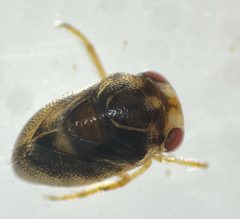
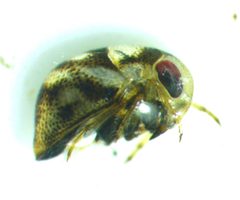
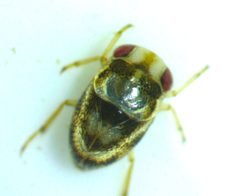
Neoplea is a of minute aquatic predatory true bugs in the Pleidae, commonly known as pygmy backswimmers. The genus contains at least 25 described distributed across North and South America, with numerous undescribed species. Members are small-bodied (approximately 1.5 mm), active in lentic freshwater . The best-studied species, Neoplea striola, has been investigated for its potential role in trophic cascades in fishless subtropical ponds.
Pronunciation
How to pronounce Neoplea: //niː.oʊˈpliːə//
These audio files are automatically generated. While they are not always 100% accurate, they are a good starting point.
Identification
Neoplea are distinguished from other Pleidae by subtle morphological differences; the can be separated from the Old World genus Plea by geographic distribution (Neoplea: New World; Plea: Old World) and genitalic characters. Species-level identification requires examination of male genitalia and other fine structural features. Neoplea striola, the type species, has been characterized in studies but diagnostic external features for field identification are not well documented in accessible literature.
Images
Habitat
Distribution
North America and South America. Documented from southern Illinois (USA), central Texas (USA), and Colombia (Complejo Humedales Hato Corozal, Cienaga Zapatosa, Ciénaga San Silvestre). The is widespread in the New World tropics and subtropics.
Seasonality
In southern Illinois, Neoplea striola is apparently : become active in early March, first instars appear mid-May, with overlapping subsequent instars; no active adults found after November. Overwinters as adults.
Ecological Role
insects occupying the top in small fishless water bodies. Experimental studies on Neoplea striola found no significant evidence of trophic cascades; weak or absent top-down effects on phytoplankton through zooplankton . Copepod-dominated zooplankton with fast escape responses may limit predation effectiveness.
Similar Taxa
- PleaThe only other in Pleidae; distinguished by Old World distribution (Europe, Africa, Asia, Australia) versus New World distribution of Neoplea, and by differences in male genitalia structure.
More Details
Species diversity
At least 25 described with numerous undescribed species; remains active with multiple species described in 2020 and 2026.
Research limitations
Most detailed ecological information derives from studies of Neoplea striola; -level generalizations should be treated cautiously. No was observed in a 40+ day mesocosm experiment with N. striola, suggesting either stress conditions or specific reproductive requirements.
Sources and further reading
- BugGuide
- Wikipedia
- GBIF taxonomy match
- iNaturalist taxon
- NCBI Taxonomy
- Catalogue of Life
- Life History of <i>Neoplea Striola</i> (Hemiptera: Pleidae)
- Beyond the fish-Daphnia paradigm: testing the potential for pygmy backswimmers (Neoplea striola) to cause trophic cascades in subtropical ponds
- Beyond the fish- Daphnia paradigm: testing the potential for Neoplea striola (Hemiptera: Pleidae) to cause a trophic cascade in subtropical ponds